
Views: 0 Author: Site Editor Publish Time: 2026-05-01 Origin: Site


Achieving perfectly smooth, uniform rounded edges distinguishes amateur woodworking from professional craftsmanship. You want flawless transitions without tearing the grain or leaving unexpected step marks. However, selecting the wrong profile or incorrect shank size often leads to ruined workpieces. Using a cutter lacking proper bearing guidance introduces severe risks. These dangers include unsafe kickback and wasted material costs. Navigating the crowded tooling market requires understanding exactly how different cutter geometries interact during operation. This guide provides a direct, technical breakdown of Edging Router Bits. We will explore how to choose the exact profile, blade material, and radius size for your specific project needs. You will learn to match these parameters perfectly to your current material. By the end, you will know how to bypass common pitfalls and elevate your finishing techniques effortlessly.
Standard Roundover Bits are the safest and most common choice for edge rounding, utilizing a guide bearing for consistent tracking.
Tool Longevity: Carbide-tipped bits offer a superior Total Cost of Ownership (TCO) compared to High-Speed Steel (HSS) for medium-to-heavy duty use.
Shank Stability: 1/2-inch shanks handle heat and heavy loads better than 1/4-inch shanks, making them ideal for professional applications.
Implementation Risk: The most common beginner error is setting the bit depth too low, resulting in an unwanted ridge or "step" (fillet) on the wood.
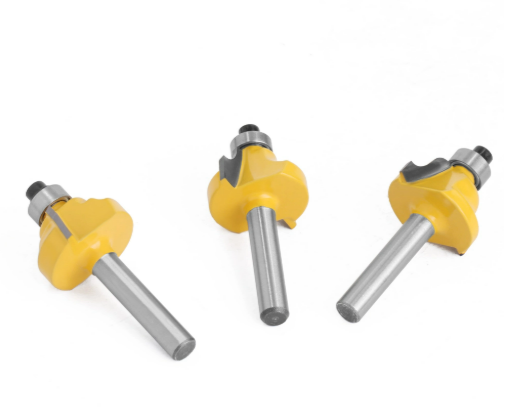
Woodworkers rely on several distinct cutter profiles to soften sharp corners. Understanding the core function of each shape ensures you select the optimal tool for the job.
Standard roundovers produce a simple, convex quarter-circle radius. They represent the most common edge profile in any workshop. You gain excellent control because a top or bottom guide bearing tracks smoothly against the material edge. The bearing acts as a physical stop to guarantee a uniform curve. However, you must perform two separate operations to round both the top and bottom edges. You route one side, flip the wooden board over, and then route the opposing edge.
A bullnose profile cuts a full 180-degree half-circle into the material. It shapes the entire edge rapidly in far fewer passes. This efficiency makes the profile incredibly popular for shelving units and robust stair treads. The primary downside is tool guidance. These cutters often lack a physical guide bearing. This absence demands exceptional machine control from the operator. You face a much higher risk of cutting too deep. Over-plunging causes aggressive tear-out and ruins the workpiece.
Production environments demand absolute speed and unyielding consistency. Double roundovers feature a clever center-mounted guide bearing. This design allows you to round both the top and bottom of a workpiece simultaneously. You finish the entire edge profile in a single pass. Manufacturers frequently use them for stair treads, custom shelving, and children's furniture. They save immense production time when processing large stacks of sheet goods.
Plunging roundovers, also known as Ovolo cutters, serve an entirely different purpose. They completely lack guide bearings by design. You use them primarily to route surface grooves and carve inner panel details. Because they cannot track an edge independently, you must rely on external guidance systems. You will need a straight edge guide, a rigid router table fence, or a programmed CNC machine to use them effectively.
Choosing the right profile is only the first step. You must also evaluate the physical construction of your Router Bits. Variables like shank diameter and blade composition drastically affect long-term performance.
The shank transfers rotational power from the motor collet to the cutting edge. Choosing the right thickness matters immensely.
1/4-Inch Shanks: These fit light laminate trimmers and compact palm routers perfectly. They work well for small radius profiling and delicate edge finishing tasks. However, they lack the physical mass to absorb heavy cutting vibrations.
1/2-Inch Shanks: Professionals consider this the absolute standard for heavy-duty work. The thicker steel handles intense heat buildup much better. It reduces chatter and unwanted vibration. You get noticeably cleaner cuts, especially when processing dense, abrasive hardwoods.
Tool longevity dictates your ultimate project expenses. Let us compare the two primary manufacturing materials used today.
Material Type | Initial Cost | Durability & Lifespan | Ideal Use Case |
|---|---|---|---|
High-Speed Steel (HSS) | Low | Dulls quickly; loses edge under high heat. | Occasional hobby use on softwoods like pine. |
Carbide-Tipped | Higher | Retains sharpness 10x to 25x longer than HSS. | Frequent use on hardwoods, MDF, and plywood. |
Carbide-tipped options, particularly those utilizing Titanium Cobalt Carbide, dominate the modern tooling market. They require a larger upfront financial investment. Yet, they drastically reduce your replacement costs over time. They maintain a razor-sharp edge through miles of highly abrasive composite materials.
Premium cutters incorporate advanced safety geometry directly into the steel body. Anti-kickback designs intentionally limit the chip thickness removed per revolution. This physical limitation prevents the blade from grabbing the wood grain too aggressively. It drastically reduces the chance of dangerous kickback incidents during hand-routing.
Additionally, pay attention to specialized anti-friction coatings. Manufacturers apply industrial layers like Teflon or proprietary polymers. These coatings reduce sticky resin buildup from pine and fir. They also lower overall heat friction. You ultimately achieve a superior, burn-free surface finish.
Radius selection dictates the final aesthetic and ergonomic feel of your project. Different industries rely on heavily standardized dimensions to achieve expected results.
Everyday furniture requires subtle edge softening to look refined. Industry standards heavily favor 1/4-inch to 3/8-inch radii. These sizes remove sharp corners effectively without altering the visual weight of the piece. They protect users from accidental scrapes. They also prevent the wood edges from splintering during daily use. You will see these exact dimensions on dining tables, drawer fronts, and custom kitchen cabinetry.
Luthiers and instrument makers face strict ergonomic requirements. Guitar necks and bodies must fit comfortably against the human body during hours of play.
1-Inch Radius: Builders use this massive size for roughing out chunky instrument necks before final hand sanding.
7/16-Inch Radius: This serves as the traditional size for contouring standard solid-body electric guitars.
1/8-Inch Radius: A tight, structural curve used explicitly at the neck heel. It provides just enough relief without compromising the mechanical strength of the neck joint.
Structural elements demand substantial edge relief for safety and durability. Carpenters frequently employ large 1/2-inch to 3/4-inch radii for these rugged tasks. You find these aggressive curves on commercial stair treads and thick butcher-block countertops. Robust architectural timbers also use them to shed rainwater efficiently and resist heavy impact damage.
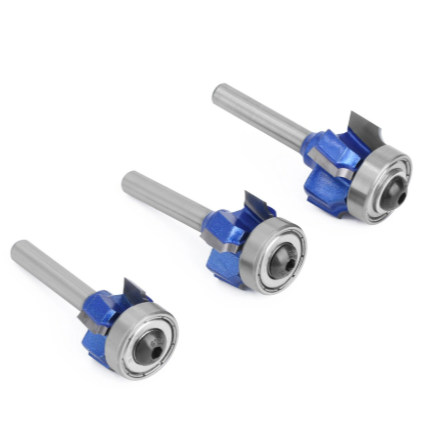
Even the highest quality tooling cannot compensate for poor operator technique. Beginners frequently encounter frustrating surface defects during edge treatments.
The most notorious operational mistake involves leaving an unintended sharp ridge. You might notice a distinct "step" running along the top edge of your freshly routed curve. The cause involves simple tool over-exposure. The straight portion of the cutter sits directly above the curved cutting profile. If you expose too much blade, this straight vertical edge engages the wood deeply.
The fix requires minor physical recalibration. You must adjust your tool plunge depth. Lower the router base plate carefully. Ensure only the curved profile and the guide bearing make contact with the material. The straight cutter wall should sit safely beneath the base plate surface, far away from the wood.
Executing perfect curves requires patience and rigorous testing protocols.
First, always test your depth setting on scrap material. Grab an off-cut of the exact same wood species you plan to use. Density variations between soft pine and hard oak drastically affect how the machine behaves. Calibrating on scrap ensures perfection on the final piece.
Second, embrace the technique of sneaking up on the cut. Do not attempt to route a massive 3/4-inch radius in one aggressive pass. This action overloads the motor and almost guarantees severe grain tear-out. Instead, make multiple shallow passes. Gradually lower the cutter depth until you reach the final desired profile.
You can easily double the versatility of your existing cutter collection. You do not always need to buy a brand-new profile for specialized trim work.
Professional woodworkers use a clever modification technique to extract two distinct profiles from a single cutter. The secret mechanism lies entirely in the interchangeable guide bearing located at the tip.
Standard roundovers arrive with a bearing perfectly matched to the cutting radius. Typically, a 1/2-inch outer diameter bearing aligns perfectly flush with the curve. You can modify this geometry by removing the top screw. Simply swap this factory bearing for a slightly smaller one. Dropping down to a 3/8-inch diameter bearing alters the entire cut dynamic.
The smaller bearing changes the physical tracking point. It allows the spinning blade to bite slightly deeper into the workpiece edge. This extra depth creates a distinct, decorative inset step at the very base of the curve. You instantly convert a standard smooth roundover into a classic "Beading" bit. It adds instant architectural interest to mundane trim work in seconds.
Choosing the correct edge profile ensures professional, clean transitions on every woodworking project. For 90% of edge-softening tasks, a high-quality, carbide-tipped Standard Roundover bit featuring a 1/2-inch shank represents the most secure investment. It provides superior cutting stability and unmatched operational longevity.
Your next steps are highly straightforward. First, check your machine collet compatibility to ensure it accepts a 1/2-inch shank safely. Next, determine the precise radius dimension required for your current design layout. Finally, gather appropriately sized scrap wood to perform essential depth calibration tests. Mastering these setup fundamentals guarantees flawless, burn-free edges.
A: Yes, but Bullnose bits typically lack guide bearings, making them harder to control freehand. Roundover bits are much more forgiving for edge tracking.
A: Usually caused by feeding the router too slowly, a dull bit, or excessive resin buildup. Upgrading to a bit with an anti-friction coating or carbide tips mitigates this.
A: No. Bearing-guided roundover bits are explicitly designed for handheld use. However, a router table provides superior stability for very small workpieces or extra-large diameter bits.


