
Views: 0 Author: Site Editor Publish Time: 2026-04-24 Origin: Site


Operating with dull cutting tools guarantees two frustrating outcomes: excessive wood tearout and hazardous heat buildup. Pushing a blunted cutter through dense material forces the machine to tear wood fibers rather than slice them cleanly. While modern micro-grain carbide retains its edge up to 20 times longer than standard tool steel, it inevitably degrades over time. However, improper sharpening destroys the bit geometry. It also introduces dangerous rotational imbalances.
Many woodworkers inadvertently ruin expensive tooling by grinding the wrong surfaces or using incorrect abrasives. This guide outlines the evidence-based protocol for safely restoring your tooling. It helps you determine when to perform DIY edge maintenance, when to hire a professional sharpening service, and when to discard the tool entirely. You will learn the exact troubleshooting steps required to extend tool life safely.
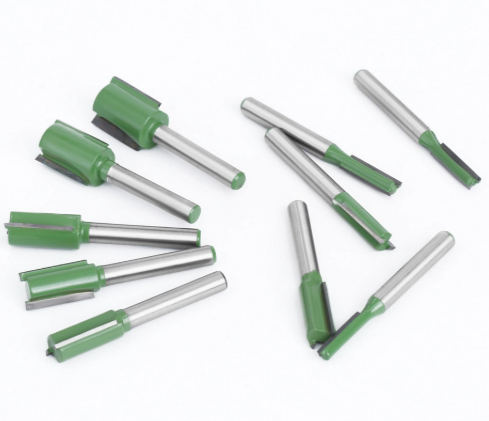
Clean before cutting: Resin and pitch buildup mimic dullness; routine cleaning resolves many cutting issues without removing metal.
Sharpen the flat face only: Never abrade the outside edge or profile. Only the inside radial flat face should be honed to preserve the bit's original diameter.
Prioritize dynamic balance: Apply the exact same number of abrasive strokes to every flute to prevent high-RPM vibrations.
Friction over lubrication: Never apply anti-rust oil to router bits; collets rely on friction, and oil introduces severe slipping hazards.
Woodworkers often misdiagnose cutting issues. They experience severe tearout or burn marks. They immediately assume they need to sharpen their Router Bits. In reality, the cutting edges are often just severely dirty.
Baked-on wood resin severely impedes chip ejection. Softwoods like pine and fir produce excessive sap. This sap clings to the spinning cutter. It creates heavy friction against the wood. The friction generates massive thermal energy. This heat bakes the sticky resin into a rock-hard crust. You enter a dangerous thermal loop. The crust creates more friction. The friction creates more heat. The heat dulls the carbide over time. It feels identical to using a blunt edge.
You must eliminate pitch buildup before attempting any metal removal. Follow this strict cleaning protocol:
Remove ball bearing pilots: Do this before introducing liquids. Solvents easily seep into sealed bearings. They dissolve the internal grease and ruin the bearing.
Apply a non-corrosive solvent: Spray a dedicated woodworking resin solvent onto the cutter. Let it dwell for 10 to 15 minutes to break down the crust.
Scrub the flutes: Use a brass or nylon brush to clear the softened pitch. Never use steel wire brushes. Steel aggressively degrades brittle micro-grain carbide.
Rinse and dry: Wash the tool under warm water. Dry the entire body thoroughly using compressed air or a clean rag.
Moisture leads to rust. You might feel tempted to apply a thick layer of protective oil to the shank. Do not do this. It creates a massive safety hazard. Router collets rely entirely on mechanical friction to secure the tool. Oiling the shank removes this vital friction. It introduces a high risk of the cutter slipping out during high-RPM operation. Thoroughly drying the metal provides adequate rust prevention without sacrificing safety.
Diagnostic Chart: Cleaning vs. Sharpening
Symptom | Visual Inspection | Recommended Action |
|---|---|---|
Scorched wood surfaces | Brown or black crust on the inner flute | Perform the Cleaning SOP. |
Fuzzy cuts and torn grain | Clean flutes, rounded microscopic edges | Perform DIY edge maintenance. |
Heavy machine vibration | Visible chips or broken carbide tips | Discard or outsource for repair. |
You cannot save every tool. Knowing when to sharpen, when to outsource, and when to replace saves both time and money. We base this decision framework on Total Cost of Ownership (TCO).
Budget tooling from big-box stores carries a very low purchase price. Manufacturers build them using inferior grades of carbide. They often lack precise factory balancing. The TCO does not justify professional repair. You should discard and replace budget tooling when standard cleaning and basic touch-ups fail.
Premium carbide tooling represents a completely different investment. High-quality cutters feature ultra-thick micro-grain carbide. They offer excellent initial ROI. This high upfront cost justifies routine DIY micro-bevel maintenance. It also justifies sending them out for eventual professional resurfacing.
DIY sharpening has strict limitations. You should view hand sharpening only as routine touch-up maintenance. It serves to restore a microscopic edge between major projects. Removing substantial amounts of carbide by hand is incredibly inefficient. You cannot fix chipped carbide manually. You cannot repair extreme edge wear by hand. Attempting heavy material removal by hand risks dimensional ruin. You will destroy the flat geometry of the cutting face.
Certain scenarios require industrial machinery. You should outsource complex profile cutters to a professional CNC tool-grinding service. Highly damaged cutters also require professional intervention. Tools requiring absolute zero-tolerance precision must go to professionals. Professional services use liquid-cooled diamond grinding wheels. They restore the edge geometry perfectly while maintaining strict dynamic balance.
Economics Summary Chart
Tool Condition | Tool Tier | Most Economical Action |
|---|---|---|
Minor dullness, no chips | Premium Carbide | DIY hand honing |
Deep chips or severe wear | Premium Carbide | Professional CNC resurfacing |
Dull edge or damaged | Budget / Big-Box Store | Discard and replace |
You must approach edge maintenance with extreme discipline. Learning how to hone Straight Router Bits properly prevents catastrophic shop failures. We must adhere to three non-negotiable rules.
You must only hone the inside flat face of the flute. This is the inner radial surface facing the direction of rotation. Never touch the outside profile or the clearance angle. Abrading the outside edge reduces the overall cutting diameter. It alters the dimensions of your dados. It ruins precision joinery permanently. Honing the inner flat face preserves the exact original diameter. It simply exposes fresh, sharp carbide at the cutting intersection.
These tools spin at terrifying speeds. Operating speeds range between 10,000 and 24,000 RPM. Dynamic balance ensures safe operation. Removing uneven amounts of carbide causes asymmetric weight distribution. High-speed asymmetry creates severe centrifugal imbalance. This leads to heavy machine chatter. It causes poor cut quality. It eventually triggers catastrophic bearing failure inside your machine. You must count your abrasive strokes. Apply identical wear to every single flute.
Carbide is phenomenally hard. It is also highly brittle. You must avoid standard aluminum oxide whetstones. Never use coarse bench grinders under any circumstances. Bench grinders spin too fast and shatter the carbide matrix. You need a dedicated diamond abrasive. Use a fine 600-grit diamond paddle. You can also use an extra-fine 1,200-grit diamond needle file. Diamond removes material smoothly. It provides total control over the honing process.
Common Mistakes to Avoid
Using a motorized bench grinder to "speed up" the process.
Failing to count the strokes on opposing flutes.
Honing the curved outside profile of the cutter.
Attempting to grind out a deep chip by hand.
Executing the hone requires patience. Follow these steps sequentially to achieve a razor-sharp micro-edge without jeopardizing tool integrity.
Do not hold the tool free-hand in mid-air. Free-hand sharpening guarantees uneven angles. It ruins the flat face geometry. You must lock the tool down tightly. Chuck the bit securely into an unplugged drill press. Alternatively, drill a matching hole into a heavy scrap block and wedge the tool inside. Ensure the tool remains completely stationary before you touch it with an abrasive.
Take your 600-grit diamond paddle. Lay it completely flush against the inner radial flat. The diamond surface must make full contact with the carbide. It cannot tilt. Apply light, consistent pressure against the face. Slide the paddle vertically. Perform a strict stroke count. Five to ten strokes are usually sufficient for routine maintenance. Keep your strokes smooth and deliberate.
You must address the dynamic balance immediately. Rotate the spindle or the holding block. Expose the opposing flute. Repeat the exact same number of strokes. Maintain the exact same downward pressure. If you applied seven strokes to the first flute, you must apply exactly seven strokes to the second flute. This guarantees structural symmetry.
You need to verify your work microscopically. We use the visual "Light Test" for validation. Inspect the freshly honed edge under a strong, direct work light. Rotate the tool slowly back and forth. A dull edge has a rounded microscopic profile. This rounded profile catches ambient light and reflects shiny flecks back at you. A truly sharp carbide edge comes to an infinitely small point. It will not reflect any light. If you see shiny spots on the edge, the tool remains dull.
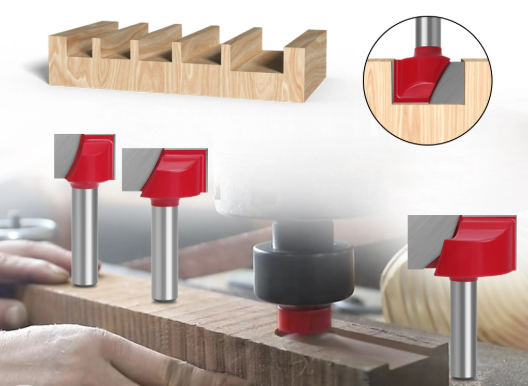
Sharpening handles the symptoms of wear. Preventive care addresses the root causes. Managing your inventory properly extends the operational lifespan of your premium cutters.
You can minimize pitch accumulation during heavy production runs. Use dry-lube sprays. You can also use specialized resin-blocking sprays. These chemicals are formulated specifically for woodworking. Apply them directly to the carbide cutter head. Never apply them to the metal shank. These coatings reduce surface friction. They prevent resin from baking onto the steel body. They keep the metal significantly cooler during aggressive hardwood passes.
Carbide requires careful storage. It is incredibly hard, but it lacks tensile strength. It shatters easily upon impact. Storing your cutters loosely in a drawer is a massive mistake. Opening the drawer causes the cutters to roll. Their carbide edges clink together. This metal-on-metal contact causes severe micro-chipping. Keep your tools in dedicated drilled storage blocks. You can also store them in their original protective sleeves. Protect the edges from accidental physical impacts at all times.
Evaluate your current tooling inventory today. Empty your router storage boxes. Separate all your cutters into three distinct piles.
Pile 1: "Needs Cleaning." These tools exhibit dark burn marks and sticky resin. They require the solvent and brushing protocol.
Pile 2: "Needs a Touch-Up." These tools are perfectly clean but fail the light test. They require the diamond paddle protocol.
Pile 3: "Needs Professional Help." These tools feature chipped edges or heavy damage. They require professional CNC grinding or immediate replacement.
Maintaining straight cutting tools is an exercise in strict precision and restraint. You must default to cleaning your cutters first before attempting any metal removal. By strictly maintaining the flat inner face, you preserve the exact cutting diameter. By respecting rotational balance and counting your abrasive strokes, you prevent dangerous machine vibrations. These habits allow you to safely extend the lifespan of your high-quality tooling.
Before purchasing expensive replacement tools, audit your current inventory. Invest in a high-quality 600-grit diamond paddle. Integrate a routine resin-cleaning protocol into your daily shop workflow. You will save money, improve your cut quality, and maintain a safer woodworking environment.
A: No. Standard bench grinders spin far too fast and generate excessive heat. They use standard abrasives that will instantly shatter brittle carbide. Furthermore, hand-holding a tool against a spinning wheel makes it impossible to guarantee the exact stroke-count needed for high-RPM dynamic balance.
A: Sharpening frequency depends entirely on the material you cut. Abrasive materials like MDF and plywood dull edges much faster than natural solid wood. Rely on the visual "Light Test" and observe your cut quality. A sudden increase in tearout indicates it is time for maintenance.
A: Burning is primarily caused by heavy friction. This usually stems from baked-on pitch or feeding the machine too slowly through the wood. It is rarely just a dull edge. Always clean the bit using a dedicated solvent to remove resin before you attempt to hone it.


