
Views: 0 Author: Site Editor Publish Time: 2026-04-27 Origin: Site


Woodworkers and shop managers frequently debate the ideal tooling for cross-grain joinery. A common shop floor question explores whether standard straight router bits provide the right tooling choice for cutting dado joints, or if specialized tools are strictly required. This is not just a theoretical debate. Mismatched dadoes lead directly to weak joinery, ruined sheet goods, and wasted labor hours. When joints fit too loosely or tear out uncontrollably, assembly becomes a frustrating and expensive process. Furthermore, the reality of modern manufacturing tolerances heavily dictates your tooling selection. Undersized plywood is now an industry standard. In this comprehensive guide, you will learn how to evaluate bit viability against material specifications. We will explore the return on investment for specialty tools. Finally, we will establish standard operating procedures to execute flawless dado cuts every single time.
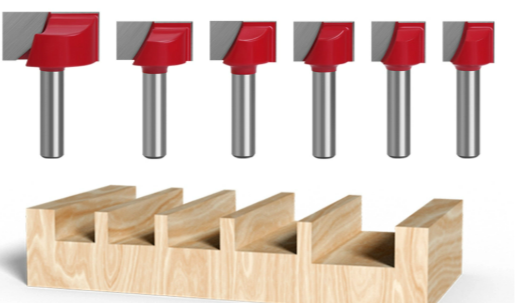
Standard straight bits can cut dadoes perfectly in solid wood, but often fail to provide a tight fit in modern plywood without multi-pass adjustments.
Dedicated "dado" straight bits are sized for actual plywood thicknesses (e.g., 23/32"), drastically reducing labor time and setup complexity.
Upgrading to spiral down-cut bits offers superior ROI for shops working primarily with expensive veneered materials by eliminating tear-out.
Freehand routing a dado is a critical workflow failure; strict adherence to straight-edge fences or precision jigs is non-negotiable due to rotational physics.
Many woodworkers start their joinery journey using traditional tooling. We must first confirm the baseline capability of these tools before discussing upgrades. Double-flute Straight Router Bits serve as the traditional standard across the industry. They are highly capable cutting instruments. Operators routinely use them for cross-grain dadoes and with-grain grooves. When cutting solid hardwood, these bits perform exceptionally well. They provide clean, square-bottomed channels every time. You can rely on them for consistent material removal because their flat cutting geometry easily handles dense wood fibers. Solid wood generally maintains true dimensional thickness. This stability allows a standard half-inch bit to cut a perfect half-inch groove without complications.
Sheet goods present an entirely different manufacturing reality today. Modern plywood rarely matches its nominal dimensions. You might purchase a sheet labeled as 3/4-inch material. However, manufacturing tolerances tell a very different story. The actual thickness usually falls between 45/64-inch and 23/32-inch. This discrepancy happens because factories sand the veneer layers heavily after pressing. They also utilize metric core layers during global production. If you cut a dado using standard 3/4-inch Router Bits, you face a major mechanical issue. The resulting groove will be too wide for the mating plywood panel. This gap creates loose, structurally compromised joints. Glue alone cannot bridge this void effectively. Your cabinet or bookshelf will lose significant lateral strength immediately.
Tool manufacturers recognized this structural problem years ago. They developed a specific category of cutters to solve it permanently. Marketed specifically as "dado bits," these tools are structurally identical to standard straight bits. However, engineers machine them to non-standard, undersized diameters. A standard plywood set might include diameters like 23/32-inch or 31/64-inch. These precise dimensions perfectly match the real-world thickness of modern veneered plywood. You get a snug, friction-fit joint right off the machine. This specialized sizing eliminates the dreaded sloppy fit. They often feature shorter cutting flutes as well. Shorter flutes significantly reduce vibration during shallow trenching operations.
Shop efficiency relies entirely on predictable, repeatable workflows. Let us compare the workflow of using both bit types. When you use a standard undersized bit (like a 1/2-inch cutter for a 3/4-inch nominal groove), you must make two passes. You set up your fence, make the first cut, and then carefully adjust the fence for the remaining width. This micro-adjustment phase consumes valuable shop time. It also introduces a high risk of human error. Conversely, using an undersized dado bit offers one-pass efficiency. You clamp your guide, route the channel, and you are done. The joint fits perfectly on the very first try.
Tooling Choice | Passes Required | Setup Complexity | Fit Quality on Plywood |
|---|---|---|---|
Standard Straight Bit (e.g., 1/2") | Multiple | High (micro-adjustments needed) | Excellent (if adjusted perfectly) |
Nominal Straight Bit (e.g., 3/4") | Single | Low | Poor (sloppy joint) |
Undersized Dado Bit (e.g., 23/32") | Single | Low | Excellent (snug fit) |
These traditional bits boast the lowest upfront cost. They also offer tremendous versatility across different projects. Beginners and seasoned professionals alike keep several in their aprons. We recommend applying them mostly to solid wood applications. In solid lumber, tear-out remains manageable. You can sand away minor splinters easily. Additionally, the horizontal cutting action provides adequate chip extraction in shallow grooves. They are easy to sharpen and cheap to replace. However, they struggle to slice delicate top veneers cleanly, making them a risky choice for high-end cabinetry panels.
When processing expensive pre-finished plywood, tear-out ruins your profit margins instantly. Spiral down-cut bits provide the ultimate veneer upgrade. Their twisted flute geometry drives the cutting force downward continuously. This downward shearing action pushes the delicate top veneer tightly against the core layers. It produces perfectly crisp top edges without any splinters. The results look flawless right off the machine. However, this design comes with a notable trade-off. The downward action creates poor chip extraction in deep dadoes. Chips pack tightly into the groove. This packing increases the risk of extreme heat buildup. Excessive heat eventually leads to premature bit wear and burned wood.
Spiral up-cut bits operate using the exact opposite physics. Their flutes pull chips up and out of the cut efficiently. This continuous evacuation keeps the bit incredibly cool. It makes them the perfect tool for cutting deep mortises. Woodworkers love them for thick, solid stock where chip clearing is paramount. However, you must strictly disqualify them for shallow dadoes on plywood. The upward pulling force acts like a wedge under the top layer. It causes severe top-veneer blowout. The edges will look ragged and torn. Never use an up-cut bit on delicate sheet goods.
Understanding machine physics prevents disastrous workshop errors. The spindle on a standard router spins clockwise at speeds exceeding 20,000 RPM. This incredible rotational velocity creates an aggressive lateral pulling force. The cutting edges grab the material violently. They do not just cut wood. They also try to drive the machine across the surface like a wheel. This traction force pulls the entire base sideways. Operators constantly fight this invisible mechanical pull during every cut.
Many beginners attempt to cut dadoes by simply following a penciled line. This approach guarantees failure. Attempting to freehand a dado results in immediate tool wandering. Human hands cannot resist the sudden lateral jerks. The bit will veer off the line within seconds. This mistake results in permanently ruined stock. It also presents a severe safety hazard in the shop. A wandering tool can catch a hidden knot, kicking the heavy machine back toward the operator. You risk serious operator injury when ignoring proper guidance protocols.
You must implement strict physical path restrictions to counteract rotational drift. We strongly recommend adhering to the following mitigation protocols:
Never start a plunge cut without a securely clamped guide rail.
Use a wide-base router sub-base to increase surface contact and overall stability.
Ensure all clamps sit far away from the motor housing path to prevent sudden collision.
Keep both hands firmly on the handles to maintain consistent downward pressure throughout the pass.
For hobbyists or small shops, a low-cost setup works perfectly well. You can build a reliable guide using factory straight-edge plywood or straight 2x4s. You secure these guides using standard F-clamps. You measure the offset from the bit to the edge of the router base. Then, you clamp the straight edge at that exact distance from your layout line. This method requires a very low financial investment. However, it demands high setup time. Measuring the offset repeatedly invites small mathematical errors into your joinery.
Growing shops need faster, more reliable solutions to remain profitable. Custom-built "sandwich" templates provide an excellent intermediate upgrade. They eliminate the need to offset measurements entirely.
Cut a base piece of thin plywood wider than your router base.
Fasten a straight guide fence permanently to this base.
Run your router against the fence, cutting off the excess base material.
The new edge of the base now represents the exact cut line for future alignments.
Clamp a second temporary fence on the opposite side to trap the router base exactly.
This setup traps the machine physically. It completely removes the risk of wandering away from the main fence during aggressive cuts.
Production environments demand extreme accuracy and durability. High-volume shops turn to precision systems. These feature aluminum CNC-machined dado jigs. They utilize 3/4-inch brass guide bushings attached directly to the router base. The bushing rides inside a tightly toleranced track. You never have to worry about the router base drifting. Aluminum components resist warping and wear. They deliver perfectly straight channels year after year, completely standardizing the workflow.
Industrial jigs require a significant upfront investment. However, their return on investment manifests through massive time savings. Guide-bushing systems allow operators to widen a dado for non-standard plywood effortlessly. You simply adjust a built-in slider mechanism. You do not need to unclamp or move the baseline fence. You take one pass, shift the slider by a fraction of an inch, and take a second pass. This drastically reduces setup bottlenecks. It turns a frustrating fifteen-minute calibration into a ten-second adjustment.
You must map out the exact orientation required by tool physics. As established, router bits rotate clockwise. Therefore, the fence must be placed on the left side of the router's travel path. When you push the machine forward, the clockwise rotation pulls the tool leftward. This force pulls it tightly against the guide. If you incorrectly place the fence on the right, the rotation pushes the machine away. This guarantees a crooked cut. Always keep the fence on your left and push forward.
Deep cuts destroy bits and ruin workpieces quickly. We mandate strict depth of cut protocols for all shop operators. You must take shallow passes. Never exceed a maximum depth of 1/4-inch per pass. Shallow passes preserve bit sharpness over time. They prevent the motor from bogging down under heavy loads. Most importantly, they reduce chatter and vibration. If you need a 1/2-inch deep dado, you must execute it in two distinct 1/4-inch passes. Patience yields professional results.
The most critical moment of the cut happens at the very end. When the spinning bit breaks through the far edge of the board, it lacks supportive wood fibers. It will aggressively blow out the grain. We define blowout prevention as the ultimate exit strategy. You must clamp scrap wood tightly against the exit edge of your workpiece. This sacrificial block acts as a physical extension of the board. It absorbs the mechanical tear-out as the bit breaches the edge. Your actual workpiece remains pristine and perfectly square.
Selecting the right tooling heavily influences the quality of your joinery. We can summarize the shortlisting logic clearly to help you optimize your shop workflow:
Choose standard straight bits for solid wood projects where excellent chip extraction matters most.
Invest in undersized straight bits for high-volume plywood work to guarantee tight, friction-fit joinery.
Upgrade to spiral down-cut bits when handling expensive, splinter-prone veneers to eliminate surface tear-out entirely.
Always pair your chosen bit with a rigid guide system, as the cut's success relies strictly on structural path restriction.
A: No, because modern 3/4" plywood is usually undersized. A standard 3/4" bit will leave a sloppy joint; you need a 23/32" bit or a smaller bit with multiple passes.
A: Usually caused by feeding the router too slowly, taking a pass that is too deep (exceeding 1/4"), or using a dull bit that struggles to clear chips.
A: You must push the router against the rotation of the bit. With the fence on your left, push forward so the clockwise rotation pulls the router base flush against the guide rail.


