
Views: 0 Author: Site Editor Publish Time: 2026-09-29 Origin: Site


Frequent tool changes, degraded surface finishes, and unexpected bit breakage inflate operating costs. These issues quickly ruin tight production schedules. Standard solid carbide struggles under extreme heat. It also degrades rapidly under constant abrasive friction. Manufacturers lose serious money on scrapped parts. Machine downtime adds another layer of severe financial drain. Upgrading to specific high-performance coatings effectively mitigates these everyday shop problems. Advanced surface treatments reduce thermal breakdown. They fight abrasive wear where bare tools routinely fail.
Our goal is to provide an evidence-based framework for you. Production managers and serious machinists will learn how to evaluate, select, and justify coated CNC Router Bits. You will discover which specific coatings match your core materials perfectly. We cover vital failure modes, cost frameworks, and implementation realities below. You will leave equipped to upgrade your tooling strategy safely and profitably.
Coatings extend tool life by primarily reducing friction and acting as a thermal barrier, rather than just increasing surface hardness.
The highest-cost coating is not universally the best; matching the coating to the workpiece material (e.g., ZrN for aluminum/sticky plastics, DLC for abrasive MDF) is the only path to positive ROI.
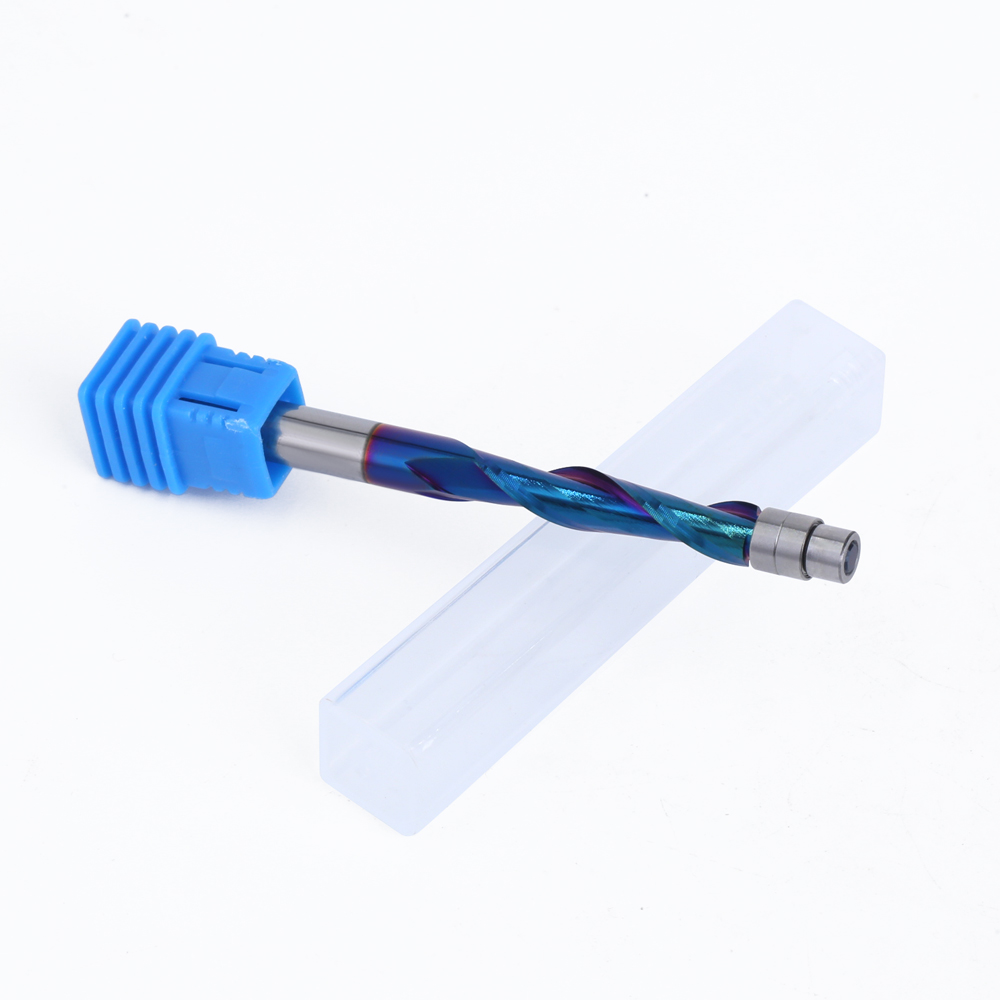
Even premium options, like a nano coated flush trim bit, cannot compensate for poor feeds, speeds, or excessive spindle runout.
Upgrading to coated tooling generally requires recalibrating chip loads to realize the full lifecycle benefits.
Many production shops rely exclusively on bare carbide tooling. Managers often assume lower upfront prices equal lower operating expenses. This assumption usually proves false in high-volume manufacturing settings. Bare carbide simply cannot withstand extreme cutting environments indefinitely. Understanding exactly how tools fail helps you justify better alternatives.
Three primary failure modes destroy standard uncoated tools during routing operations. Recognizing these modes prevents future machining disasters.
Thermal Shock: High-speed routing generates massive localized heat. Rapid heating and subsequent cooling cycles create microscopic fractures. These micro-fractures compromise the carbide structure entirely. The cutting edge eventually crumbles under normal feed pressures.
Edge Abrasion: Machining composite materials exposes the bit to harsh glues. MDF, fiberglass, and particleboard contain highly abrasive resin binders. These binders eat raw carbide edges extremely fast. The sharp shear angle rounds over completely.
Chip Welding (BUE): Built-Up Edge occurs frequently during aluminum or plastic machining. Soft materials melt rapidly under friction. Molten material fuses directly to the tool flute. This ruins the cutting geometry and snaps the bit.
Uncoated tools carry massive hidden financial burdens. Machine downtime during frequent tool swaps stops production dead. Idle spindles cost busy shops dollars per minute. Furthermore, scrapped parts waste expensive raw materials. Degraded cut quality forces operators into secondary manual processing. Labor costs for secondary sanding and finishing destroy profit margins. You must account for these hidden expenses.
You must define clear success metrics before upgrading your tool crib. A successful coating investment requires measurable returns. Do not simply buy the most expensive option available. Set a strict baseline goal. Achieving a 3x tool life increase for only a 1.5x price premium represents excellent value. We recommend tracking the cost per linear foot cut. This specific metric proves the true value of any tooling upgrade.
Selecting the right coating chemistry is absolutely critical for success. Different applications demand very specific surface treatments. Manufacturers apply these microscopically thin layers using physical vapor deposition (PVD). This process bonds the coating to the carbide substrate at a molecular level.
This distinctively gold-colored coating serves general-purpose routing well. It suits entry-level production environments perfectly. It provides excellent baseline friction reduction across various materials. Operators easily identify wear patterns due to its bright gold color. You can monitor tool degradation visually and swap bits before part failure occurs.
This dark coating excels in demanding, high-heat applications. It handles ferrous metals and aggressive dry machining beautifully. Heat actually activates its primary defense mechanism. It forms a protective aluminum oxide layer under intense thermal stress. This sacrificial layer extends tool life significantly during aggressive cuts. However, it requires heat to function properly.
Zirconium Nitride dominates non-ferrous machining applications. It works exceptionally well on aluminum, acrylics, and resin-heavy softwoods. It offers superior lubricity compared to most other options. This slippery surface prevents chip packing completely. It stops material welding effectively. ZrN preserves the delicate flute geometry when cutting notoriously sticky materials.
DLC and CVD Diamond tackle extreme abrasion environments head-on. They dominate MDF, fiberglass, carbon fiber, and melamine machining. These advanced coatings offer extreme surface hardness. They often deliver up to ten times longer tool life compared to bare carbide. They do require a significant upfront financial commitment. Production shops easily recoup this cost through extended machine uptime.
Modern machining often demands hyper-specialized coating solutions. High-friction, precision edge work benefits massively from these advancements. Utilizing a Nano Coated Flush Trim Bit in laminate applications changes everything. Edge-banding procedures generate massive adhesive buildup. Proprietary nano-coatings drastically reduce this stubborn glue accumulation. They maintain a razor-sharp shear angle much longer than standard PTFE-coated alternatives.
Coating Application Matrix
Coating Type | Primary Benefit | Best Suited Materials | Relative Upfront Cost |
|---|---|---|---|
TiN | Visual wear indication, low friction | Plastics, general softwoods | Low |
TiAlN | High thermal resistance | Hardwoods, ferrous metals | Medium |
ZrN | Extreme lubricity, prevents welding | Aluminum, acrylics, resinous wood | Medium |
DLC / CVD | Maximum surface hardness | MDF, carbon fiber, fiberglass | High |
Evaluating tooling requires looking past the initial purchase price. We must measure the Total Cost of Machining (TCM). This comprehensive metric reveals the true financial impact of your tooling choices.
Focus entirely on the TCM metric. You calculate this by adding tool cost, downtime cost, scrap cost, and secondary labor cost. Divide this grand total by the number of successful parts produced. A premium coated tool might cost twice as much initially. However, it might produce four times as many parts. The TCM clearly drops in this scenario. This specific metric justifies higher upfront tooling expenditures to corporate management.
Matching coatings to materials prevents disastrous manufacturing results. Using a high-heat coating on softwoods often fails spectacularly. TiAlN requires significant heat to activate its protective oxide layer. Softwoods and soft plastics do not generate enough friction. The coating never activates properly. Instead, the slightly blunted coated edge acts as an abrasive. It burns the wood rather than cutting it cleanly. Bare carbide actually outperforms improperly matched premium coatings.
Assess your production volume thresholds carefully before buying. Hobbyists cutting one project per month rarely need diamond tooling. High-volume manufacturers cutting MDF daily cannot survive without it. Determine exactly where the premium transitions from an unnecessary expense to a highly profitable investment. High-end coated tooling pays off immediately when machine uptime becomes your primary production bottleneck.
Upgrading tools does not instantly solve bad machining practices. Coatings possess distinct physical limitations. You must optimize your machining environment to support premium tools.
We must clarify this harsh reality immediately. No coating will survive incorrect chip loads. Operators must maintain proper feed and speed ratios. Aggressive plunge rates without proper ramping will snap premium tools instantly. Inadequate workholding causes severe chatter and vibration. Vibration shatters hard coatings in seconds. You must fix foundational machining errors first.
Coated micro-tools are highly susceptible to sudden chipping. Harder coatings inherently possess much more brittle edges. Spindle runout exceeding acceptable tolerances creates uneven chip loads. One flute takes a massive bite of material. The opposite flute cuts absolutely nothing. This uneven pressure chips the brittle coating instantly. Inspect your collets and spindles regularly. Maintain strict runout tolerances below 0.001 inches for optimal tool life.
Address the reality of long-term tool maintenance. Sharpening a coated bit fundamentally alters its performance profile. Grinding the flute removes the coating directly on the inner cutting face. The outer diameter retains the original coating. The tool now has a hybrid surface. It will never perform exactly like a factory-new tool again. Plan your lifecycle costs around this strict limitation. Many shops downgrade resharpened coated tools to roughing operations.
Purchasing new tooling requires a highly systematic approach. Do not guess which coating you need. Use data to drive your procurement decisions.
Inspect your discarded bits under high magnification. Identify the primary failure mode accurately. Look for bluing on the shank. Bluing indicates severe burning and heat failure. Look for rounded cutting edges instead. Rounding indicates pure material abrasion. Look for tiny micro-fractures along the flute. Chipping indicates excessive runout or machine vibration. Choose a specific coating designed to solve your specific observed failure mode.
Rigorous testing proves real value. Standardize your feeds, speeds, and materials perfectly. Run a bare carbide bit to total failure. Record the exact linear inches cut. Next, run the targeted coated bit under strictly identical conditions. Measure its total linear inches cut. Compare the two numbers directly. This isolated test removes all emotional guesswork from the procurement process.
Look for deeply knowledgeable tooling partners. Good suppliers provide specific speeds and feeds charts. These charts must be tailored directly to their proprietary coatings. Avoid suppliers relying solely on generic carbide data. Coated tools often require increased feed rates to perform correctly. Your supplier should actively guide you through these precise parameter adjustments.
Coated tools represent a mandatory upgrade for high-volume production facilities.
They excel particularly in abrasive composites, laminates, and non-ferrous metals.
You must strictly match the specific coating technology directly to your workpiece material.
Start by upgrading the specific tools failing most frequently in your shop today.
Document your lifecycle data carefully to verify ROI before scaling your purchasing strategy.
A: Usually, weekend warriors do not produce enough volume to justify premium coatings like DLC. Bare carbide handles occasional hardwood or plywood projects perfectly well. However, hobbyists cutting aluminum or sticky acrylics benefit greatly from affordable ZrN coatings. It prevents melted plastic disasters. It easily saves expensive raw materials from the scrap bin.
A: Yes, regular cleaning extends tool life significantly. Never use aggressive metal wire brushes. Metal bristles scratch and chip microscopic coating layers. Soak your tools in specialized citrus-based cleaners instead. Wipe them gently using soft nylon brushes or shop rags. Proper cleaning prevents heat-trapping resin buildup completely.
A: Yes, recalibration is often necessary. Coatings drastically reduce surface friction. Reduced friction inherently lowers cutting temperatures. This dynamic often allows operators to push higher feed rates while maintaining lower spindle RPMs. Consult your manufacturer for specific chip load recommendations. Proper adjustment ensures you maximize the coating's full lifecycle potential.
