
Views: 0 Author: Site Editor Publish Time: 2026-08-28 Origin: Site


Think all materials cut the same? Think again.
Using the exact same tool for hardwood and aluminum is a fast track to ruined stock. It also breaks your cutters. Machining different materials requires managing distinct physical reactions. You must control heat generation carefully. You also need to manage chip evacuation and material abrasiveness. We aim to provide a technical, objective framework for your tooling decisions.
This guide helps you select the correct cutting geometries based strictly on material properties. We balance tool longevity, finish quality, and cost-per-cut ROI. You will learn why structural design matters more than generalist claims. You will discover how material density dictates your choices. We also explore the physical differences between shearing wood and melting plastics.
Ultimately, you will gain the knowledge needed to eliminate costly trial and error. Read on to transform your machining strategy and optimize your next production run.
Geometry over generalism: Flute count and chip direction (up-cut, down-cut, compression) must match the material's structural integrity to prevent tear-out or melting.
Heat is the enemy of acrylic and aluminum: Machining plastics and non-ferrous metals requires specialized single-flute or O-flute bits paired with precise feed rates to prevent chip-welding.
MDF requires specialized wear resistance: The high glue content in engineered woods degrades standard carbide rapidly; specialized coatings (like nano-coatings) are required for profitable tool life.
Feeds and speeds are non-negotiable: Even the premium bits will fail if RPM and feed rates are not mathematically optimized for the specific material density.
Ruined sheet goods destroy your profit margins. Snapped tools stall your production line entirely. You must treat tool selection as a serious risk-mitigation strategy. Many operators view cutters as universal accessories. This mindset leads to expensive failures. A tool designed for oak behaves unpredictably in aluminum.
Your success criteria should remain strictly defined. You want a clean edge on every pass. The cut should require zero post-processing. You also need acceptable tool life to maintain profitability. Achieving these goals requires understanding material physics.
Wood and metal present opposite machining dynamics. Wood splinters easily. It tears along the grain. You need sharp shear angles to slice these fibers cleanly. Metal and acrylic behave differently. They melt under friction. They also gall against the cutter. You must prioritize aggressive chip evacuation. You need to displace heat quickly.
You evaluate tools across several core dimensions. Flute count is the most critical factor. Wood needs two or three flutes for a smooth finish. Aluminum and acrylic require one flute to maximize chip clearance. Flute geometry also matters deeply. Straight flutes handle basic routing. Spiral flutes provide distinct advantages. Up-cut, down-cut, and compression geometries push chips in specific directions.
Table: Core Material Dynamics and Tool Requirements
Material Category | Primary Machining Challenge | Ideal Flute Count | Required Geometry Strategy |
|---|---|---|---|
Hardwoods & Plywood | Grain tear-out, splintering | 2 to 3 | Shearing action (Up/Down/Compression) |
MDF & Melamine | Extreme abrasion from glues | 2 | Wear resistance (Coatings, Carbides) |
Acrylic & Plastics | Melting, chip welding | 1 (O-flute) | Heat displacement, rapid chip ejection |
Aluminum | Galling, chatter, rigidity | 1 to 2 | Reinforced cores, specific rake angles |
Natural woods and veneered plywood present unique structural challenges. Wood grains tear easily during machining. You must manage this grain direction constantly. Solution categories focus on spiral geometries. You choose between up-cut, down-cut, and compression designs. Each serves a specific purpose.
Implementation realities quickly reveal the strengths of each design. Up-cut tools evacuate chips beautifully. They pull debris straight out of the slot. However, they splinter the top veneer badly. Down-cut tools solve this problem. They leave a pristine top edge. They push fibers downward cleanly. Unfortunately, they pack chips tightly into the cut path. This packing risks fire if your feed rates remain too slow.
Compression tools dominate the modern woodworking industry. We use them constantly for double-sided laminates. We rely on them for high-quality plywood. They combine up-cut and down-cut flutes. They pull the bottom up and push the top down simultaneously. This ensures clean top and bottom edges in a single pass.
Adoption risks exist for compression geometries. They require a specific depth of cut on the very first pass. You must engage the up-cut portion fully. Shallow passes fail completely. They act just like an up-cut tool. They will cause severe top tear-out.
Follow these best practices for compression tools:
Measure your material thickness accurately before cutting.
Ensure the first pass plunges past the up-cut transition point.
Use a ramping toolpath instead of a straight plunge.
Keep feed rates aggressive to prevent heat buildup.
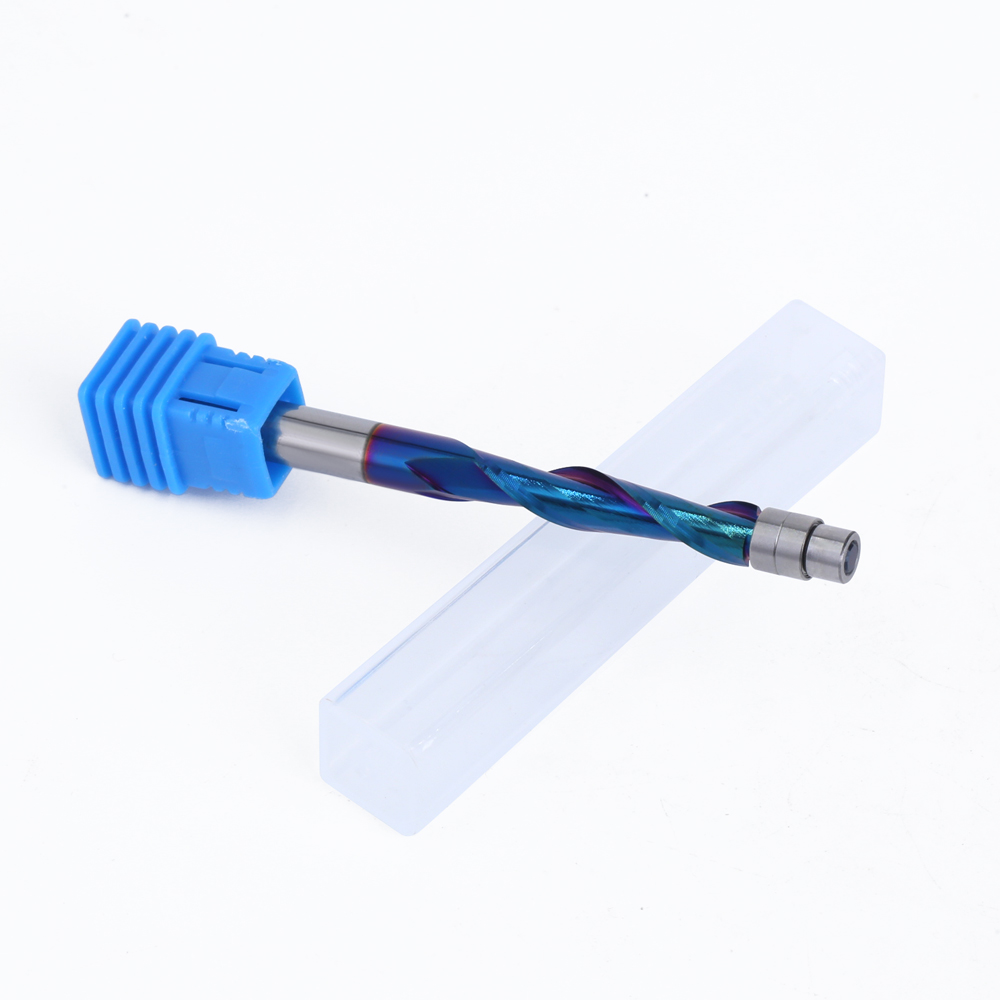
MDF and Melamine cut very predictably. They lack natural wood grain entirely. However, they are highly abrasive materials. The hidden cost is rapid tool dulling. Synthetic resins degrade cutting edges quickly. This dulling leads directly to edge chipping. It ruins expensive melamine sheets.
You must evaluate tool life against replacement costs. Standard carbide loses its edge fast in high-volume MDF environments. You replace tools frequently. You lose valuable production time during these changeovers. The downtime costs more than the tool itself.
Advanced solutions focus on surface treatments. You should introduce specialized coatings into your workflow. A Nano Coated Flush Trim Bit provides incredible value here. We use similarly coated profile tools for edge work. These nano-coatings resist extreme heat perfectly. They withstand the severe abrasion caused by synthetic glues. They keep the carbide edge sharper for much longer.
We maintain transparent assumptions regarding these solutions. Coated options definitely cost more upfront. You pay a premium for the technology. However, they drastically lower your cost-per-linear-foot of cutting. They reduce tool changeover downtime significantly. You finish more sheets per shift. The return on investment becomes obvious within days.
Common mistakes when machining MDF:
Ignoring tool wear until the melamine chips visibly.
Running standard uncoated carbide in high-production settings.
Dropping feed rates too low when the tool dulls.
Failing to upgrade your dust collection for fine particulates.
Machining plastics frustrates many operators. They approach acrylic just like wood. This strategy fails immediately. Solution categories revolve around single O-flute designs. You can use up-cut or straight O-flutes. The geometry remains entirely distinct from wood tools.
Implementation realities differ sharply. Plastics do not shear cleanly. They fracture or melt under pressure. Friction creates your biggest obstacle. The primary goal becomes rapid heat evacuation. You must move heat away from the cut zone instantly.
Evaluation criteria highlight why standard wood tools fail here. They create far too much friction. Multi-flute designs trap the debris. Chips weld back into the cut path. You end up recutting melted plastic. The necessity of O-flute geometry becomes clear. The wide gullet curls the plastic chip beautifully. It ejects the material before it re-melts.
Implementation risks center around your machine parameters. Feed rates must remain fast. A fast feed rate takes a meaningful chip. The chip carries the heat away safely. However, feed rates must remain slow enough to protect the tool. Single-flute tools snap easily under excessive lateral loads. You must find the perfect mathematical balance.
Machining aluminum on a wood-optimized gantry presents massive challenges. Wood routers lack mass. They compensate for lower machine rigidity poorly. They also run at much higher RPMs than metal mills. You require specific tooling to overcome these environmental disadvantages.
Solution categories feature specialized coatings. Specialty ZrN-coated cutters perform exceptionally well. You also need specific single-flute metal-cutting geometries. These designs clear chips efficiently at high spindle speeds.
Evidence-oriented claims separate facts from marketing. Standard woodworking tools occasionally cut aluminum. However, their geometries create excessive chatter. They produce poor surface finishes. They also carry high fracture risks. Metal-specific geometries feature different rake angles. They utilize reinforced cores to survive vibration.
Implementation risks require careful mitigation. You cannot cut aluminum dry effectively. You need mist coolant or air blast systems. These systems clear chips aggressively. They also lubricate the cutting edge. Plunging techniques dictate tool survival. Ramp plunging enters the material at an angle. Straight plunging snaps the cutter almost instantly.
Follow these steps for successful aluminum routing:
Install an air blast or minimal quantity lubrication (MQL) system.
Program a helical or ramped entry for all pockets.
Calculate chip loads specifically for high-speed spindles.
Ensure your material hold-down strategy is absolutely rigid.
Building a practical tool library prevents overspending. You need a solid decision framework. You should avoid buying massive, generic sets. Instead, purchase specific geometries for specific materials. Finding the right CNC Router Bits ensures consistent, profitable production runs.
Scalability and maintenance drive your long-term success. Shank sizes matter immensely. You should choose 1/2" shanks over 1/4" shanks whenever possible. The thicker shank provides superior rigidity. It reduces vibration significantly. It also extends the cutting edge life.
Collet maintenance acts as a hidden performance factor. Operators often ignore their collets. A dirty collet mimics a dull cutter perfectly. Dust buildup pushes the tool off-center. This introduces runout and chatter into the cut. You must clean your collets regularly. You should replace them every few hundred hours.
Your next-step actions should remain practical. Audit your most commonly cut materials today. Identify your primary failure modes. Look for poor surface finishes. Track unusually short tool life spans. Upgrade the specific category causing your biggest bottleneck first. This targeted approach maximizes your return on investment.
Matching your tool directly to your material is an engineering necessity. It is never a luxury. Wood demands precise shear angles. MDF demands extreme abrasion resistance. Acrylic demands rapid heat control. Aluminum demands absolute rigidity. You cannot ignore these physical realities.
We advise remaining highly skeptical of universal tools. Beware of products claiming to cut everything perfectly. An optimized, material-specific tool will always yield a better finish. It guarantees superior ROI. It prevents ruined sheets and wasted hours.
Review specialized material-selection charts before your next job. Shortlist the exact geometry for your specific sheet goods. Choose the right coating for your production volume. Upgrade your tooling strategy today to ensure clean, profitable cuts tomorrow.
A: Technically possible for very shallow passes, but highly unadvisable. Wood bits lack the proper rake angle and coating, leading to galling, chatter, and high snapping risk.
A: Incorrect geometry (using a multi-flute bit) or incorrect feeds and speeds (RPM too high, feed rate too low, causing friction instead of chipping).
A: Solid carbide compression bits or tools with specialized wear-resistant coatings (e.g., Nano Coated Flush Trim Bit geometries for edge work) designed to handle abrasive glues.
A: Up-cut is best for chip evacuation and deep mortises; down-cut is best for preserving the top surface finish on veneers and preventing part lifting.
