
Views: 0 Author: Site Editor Publish Time: 2025-12-08 Origin: Site


A roundover router bit is an essential tool for any woodworker. It helps create smooth, rounded edges that give projects a polished, professional appearance.
In this article, we’ll show you how to use a roundover router bit effectively, from setup to advanced techniques. You’ll learn how to select the right bit, set it up properly, and troubleshoot common issues.
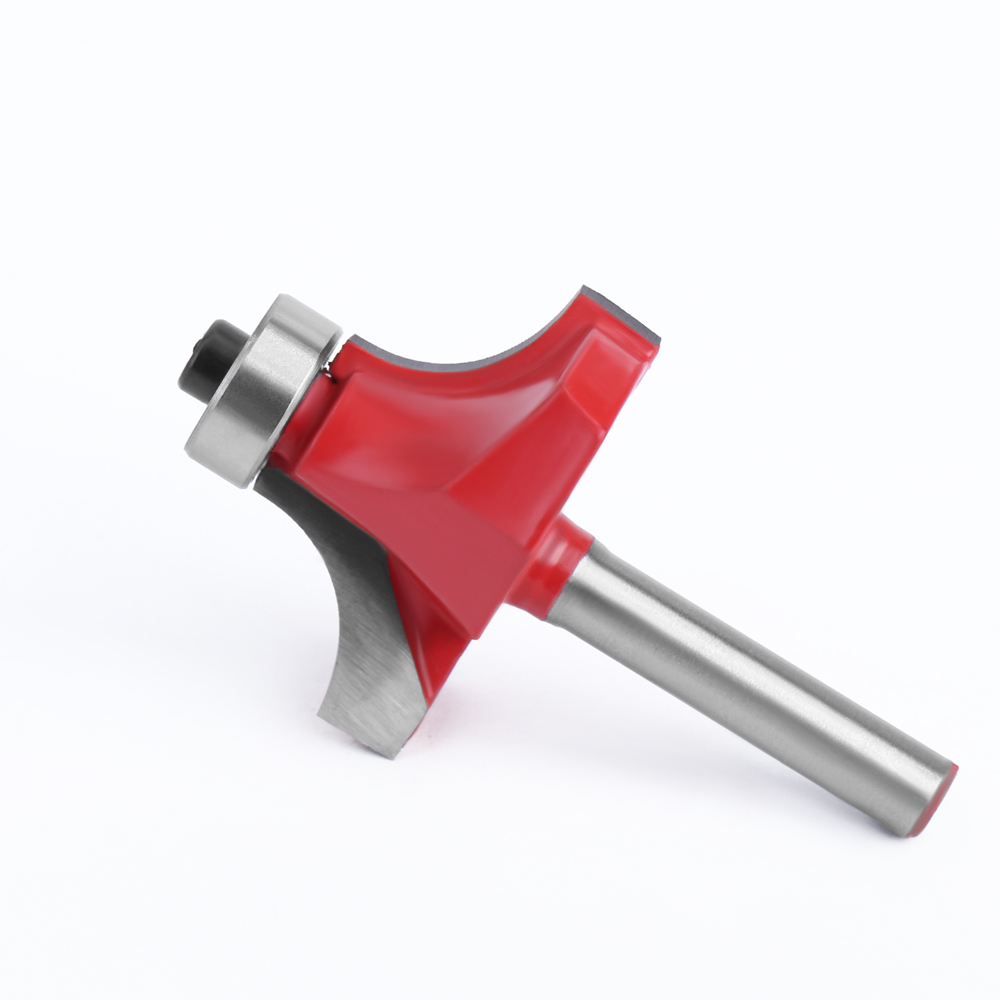
A roundover router bit is a cutting tool that features a rounded edge, designed to create smooth, curved edges on wooden workpieces. The bit itself typically has a concave, semi-circular cutting edge, and the most common roundover bits are sized by the radius they cut, ranging from ¼" to ¾". Unlike other router bits, the roundover bit is mainly used for decorative purposes, giving edges a soft, rounded profile.
Roundover bits come in a variety of sizes, which are categorized based on the radius they cut. The most common sizes include:
● ¼" roundover bit: Ideal for smaller, delicate projects where only a subtle round is needed.
● ½" roundover bit: Used for standard woodworking projects with medium-sized edges.
● ¾" roundover bit: Perfect for larger projects, providing a more pronounced rounded edge.
Size | Ideal For |
¼" | Small, delicate projects |
½" | Standard woodworking projects |
¾" | Larger projects with pronounced edges |
Each of these sizes serves a different purpose depending on the workpiece size and desired aesthetic effect.
Rounding the edges of your woodworking projects adds a softer, more refined look. Sharp edges can appear harsh, whereas rounded edges provide a more fluid, elegant appearance. Whether it's a table, shelf, or picture frame, a rounded edge is universally seen as more attractive.
In addition to their visual appeal, rounded edges offer several practical benefits:
● Durability: Rounded edges are less prone to chips, splinters, and wear over time compared to sharp corners.
● Safety: Rounded edges are safer to handle, reducing the risk of injury, especially in products like children's furniture and toys.
A roundover edge is much safer for both the user and the finished product. For example, when crafting items like wooden toys or furniture for children, rounded edges are necessary to ensure the safety of those handling the items. Additionally, they make furniture less likely to get damaged by impacts or bumps, preserving the finish and overall quality.
Choosing the right roundover bit depends largely on the material you’re working with and the desired effect. For small, delicate items, such as decorative trim or fine cabinetry, a smaller radius (e.g., ¼") is recommended. For larger, bulkier projects like tables or countertops, a larger radius (e.g., ¾") works better to ensure a smooth, consistent cut.
When choosing between small or large radius bits, it’s essential to think about:
● The size and thickness of your material.
● The visual impact you want to achieve.
● The number of passes required to reach the final depth.
For larger cuts, a larger bit may be needed. However, for finer details or smaller workpieces, a smaller bit will provide greater precision and control.
Roundover bits can be used with various routers, including handheld models and router tables. Handheld routers are ideal for smaller, lighter workpieces, while a router table provides more stability and control for larger cuts. It’s important to ensure that the router you’re using is compatible with the bit size you’ve selected.
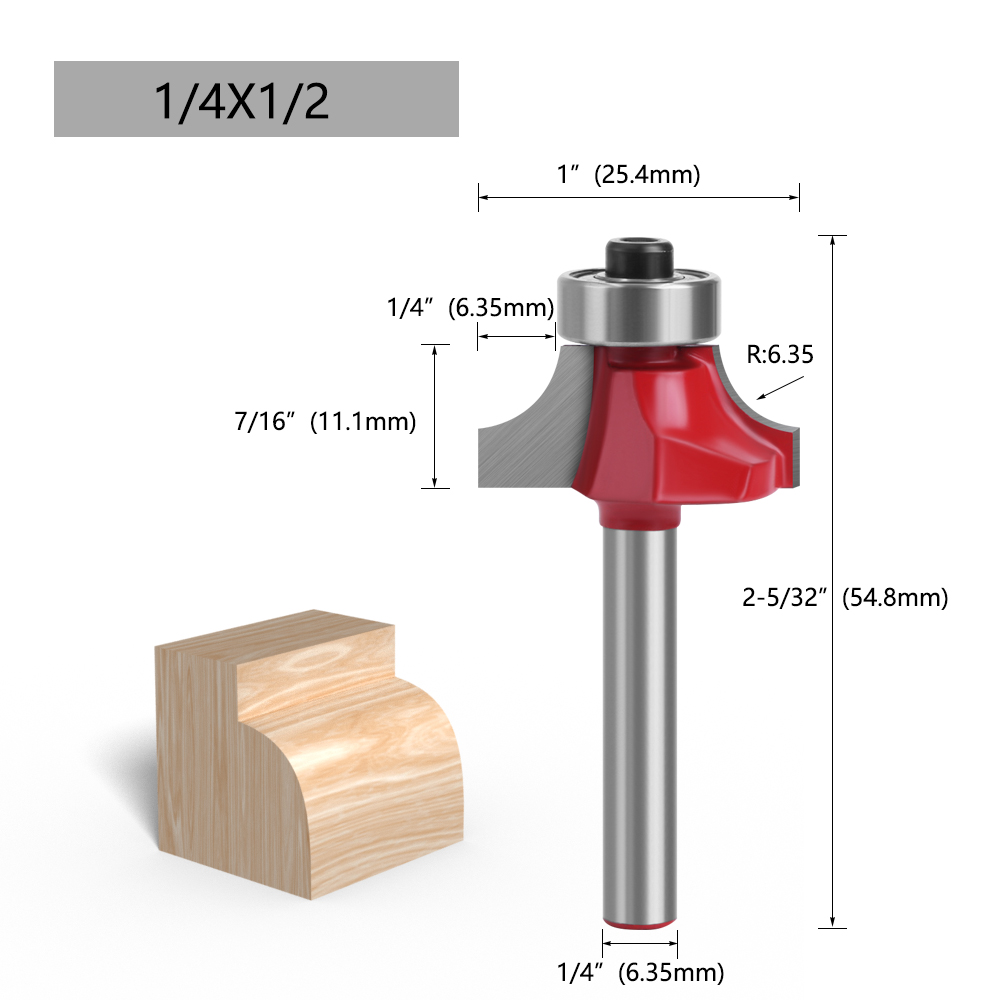
To set up your roundover router bit properly, follow these key steps to ensure a clean and precise cut. Below is a breakdown of the process:
Step | Action | Key Considerations |
Mounting the Bit | Secure the roundover bit in the router collet. | Ensure the bit is tightly fixed to avoid wobbling. |
Adjusting the Cutting Depth | Set the router bit height to align with the router base or workpiece surface. | If using a router table, adjust based on project depth. |
Checking Alignment | Use a flat block of wood to check the bit's alignment. | Ensures a consistent and clean cut. |
By following these steps and using the table as a reference, you can set up your roundover bit with confidence and achieve smooth, rounded edges.
Before starting on the final workpiece, always perform a test cut on scrap material. This helps you check the depth and smoothness of the cut. If the bit is too high or low, it may result in a rough edge or an incomplete roundover.
Ensure the edges of your workpiece are smooth and straight. The roundover router bit will follow the edges closely, so imperfections in the workpiece will show up in the final cut. If your workpiece is thin, it’s a good idea to place a scrap piece of wood beneath it to give the bit enough clearance.
● Feed Direction: Move the router in an anti-clockwise direction when rounding over the outside edges of the workpiece. For inside edges, move the router in a clockwise direction.
● Consistent Movement: Maintain a steady hand as you guide the router along the edge, ensuring a smooth and even cut.
After making the first pass, check the cut. If needed, lower the router bit slightly and make additional passes until the desired roundover depth is achieved. Always move the router slowly and steadily to maintain control.
To add a fillet (a concave curve) along the top edge of your roundover, slightly extend the bit from the router. This creates a unique look and can be used for more decorative projects. The fillet depth can be set using a ruler for precise control.
By swapping out the guide bearing for a smaller one, you can transform your roundover bit into a beading tool. This allows you to create decorative beads along edges, adding complexity and elegance to your woodworking projects.
Adjust the router bit so that the straight edge at the top of the bit protrudes from the base. This will allow you to create a shoulder cut, a technique often used for more detailed, classical designs.
If you notice ridges or an incomplete radius after routing, it’s often due to the bit being set too high or low. Double-check the depth settings and ensure the bit is properly aligned with the router base.
If the bit extends too far from the collet, it may cut too deeply, leaving a ridge on the edge. Conversely, if it doesn't extend far enough, the roundover will be incomplete. Always test on scrap material to find the right bit extension.
If your workpiece is too thin, it may lack the support needed for smooth routing. To avoid this, place a scrap piece of wood underneath the workpiece to provide sufficient clearance.
Using a roundover router bit is an easy way to enhance your woodworking projects. With the right setup and technique, you can create smooth, rounded edges that improve both the aesthetic and functional qualities of your work. Experimenting with different bit sizes and techniques, such as adding a fillet or beading, can help elevate your projects to a professional level.
At YUEQING LAIWEI TOOLS CO., LTD., their high-quality router bits offer exceptional performance, allowing woodworkers to achieve flawless edges. Their products provide lasting value, ensuring precision and reliability for every project.
A: A roundover router bit is a tool used to create smooth, rounded edges on wood. It’s commonly used in woodworking projects to enhance the aesthetics and durability of the edges.
A: To use a roundover router bit, set up the bit in your router, adjust the height for the desired cut depth, and move the router along the edge of the material, ensuring smooth and consistent motion.
A: Roundover router bits provide consistent, precise edges quickly. Unlike sandpaper, they ensure uniform results without the time-consuming effort of sanding by hand.
A: Roundover router bits enhance the look of projects by softening sharp edges, prevent splintering, and increase durability, making them ideal for furniture, cabinetry, and decorative pieces.
A: Most roundover router bits can be used with handheld routers or router tables. Ensure the bit size matches the router’s capacity for optimal results.
A: The right size depends on the project. Smaller bits, like ¼", are good for delicate edges, while larger bits, such as ¾", work well for more pronounced curves on thicker materials.


