
Views: 0 Author: Site Editor Publish Time: 2025-10-28 Origin: Site


Yes — many router bits can be sharpened, but how and whether you should depends on material (HSS vs carbide), profile complexity, and cost. This article explains which bits are practical to sharpen, the DIY and professional methods (touch-up vs full regrind), safety tips, and when replacing makes more sense — written for LAIWE Tools (YUEQING LAIWE TOOLS CO.,LTD) customers and woodworking pros.
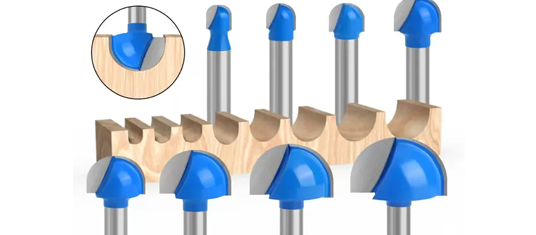
Not all router bits are created equal. The two main cutter materials you’ll see are high-speed steel (HSS/HSS-E) and carbide (solid carbide or carbide-tipped). The material determines ease of sharpening, tool life, and expected sharpening frequency.
HSS router bits are the simplest to restore. High-speed steel can be sharpened on a bench grinder, a small sharpening jig, or by hand with oilstones and diamond stones. The steel takes a very sharp edge and can often be reprofiled if the edge is damaged. For many hobbyists and small shops, HSS bits are the budget-friendly bits that lend themselves to repeat sharpening. Keep in mind HSS dulls faster than carbide when cutting hardwoods or abrasive materials (like laminate), but for light-to-moderate use and for users who like to maintain tools, HSS is very serviceable.
Carbide and carbide-tipped bits are far more wear-resistant than HSS but are also harder and more brittle. Carbide cannot be sharpened with traditional steel stones — it requires a diamond abrasive. For many carbide-tipped bits, touch-up sharpening with a diamond hone or diamond paddle is practical and economical; you remove a tiny amount of carbide to refresh the edge. However, a full regrind (restoring the edge geometry significantly or re-profiling an intricate profile) is difficult, requires professional equipment, and can be costly — sometimes approaching or exceeding the price of a new bit. Solid carbide bits are similar: you can touch them up, but extensive reshaping is best left to professional regrinders.
Sharpening technique and equipment differ substantially between HSS and carbide. Below are the commonly used methods — choose the one that matches your skills, frequency of sharpening, and the value of the bit.
For carbide and carbide-tipped routers, diamond is the go-to abrasive. Popular DIY tools and methods include:
Diamond honing paddles: Flat diamond stones or paddle hones are easy to hold and let you refresh the knife-like faces on carbide bits. They’re excellent for small touch-ups and maintaining a keen edge between professional regrinds.
Diamond wheels on rotary tools: A Dremel or small grinder with a fine diamond wheel can remove more material and restore geometry more quickly. This method needs a steady hand and light pressure — carbide is brittle, and overheating or chipping can ruin the edge.
Mounted diamond grinders (pro shops): Professional sharpening shops use precision diamond grinders with fixtures to maintain correct cutting angles and concentricity. These are the machines that can reprofile or regrind complex profiles while preserving the bit’s original geometry.
Diamond methods are for touch-ups and light reconditioning. If a carbide profile is badly chipped or altered, a pro regrind may be required.
HSS bits are forgiving and can be sharpened with more common tools:
Bench grinder with a fine wheel: Use a slow-speed bench grinder ideally with a tool-rest and a fine-grit wheel. A jig that locks the bit at the correct angle helps maintain consistent geometry. Avoid overheating the steel — frequent light passes and cooling in water help.
Oilstones and diamond stones: For precision touch-ups, traditional oilstones or diamond stones work well. Use stones to lap the cutting faces and restore a keen edge while preserving the profile.
Jigs and sharpening fixtures: There are many router-bit-specific fixtures that hold the bit at the proper angle for grinding. These jigs make it easier to keep profiles symmetrical and concentric.
Professional regrinding services use specialized machines and fixtures to:
Remove chips and restore radius, bead, or ogee profiles precisely.
Re-establish correct primary and secondary bevel angles to factory specs.
Rebalance and inspect the bit for concentricity and runout.
Recoat or reface the bit if necessary.
High-end profile bits (decorative ogees, classical profiles, or large cutter heads) often justify the cost of a professional regrind. The service preserves expensive tooling geometry and is common among shops that own large-shop-made cutters or expensive profile sets.

Sharpening decisions depend on three factors: bit cost, sentimental or production value (rare profiles), and the sharpening cost/time.
Expensive or large profile bits with complex edges (Roman ogees, classical molding bits) are often worth regrinding because replacement is expensive and downtime matters.
If a bit is part of a matched set or custom profile, a pro regrind preserves the exact profile and is usually the better choice.
Small, inexpensive trim bits, flush-trim bits, or cheap combo sets are often more economical to replace than to send for professional regrind.
If a carbide-tipped bit is heavily chipped, the cost of a precision regrind can exceed buying a new bit — in that case, replacement is the rational choice.
For production shops, the right approach is planned: buy quality long-life carbide bits from a trusted manufacturer (like LAIWE Tools), touch them up regularly with diamond hones, and reserve professional regrinds for high-value cutters.
For hobbyists, HSS bits sharpened at the bench and periodic replacement of carbide bits is a typical pattern.
If you plan to sharpen at home or in a small shop, follow these steps and safety tips to get predictable, safe results.
Clean the bit: Remove pitch and resin with a bit cleaner or a mild solvent. Clean cutting edges allow you to see true damage.
Inspect for damage: Look for chips, rolls, or missing carbide. If the carbide is chipped deeply, sharpening may be insufficient.
Check shank and bearing: Make sure the shank is straight and bearings (if any) are functional. Sharpening won’t fix a bent shank.
Secure your bench grinder or use a sharpening jig.
Lightly grind the primary bevel, matching the original angle. Use short, light passes.
Cool in water frequently to avoid overheating and temper loss.
Hone the edge on a fine stone for a razor-sharp finish.
Reassemble and test on scrap.
Use a diamond paddle for touch-ups: lightly lap the cutting faces in one direction, preserving the original bevel.
For more material removal, use a rotary tool with a diamond wheel; keep RPMs moderate and use light touch.
Avoid changing the clearance or primary angle unless you understand the geometry — altering angles can worsen cutting action and increase tear-out.
Clean and test on scrap; if performance is not restored, consider a professional regrind or replacement.
Use jigs and fixtures when possible — they make angle control repeatable.
After sharpening, check the bit in the router to ensure it runs true. Excessive runout or vibration after sharpening suggests imbalance or a damaged shank.
Test on the same species you usually cut. Signs of a successful sharpening: cleaner edges, less burning, smoother feed, and less tear-out.
If the bit still smears or burns after sharpening, check feed rate, RPM, and whether the bit is mounted tightly and concentric.
At LAIWE Tools (YUEQING LAIWE TOOLS CO.,LTD) we design router bits and accessories with practical maintenance in mind. Our recommendations:
Carbide-tipped bits and long-life series: Invest in high-quality carbide-tipped bits for longer life and fewer resharpenings. These are ideal for professional shops and demanding work (hardwoods, laminates).
Touch-up kits: We recommend keeping a diamond paddle hone and a set of diamond wheels for light touch-ups. These make it simple to maintain sharp carbide edges between professional services.
HSS options for hobbyists: For users who prefer to resharpen at the bench, our HSS and HSS-E lines provide good performance and easy resharpening.
Partner sharpening services: For shops with high-value profile bits, check our recommended professional regrind partners — they preserve profile geometry and restore cutters to near-factory performance.
Accessories and care: We also offer cleaning and lubricating products to remove pitch and prolong edge life, and precision collets and router arbors to reduce runout and protect your sharpened edges.
To sum up, router bits can definitely be sharpened — HSS bits are straightforward to resharpen at home, while carbide and carbide-tipped bits benefit from diamond touch-ups or professional regrinds for serious damage. LAIWE Tools (YUEQING LAIWE TOOLS CO.,LTD) manufactures a range of high-quality router bits and sharpening accessories designed to maximize tool life; whether you prefer HSS for easy at-home maintenance or longer-life carbide-tipped bits, we have options and recommended touch-up kits to keep your cutters performing. Contact us to learn more or to purchase sharpening kits and professional regrind services — contact us for product details and ordering.


