
Views: 0 Author: Site Editor Publish Time: 2026-04-29 Origin: Site


Every woodworker eventually faces a familiar shop dilemma. Should you rely on standard Straight Router Bits for your next project, or must you invest in a more expensive spiral alternative? Straight bits cut using a distinct chopping motion rather than a smooth shearing action. Because of this mechanical difference, they lack the continuous edge found on spiral tools. However, they remain the undisputed workhorse for specific high-volume, flat-bottom applications across countless workshops.
This guide provides a transparent, decision-stage breakdown. You will learn exactly what these essential tools are actually used for in daily practice. We will explore their physical limitations, particularly when executing plunge cuts in dense materials. Finally, we evaluate their total cost of ownership so you can make smarter, more scalable tool investments for your shop.
Core Function: Straight router bits are primarily used for making straight, square-bottomed cuts like dadoes, grooves, and rabbets in standard woodworking.
The Plunge Limitation: Standard straight bits feature a "blind spot" in the center of their bottom face, making direct vertical plunge cuts highly inefficient and prone to burning material without a sweeping motion or pilot hole.
TCO Advantage: Despite rougher edges on fragile laminates, straight bits offer unmatched economic scalability due to their low initial cost, availability in large diameters (up to 2 inches), and cheap, repeatable resharpening potential.
Application Specificity: Choosing the right straight bit depends heavily on flute count, blade length, and tip modifications (e.g., bottom-cleaning or panel pilot designs).
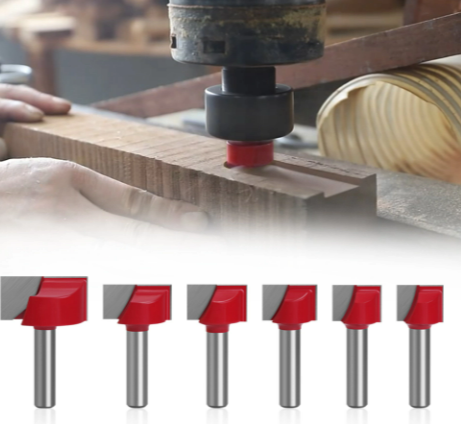
To understand the utility of these tools, we must first define their mechanical action. They operate by violently striking the wood fibers. They chop away material as they spin. This aggressive action excels in general stock removal. You will find them highly effective when tear-out is less of a concern. Solid hardwoods handle this chopping motion beautifully, whereas delicate veneers may splinter.
Cabinetry and joinery rely heavily on flat-bottomed channels. You use a straight bit primarily to create these precise recesses. A dado runs across the wood grain, while a groove runs parallel to it. Bookshelves, cabinet carcasses, and drawer boxes all require these strong interlocking joints. When you need a perfectly square bottom for a glue joint, these bits deliver reliable results every single time.
You often need to square an edge or create an overlapping joint. A rabbet is simply a recess cut into the edge of a workpiece. You can set up your router table fence to expose just a fraction of the blade. This setup allows you to mill perfect rabbets along board edges. These joints provide excellent mechanical strength for cabinet backs and inset panels.
Pattern-following applications represent another major advantage. You can easily modify these bits to accommodate top-mounted or bottom-mounted guide bearings. Once attached, the bearing rides along your template while the blade shapes your workpiece underneath. They handle template routing without the massive cost spikes associated with bearing-guided spiral Router Bits. You save money while achieving identical structural results.
Manufacturers design numerous variations to solve specific workshop problems. You must match the exact variant to your success criteria. Let us detail the main solution categories.
Flute count drastically changes how the tool behaves in wood. You must choose based on your desired feed rate and finish quality.
Single-flute: This design prioritizes fast feed rates. It offers aggressive chip clearance because it has more open space between cuts. You should select this option for deep, rough grooving where speed matters more than a flawless edge.
Double-flute: This variant prioritizes surface finish over raw speed. It creates a cleaner edge because it takes twice as many cuts per revolution. You want this style for visible joinery and finer furniture making.
Some projects require wide, shallow recesses. Stair treads and hardware mortises demand extreme smoothness. Engineers design bottom-cleaning bits specifically for this task. They feature a slight shear angle on the cutting edge. This geometry slices the bottom surface rather than chopping it. You achieve a perfectly flat, smooth floor inside your routed cavity.
Wall paneling and door openings require special techniques. Panel pilot bits feature a drill-point tip and a smooth guide shaft. The pointed tip punches directly through the material. The unsharpened shaft then rides against the window or door frame. You simply trace the opening to remove the excess paneling quickly and safely.
Double-sided materials like melamine present unique challenges. Staggertooth plunge bits utilize alternating high and low cutting edges. One edge shears downward while the other shears upward. This balancing act extracts chips efficiently while maintaining excellent edge quality on both faces. They serve as a highly specialized solution for modern composite panels.
You will eventually encounter the most common user failure point. Misunderstanding the plunge geometry leads to ruined workpieces and damaged tools. We must address these implementation realities.
A severe physical geometry constraint exists on standard designs. If you push a standard straight bit directly downward, it will stop. The center of the bottom face contains no sharpened cutting edge. This unsharpened center rubs intensely against the wood. It generates high friction immediately. You will burn the material, dull the tool, and halt all progress. We call this the "dry-spin" blind spot.
Practical limitations dictate how you operate the router. Direct plunging should rarely exceed 3/32 of an inch per pass. Attempting to force the tool deeper will trigger the burning effect mentioned above. You must respect this depth limit to maintain tool life and project quality.
Experienced woodworkers use two primary techniques to bypass this limitation. You can safely achieve deep cuts by adopting these operational workarounds.
The Sweep Method: You move the router laterally while simultaneously plunging downward. This sweeping motion allows the perimeter blades to clear material out of the way. It prevents the dead center from binding against the wood floor.
The Drill-Hole Hack: You step away from the router temporarily. You use a Forstner bit on a drill press to clear the bulk depth. You then drop the straight bit into this pre-drilled void. Finally, you move the router laterally to clean up the edges. This hack saves immense wear on your router blades.
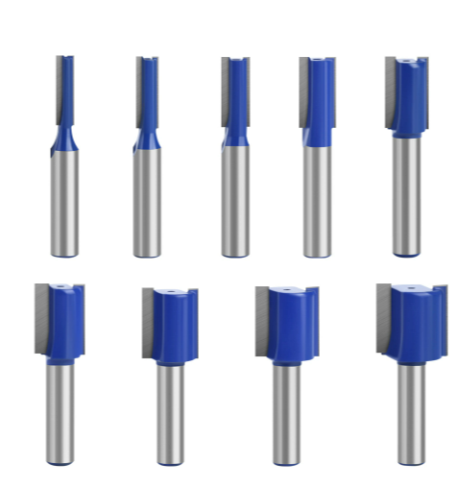
Buyers often struggle to choose between these two distinct technologies. We provide a clear features-to-outcomes decision matrix. You can use this framework to evaluate your specific project needs.
Standard natural wood handles straight blades perfectly. Oak, maple, and walnut respond well to conventional designs. However, fragile composite materials require a different approach. Plywood and melamine feature thin surface veneers. You should transition to compression or spiral bits for these materials. They prevent catastrophic top and bottom edge tear-out.
The cutting action dictates the finish quality. Straight designs use a "chopping" action. This leaves larger chips and introduces potential chatter along the cut line. Conversely, spiral designs use a "slicing" or "shearing" action. They maintain seamless, continuous contact. This continuous engagement yields a vastly superior edge on difficult grain patterns.
You must understand the physical forces generated during operation. Spiral designs introduce strong vertical forces. An up-cut spiral violently lifts the board toward the router. A down-cut spiral pushes the router rapidly away from the workpiece. Straight designs only generate lateral sideways resistance. They feel much more predictable in the hands of beginners handling handheld routers.
Review the simple comparison chart below to solidify these concepts.
Feature Dimension | Straight Bits | Spiral Bits |
|---|---|---|
Action | Chopping | Shearing / Slicing |
Material Focus | Solid Hardwoods | Plywood / Melamine |
Physical Force | Lateral (Sideways) | Vertical (Up/Down) |
Plunge Ability | Requires sweeping | Direct vertical plunge |
Straight router bits remain an indispensable, highly cost-effective tool for any woodworking environment. They dominate flat-bottom grooving, wide-diameter clearing, and standard template routing. Their ability to deliver repeatable results at a fraction of the cost secures their place in modern manufacturing.
You should purchase these traditional bits for utility joints and roughing out stock. You can then reserve your tool budget for premium spiral bits strictly when working with delicate laminates or requiring deep, continuous plunge cuts. This strategic purchasing keeps your shop profitable and efficient.
Your next step is to audit your current project requirements. Evaluate your material type and your plunge depth needs. Once you know these variables, you can confidently select the correct flute count and blade style to guarantee a successful outcome.
A: Not directly. You cannot push the tool straight down because the center of the blade lacks a cutting edge. You must use lateral movement while plunging, or you need to bore a pre-drilled starter hole to bypass this center dead zone.
A: Burning is usually caused by attempting to plunge too deep in a single pass. It also happens if you move the router too slowly, or if you use a dull blade. A dull edge generates intense friction instead of actually slicing the wood fibers.
A: They are vastly more economical and perfectly capable of cutting clean dadoes in solid wood. They guarantee a perfectly flat bottom. However, spiral bits do offer better upward chip extraction if you are cutting very deep, enclosed channels.


