
Views: 0 Author: Site Editor Publish Time: 2026-04-20 Origin: Site


Precision machining operations rely heavily on the integrity of your cutting tools. A degraded cutting edge compromises finish quality, increases cycle times, and risks scrapping expensive workpieces. Operators frequently misdiagnose material buildup as actual structural wear, leading to unnecessary maintenance. Knowing how to sharpen Countersink Bits effectively—and recognizing when replacing them makes more financial sense—is critical for both production machinists and serious fabricators. This guide breaks down the precise geometric requirements for regrinding different bit types. You will discover practical maintenance strategies and visual validation techniques. By mastering these techniques, you can restore factory-level performance and significantly reduce your tooling overhead.
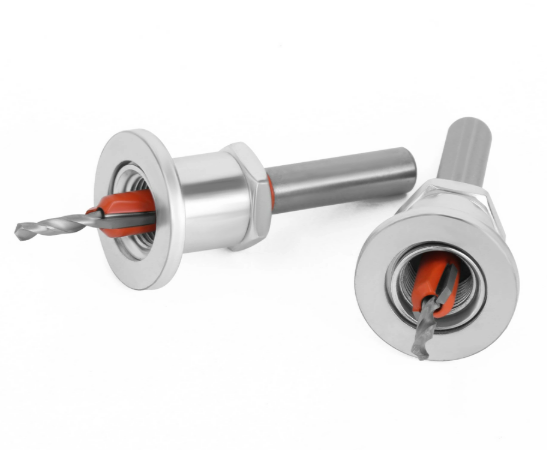
Preserve the Relief Angle: Never file the outside diameter (OD) of a single-flute bit; sharpening must only occur on the inner cutting face to avoid destroying the tool's built-in clearance.
Assess the Damage Early: Lightly dulled edges require minimal honing, whereas severely "rolled" edges often require professional regrinding or immediate replacement to prevent cascading substrate damage.
Identify False Dullness: In materials like aluminum, galling (cold welding) can mimic a dull edge. Cleaning the bit is often the actual required fix.
Verify Symmetrical Grinding: For multi-flute bits, uneven sharpening causes chatter and asymmetrical cutting. Visual verification methods are mandatory before returning the tool to service.
Before investing labor into maintenance, you must verify the actual condition of your tooling. Misdiagnosing tool wear leads to unnecessary grinding. This removes vital material and shortens tooling life prematurely. We highly recommend establishing a strict inspection protocol.
When working with aluminum or stainless steel, friction generates intense heat. This heat accumulation causes metal chips to fuse directly to the cutting edge. Machinists call this phenomenon "cold welding" or galling. Galling mimics dullness perfectly. The tool stops cutting efficiently and starts pushing material instead. However, the underlying edge often remains sharp. This condition requires chemical cleaning or localized clearing. It does not require abrasive sharpening. Using a brass wire brush and a solvent like isopropyl alcohol usually clears the fused material safely.
You should routinely inspect the cutting edge under strong magnification. Wear generally falls into two categories:
Micro-Abrasions: These appear as tiny scratches along the cutting face. You can easily recover a lightly dull edge via simple hand-honing. It requires very little material removal.
Rolled or Chipped Edges: A rolled edge feels blunt or folded over to the touch. This indicates a severe structural failure. Restoring a rolled edge requires aggressive material removal. Hand-honing will not fix this level of damage.
Running blunt tooling introduces severe risks to your entire operation. A dull edge behaves similarly to a blunt gear cutter. It generates excessive friction instead of shearing the material. This friction rapidly hardens the workpiece material. Once the workpiece hardens, it aggressively attacks the tool. This process rapidly destroys the tool’s underlying substrate. Catching wear early prevents this destructive cycle.
At the decision stage, maintenance becomes a pure calculation. You must weigh labor costs against required precision and replacement availability. Not every tool deserves your time. Some require professional intervention, while others belong in the scrap bin.
Hand sharpening works best for immediate touch-ups on minor wear. It requires specialized manual abrasives. It also demands high operator discipline. You must maintain the exact factory angles. One careless pass with a file can ruin the clearance angle completely. We suggest reserving hand sharpening for light micro-abrasions.
Professional services are ideal for heavily worn or high-value industrial bits. Utilizing a tool cutter grinder service ensures exact geometric restoration. These machines perfectly recreate factory clearance angles. Professional regrinding proves highly cost-effective for large diameters. The replacement costs for massive industrial tools are incredibly steep, making outsourced sharpening a highly profitable strategy.
Sometimes, discarding the tool remains the smartest financial choice. If a standard High-Speed Steel (HSS) bit consistently fails prematurely in abrasive materials, stop sharpening it. The Return on Investment (ROI) strongly favors upgrading the tooling. Frequent sharpening wastes expensive machine operator hours. Upgrading to Cobalt alloy tools can yield a 10x to 20x lifespan improvement in metals. This drastically shifts your maintenance frequency.
Strategy | Ideal Scenario | Primary Advantage | Primary Drawback |
|---|---|---|---|
Hand Sharpening | Minor wear, micro-abrasions, woodworking | Zero operational downtime, zero external costs | Requires high skill; risks altering tool geometry |
Professional Grinding | Large diameter industrial tools, severe edge roll | Restores exact factory geometry and relief angles | Requires shipping time; minimal fee applies |
Tool Replacement | Frequent HSS failure, shattered flutes | Immediate return to optimal production speeds | Highest upfront capital expenditure |
Different tool geometries dictate completely different abrasive approaches. Utilizing the wrong tool will permanently ruin the bit. Applying an abrasive to the wrong face destroys the cutting mechanics. Below, we outline the exact methodologies for the two most common configurations.
These specialized tools feature a distinctive angled hole drilled through the cone. They provide incredibly smooth finishes, particularly in aluminum and plastics.
The Golden Rule: Never touch the outer diameter (OD). The OD features a precise micro-relief angle. This angle prevents the tool body from rubbing against the workpiece. Altering the OD destroys this clearance. It instantly turns the bit into a friction-generating plug. It will burn the material instead of cutting it.
The Sharpening Method:
Secure the tool firmly in a padded vise to prevent rotational slipping.
Select a fine diamond needle file, a precision rotary tool hone, or an ultra-fine diamond stone.
Position the abrasive strictly inside the inner cross-hole face.
Apply light, consistent upward strokes. You only want to remove the tiny wire burr on the edge.
Inspect the edge visually. Stop immediately once a clean edge appears.
These feature three, four, or more distinct cutting flutes. They handle heavy material removal efficiently but require perfect symmetry to function well.
Specialized Tooling: You must utilize an auger bit file. Standard files will ruin the tool. Auger bit files feature "safe edges." They have abrasive teeth on the main working face. However, their sides remain completely smooth. This unique design ensures you do not score adjacent cutting structures during tight-clearance filing.
The Sharpening Method:
Identify the leading cutting face of the flute. You will only file this flat inner face.
Place the safe-edge file flat against the cutting face.
Apply moderate pressure and push forward. Count your exact number of strokes.
Rotate to the next flute. Apply the identical number of strokes using identical pressure.
Strict stroke counting maintains strict symmetry across all cutting edges.
A poorly sharpened tool acts far more destructively than a simply dull one. It can violently catch the material or ruin the hole concentricity. You must establish a validation step before returning tooling to the production floor.
You can easily verify your grinding symmetry using common shop supplies. Coat the newly sharpened cutting edges entirely with a dark permanent marker. Chuck the tool into a drill press. Perform a very slow test cut in scrap wood or a soft plastic material. Keep the pressure light and the duration short.
Remove the bit and inspect the remaining ink. If the tool is perfectly balanced, the wood will wear the ink off every flute evenly. If ink remains untouched on one or more flutes, the tool is asymmetrical. This means you filed the clean flutes too aggressively. The flutes with intact ink are now hovering slightly above the cut line. They carry zero chip load. You must lightly dress the aggressive flutes until all edges make simultaneous contact.
Ensure the restored bit mounts perfectly into your machinery. Modern high-torque operations rely heavily on hex shanks. These require proper three-jaw chucks or dedicated hex collets. Many operators mistakenly rely on older two-jaw braces paired with modernized shanks. This mismatch introduces severe runout. Runout causes the bit to wobble during rotation. Wobble completely negates any sharpening precision you just achieved. Always verify your chuck compatibility.
Observed Defect | Probable Cause | Corrective Action |
|---|---|---|
Severe Chatter / Vibration | Asymmetrical flutes causing uneven chip load | Use the ink test to identify the high flutes; re-file for balance. |
Tool Burns Material | Relief angle destroyed during grinding | Tool is compromised. Send for professional regrinding or replace. |
Tear-out on Hole Edges | Edge not honed finely enough; wire burr remains | Make two light passes with an ultra-fine diamond stone. |
You should actively extend the interval between necessary sharpenings. Optimizing the cutting environment drastically improves tool longevity. Tool maintenance principles here closely mirror those required for maintaining high-RPM tooling like Router Bits. Proper feed control and lubrication dictate how long your edge survives.
Excessive RPMs generate lethal heat. Heat kills high-speed steel rapidly. Conversely, excessive feed rates cause violent chatter. Chatter chips the delicate cutting edge. You must balance these two variables. We recommend implementing a standard through-hole drill sequence first. Follow this immediately with a dedicated, low-RPM countersink pass. Splitting the operation reduces tool stress and dramatically extends edge life.
Dry cutting metal severely accelerates edge degradation. You must utilize appropriate cutting fluids based on your workpiece. For instance, applying isopropyl alcohol provides excellent cooling for aluminum without leaving a sticky residue. Alcohol prevents the chips from adhering to the flutes. A cool, lubricated cutting zone prevents galling entirely.
For fine woodworking applications, tool dullness often presents as severe tear-out in hardwoods. The bit rips the wood fibers instead of slicing them clean. Adjusting your plunge approach angle helps mitigate this. Furthermore, ensuring absolute flute symmetry prevents uneven tearing. Always clear wood resins from the bit body, as baked-on pitch generates friction that mimics edge dullness.
Sharpening countersink bits serves as a highly viable operational strategy when executed with strict adherence to tool geometry. You must never compromise the built-in relief angles, particularly on single-flute designs. By implementing accurate diagnostic criteria, you prevent wasting labor on easily cleaned galling issues. Utilizing specialized safe-edge files or diamond hones ensures safe material removal. Finally, knowing when to escalate to professional regrinding or Cobalt upgrades allows operators to drastically reduce tooling overhead. Applying these practices eliminates workpiece damage and keeps your production running efficiently.
A: Chatter is almost always the result of asymmetrical sharpening on multi-flute bits. When one flute is higher than the others, it takes a heavier cut, causing uneven chip loads and vibration. Chatter can also occur if the relief angle on a single-flute bit was accidentally flattened during grinding.
A: Freehanding on a standard bench grinder is highly discouraged for precision countersinks. It is nearly impossible to accurately control the critical clearance angle by hand. This method is only viable if you use specialized holding jigs or operate a dedicated tool and cutter grinder.
A: Generally, no. For low-cost HSS bits, the manual labor time often exceeds the outright replacement cost. However, high-quality HSS or Cobalt bits used in industrial or heavy fabrication settings are prime candidates for regular maintenance protocols and yield excellent ROI when sharpened correctly.


