
Views: 0 Author: Site Editor Publish Time: 2026-04-28 Origin: Site


Woodworkers and fabricators frequently attempt vertical plunge cuts with standard straight bits in their shops. Often, they encounter severe burning, intense physical resistance, or entirely ruined stock. This operational dilemma frustrates many beginners and seasoned professionals alike. While you can actually use Straight Router Bits for plunge cuts, they are simply not drill bits. They require very specific lateral-movement techniques to overcome structural limitations at their tip. Ignoring this mechanical reality leads directly to broken tools and wasted money.
We provide a transparent, evidence-based evaluation of exactly when to use straight bits for plunge operations. You will learn how to properly execute the required sweeping motions to protect your workpieces. Furthermore, we will show you how to calculate true tooling costs and decide when to pivot to spiral alternatives. Our goal is to help you protect both your material and your equipment.
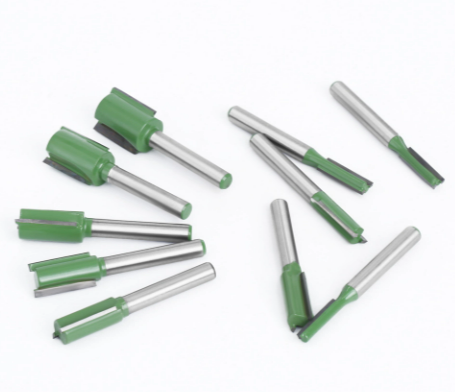
Standard Straight Router Bits cannot perform deep, stationary vertical plunges due to a center "dead spot" lacking cutting flutes.
Safe plunge cutting with a straight bit requires a continuous "sweeping" or lateral sliding motion (approx. 10mm at a time) to clear material.
From a Total Cost of Ownership (TCO) perspective, straight bits offer extreme value—often costing a fraction of spiral bits and allowing for 4–5 resharpening cycles.
Project success dictates tooling: use straight bits for budget-conscious, high-volume roughing, but switch to spiral bits for delicate laminates or perfectly sheer vertical drops.
Many shop failures occur because operators misunderstand cutter geometry. Ruined workpieces and broken equipment cost businesses significant money. You must intimately understand the physical structure of your Router Bits to prevent these losses. Look closely at the bottom end of standard straight bits. You will notice a distinct gap between the carbide cutters. We call this the center void or "dead spot." It completely lacks cutting edges.
If you attempt a direct vertical drop, the bit will quickly bottom out. It usually stops penetrating around a 1/8-inch depth. At this point, the flat center simply grinds against the solid stock beneath it. It cannot cut downward. Industry standard guidelines for carbide tooling explicitly warn against treating these profiles like drill bits.
Straight flutes operate via a horizontal chopping mechanic. They spin and sweep away material sideways. They do not feature the continuous upward or downward shearing action of a drill. Drills pull material out of a hole continuously. Straight bits simply chop material into smaller chips and throw them outward.
Forcing a straight bit straight down traps these chips underneath the spinning metal. The trapped debris causes massive friction instantly. You will experience rapid heat buildup almost immediately. This extreme temperature accelerates carbide wear and dulls the edge prematurely. It also creates excessive tool vibration. This vibration transfers directly into the operator's hands, ruins the cut quality, and poses a serious safety hazard.
Common Mistake: Never apply heavy downward body weight onto the router to force a plunge. If you feel severe resistance, you have hit the dead spot. Stop immediately.
You must respect operational boundaries to prevent tool binding and dangerous kickback. Plunging safely requires a specific approach. You cannot simply pull the router downward. Instead, you must use the lateral drop method.
This technique involves simultaneously moving the router horizontally while lowering it into the cut. You sweep the tool forward slightly as you push down. We recommend moving about 10 millimeters horizontally for every slight drop. This sweeping motion allows the side flutes to carve away the center material. It completely clears the path before the dead spot can bind against the wood.
Depth control remains absolutely critical during this process. You should only take shallow passes. Keep each pass between 1/8-inch and 1/4-inch deep. Shallow passes maintain safe chip clearance. They prevent debris from packing tightly into the groove. Packed chips cause burning and exponentially increase friction.
You must also focus heavily on risk mitigation. Initiating a sweeping plunge introduces sudden lateral forces. The bit will try to pull the router off your intended line. Rigid clamping of your workpiece is mandatory. You should also use sturdy edge guides or templates. Apply slow, deliberate feed rates when starting the cut. Never rush the initial drop. Rushing causes router drift and ruins the accuracy of your slot.
Best Practice: Always attach a dust extraction system when plunge cutting. Removing chips aggressively reduces heat and keeps the lateral sweeping path visible.
Comparing core tooling solutions requires looking at finish quality and operational physics. You need to understand how different bits interact with material under stress. We must carefully evaluate chip clearance, heat management, edge finish, and physical handling forces.
Spirals manage heat exceptionally well in deep mortises. Up-cut spirals continuously eject chips out of the hole. Down-cut spirals pack them downward. Straight bits, however, leave much larger chips behind in the groove. These larger chips often require manual clearing. You might need to pause your work and vacuum the recess repeatedly.
Edge finish varies significantly between the two styles. Straight bits perform high-speed material removal. They often leave a slightly rougher edge. Spiral bits provide sheer, incredibly clean edges. They excel on fragile materials like laminates or veneers. If you cut expensive display-face wood, spirals prevent catastrophic tear-out.
Physical forces dictate your safety and tool handling approach. Spiral bits induce severe vertical forces. An up-cut bit literally attempts to lift the stock off the table. A down-cut bit violently pulls the router down into the wood. You need heavy-duty fixturing to counteract these vertical forces safely. Straight bits present mostly horizontal torque. They largely avoid this aggressive vertical bite-back.
Evaluation Metric | Straight Router Bits | Spiral Router Bits |
|---|---|---|
Chip Clearance | Leaves large chips; requires periodic manual clearing | Continuous vertical ejection (up-cut) or packing (down-cut) |
Edge Finish Quality | Moderately rough; high-speed chopping removal | Sheer, flawless edges; ideal for veneers and laminates |
Heat Management | Prone to heat buildup if plunged stationary | Excellent heat dissipation during deep mortises |
Physical Handling Forces | Predictable horizontal torque | Severe vertical lifting or pulling forces |
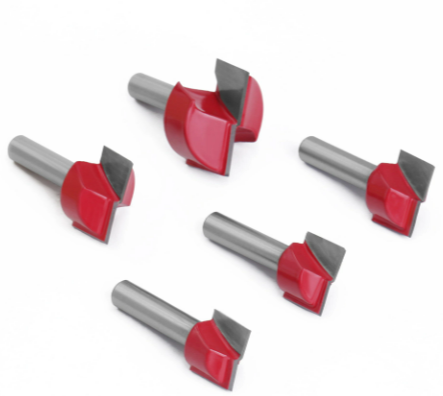
Many beginners share a dangerous misconception. They believe all straight bits are physically identical. This is entirely false. You must map specific tool profiles to your exact project success criteria. Different configurations solve entirely different problems. Let us break down the primary solution categories available to woodworkers.
Single-Flute Bits: Choose single-flute designs for aggressive material removal. They provide incredibly fast chip clearance. You need this generous clearance in deeper grooves to prevent overheating. They cut fast but leave a slightly rougher edge.
Double-Flute Bits: Choose double-flute designs when you need a smoother surface finish. They require slower feed rates. The dual cutting edges balance the tool well and shear the wood more frequently per revolution.
Mortising Bits: We highly recommend mortising bits for shallow plunge cuts. You use these specifically for recessed door hinges or lock faceplates. Their specific geometry minimizes bottom tear-out. They handle wide, flat recesses effectively. They clear the bottom of a pocket much cleaner than standard straight profiles.
Panel Pilot Bits: Highlight these bits for specific pierce-and-cut applications. You use them to cut window or door openings in paneling. They feature a unique drill-like tip paired directly with straight cutting flutes. You can actually plunge them directly into thin sheet material without lateral movement.
Selecting the exact Straight Router Bits requires careful thought. You must precisely match the flute count and tip geometry to your stock material. Doing so guarantees better cuts, prolongs tool life, and ensures safer operation.
Our decision matrix reveals a clear path forward for shop operators. Straight bits are entirely capable of plunge cutting. However, the operator must actively employ the lateral sweeping technique. You absolutely cannot force them straight down into the material like a drill press. The central dead spot dictates your physical approach to every cut.
We strongly advise you to audit your current project needs right now. Look closely at your materials and your financial budget. If your top priorities include tooling longevity, strict budget control, and high-volume general grooving, stick to straight bits. They provide unbeatable economic value and reliable performance across multiple resharpening lifecycles. Conversely, if your project demands deep, flawless vertical mortises in expensive display-face wood, change your strategy. You should invest in a specialized spiral bit to protect that high-value material. Make your tooling choices based on cutter geometry, operator safety, and long-term shop economics.
A: No, standard straight bits cannot function as drill bits. They contain a central dead spot at the tip that entirely lacks cutting edges. If you attempt to drill straight down, the flat center will hit the wood and stop penetrating. You must move the router laterally to carve out the center material safely.
A: You should strict limit your maximum plunge depth to 1/8-inch to 1/4-inch per pass. Beyond this depth, you must begin lateral movement to clear the material. Taking deeper stationary plunges risks severe chip packing, overheating, and potentially snapping the carbide bit.
A: Burning occurs due to extreme friction from trapped chips. Straight bits do not eject debris vertically like drill bits. Forcing the bit straight down packs the chips tightly underneath it. You must use a continuous sweeping motion to allow the side flutes to clear the waste material.
A: Yes, specifically for shallow plunge operations like routing hinge recesses. Mortising bits feature specialized bottom-clearing geometry. They leave a much flatter, cleaner bottom surface than standard straight bits. However, they still require slight lateral movement to prevent burning during the initial downward drop.


