
Views: 0 Author: Site Editor Publish Time: 2026-07-22 Origin: Site


Premium carbide edges on cutting tools often suffer their worst damage while sitting completely idle in your shop. The operational costs of improper tool storage add up fast. High-quality edges are frequently destroyed not during active routing, but by poor handling, ambient workshop moisture, and edge-to-edge contact in cluttered drawers. When tools roll together, the brittle carbide fractures. When exposed to unconditioned garage air, steel shanks rapidly oxidize.
You face specific vulnerabilities with these tools. Carbide cutters are highly prone to micro-chipping. Steel shanks remain highly susceptible to flash rust in unconditioned garage or basement environments. Beginners often struggle with a common problem: balancing the need for quick, organized tool access with absolute rust and damage prevention. Throwing tools into a bin saves time initially but ruins the cutting edge permanently. Effective storage requires both physical isolation and environmental moisture control. You must evaluate DIY, commercial, and hybrid storage solutions based on your collection size, workshop climate, and workflow efficiency.
Physical Isolation is Non-Negotiable: Carbide is exceptionally hard but highly brittle; storage must guarantee zero edge-to-edge contact to prevent micro-fractures.
Moisture Control Outweighs Aesthetics: Open-air storage racks fail in unconditioned shops. Closed systems utilizing Volatile Corrosion Inhibitors (VCI) or desiccants are required to prevent shank rust.
Pre-Storage Maintenance Dictates Longevity: Storing bits with burnt-on resin or pitch traps moisture against the carbide, accelerating corrosion, increasing cutting friction, and causing heat-driven degradation during subsequent uses.
Material Selection Matters: Storing bits in unsealed, acidic wood blocks (like solid oak) or cheap open-cell foam actively induces rust on steel shanks. Sealed engineered woods (like Baltic Birch plywood) and closed-cell foams are safe alternatives.
Understanding the metallurgical differences between tool components helps you prevent damage on the job. Carbide cutters resist rust naturally but are highly susceptible to impact damage. They chip easily when dropped on a concrete floor or knocked against other hard steel surfaces in a drawer. Steel shanks are impact-resistant but highly vulnerable to oxidation. They rust quickly when exposed to humid air, especially in shops lacking climate control.
Micro-chipping on a cutting edge directly impacts your work quality. Even microscopic fractures translate to severe burn marks on wood. A chipped edge forces the tool to tear wood fibers rather than slice them cleanly. This increases strain on the router motor and creates unsafe kickback risks. You will notice the router fighting you, requiring more physical force to push the material past the bit.
Rusted shanks cause mechanical failures in the collet. A corroded shank prevents proper collet seating. This leads to dangerous runout, slippage, and heavy vibration during operation. A slipping shank can ruin a workpiece instantly or cause the tool to eject from the router at high RPMs. The collet relies on perfectly smooth, clean steel to maintain its friction grip. Rust pits compromise that surface area entirely.
Wood pitch is a harsh chemical reality in the workshop. It is acidic, sticky, and highly hygroscopic. Hygroscopic materials actively attract and hold atmospheric moisture. When you cut resinous woods like pine, fir, or cherry, pitch bakes onto the cutting edge. This creates a thick, dark crust right behind the cutting edge.
Failing to clean tools before storage creates a destructive micro-environment. The trapped pitch holds moisture directly against the carbide and steel braze line. This accelerates corrosion right at the weakest point of the tool. The braze line is where the carbide is welded to the steel body, and it is highly susceptible to chemical degradation.
Leftover pitch also destroys performance. Residue buildup increases friction during cutting. Friction generates excessive heat. This heat can degrade the binder holding the carbide together. The edge dulls rapidly before it even touches the storage rack again. You end up with a tool that burns wood instead of cutting it, forcing you to spend time sanding out burn marks.
Physical protection requires strict isolation. Storage mediums must secure the shank firmly enough to prevent tipping. At the same time, the carbide cutter must remain completely suspended and isolated. If the cutter touches wood, plastic, or metal, it risks dulling. You cannot allow tools to lean into each other.
Spacing requirements vary based on bit diameter. You must plan for wide panel-raising bits sitting next to narrow straight bits. Staggered layouts prevent large cutters from knocking into adjacent tools when you lift them out of the tray. A good rule of thumb is to leave at least a half-inch of clearance between the widest parts of adjacent cutters.
Consider the depth of the storage holes. A 1/2-inch shank needs a hole deep enough to hold it vertically without wobbling, usually about 1 inch deep. A 1/4-inch shank needs a shallower hole, about 5/8 inch deep, so the cutter does not bottom out on the storage block.
Environmental protection dictates where you place your storage system. A closed micro-climate is necessary in damp workshops. Drawers, sealed cabinets, or individual cases block out humid ambient air. Open-air wall racks fail in these environments because they expose tools to constant moisture and airborne dust.
Workshop temperature fluctuations cause dew point condensation. When a cold garage warms up quickly in the morning, moisture condenses on cold steel. Exposed steel rusts within hours under these conditions. Closed systems buffer these rapid temperature swings, keeping the tools closer to ambient temperature without sudden condensation.
You can actively manage this micro-climate. Adding silica gel packets or VCI emitters inside a closed drawer creates a dry zone. This is especially important for shops located in basements or coastal areas where humidity regularly exceeds 60 percent.
You need to keep tools organized for a rapid workflow without exposing them to dust and moisture. Digging through a drawer wastes time and risks injury from sharp edges. A good system balances instant visual identification with secure physical protection. You should be able to look at a drawer and instantly know if a tool is missing.
Your system must scale as your collection grows. Someone who just purchased their first Router Bit Starter Kits has different needs than a production shop with hundreds of specialized profiles. Starter kits fit easily in small boxes, but large collections require modular drawers that can be reconfigured.
Operational efficiency improves when you store tools by profile type. Grouping joinery, edge-forming, and straight profiles together saves setup time. Visible labels on the storage block help you grab the right tool instantly. Color-coding sections of your storage drawer can further speed up tool retrieval during complex projects.
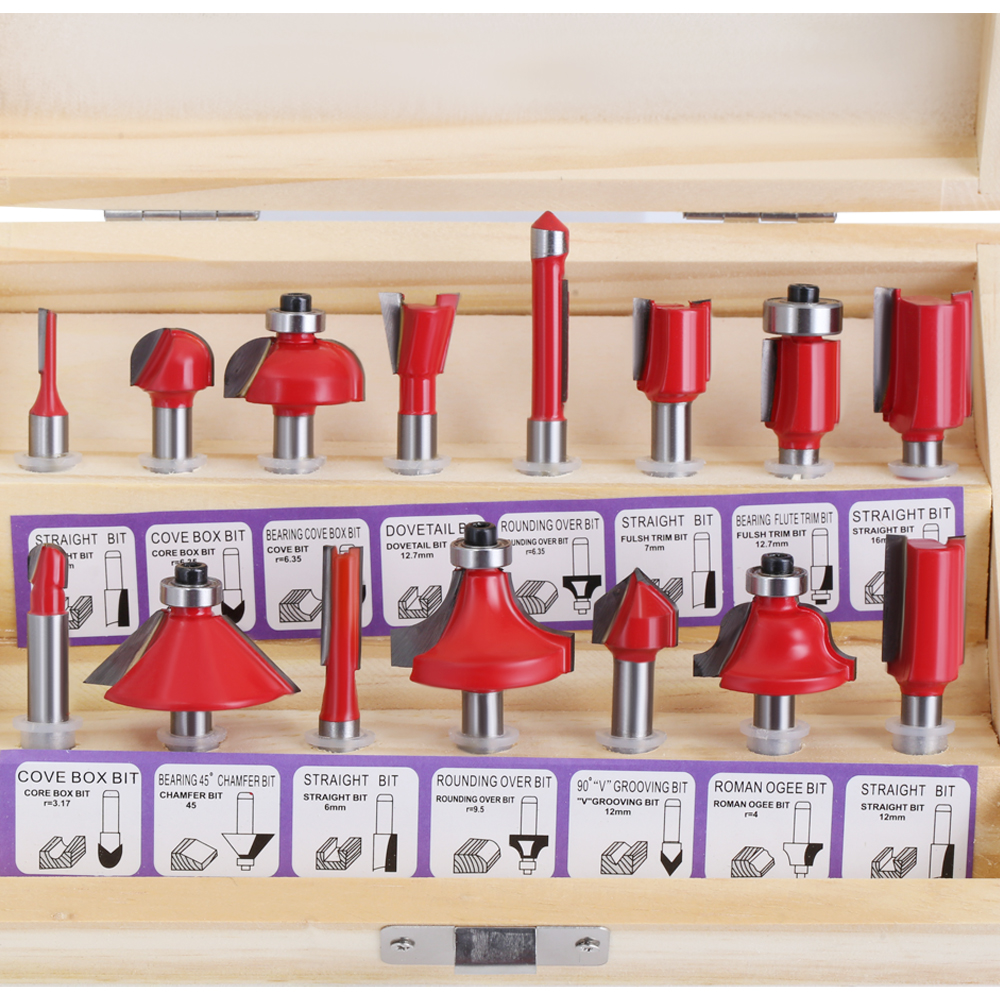
The instant solid wood block is a popular project. Users drill holes directly into a scrap block of wood. This quick fix can ruin tools if the wood species is acidic or unsealed. Moisture in the wood transfers directly to the steel shanks, causing rust rings exactly at the depth of the hole.
Engineered plywood drawer liners offer a safer alternative. Drilling 1/4-inch and 1/2-inch holes into stable Baltic Birch plywood creates a reliable grid. Plywood contains fewer natural acids than solid hardwoods and resists warping. You can cut the plywood to fit exactly inside your tool chest drawers.
This method is highly customizable and low cost. It utilizes shop scrap efficiently. However, fixed spacing limits future reorganization. If you buy a massive flattening bit, it might not fit in the grid you drilled last year. If you use unsealed solid hardwoods, you risk severe moisture retention.
Pre-cut or customizable foam grids fit perfectly inside tool cabinet drawers. You press the shanks into the foam, which grips them tightly. This keeps the tools upright and spaced evenly. You can cut the foam with a utility knife to create custom layouts.
Foam provides excellent impact protection. It is modular and grips shanks securely without dulling edges. It also protects against drawer-slamming vibrations. When you slam a heavy drawer shut, tools in wood blocks can rattle and chip. Foam absorbs that shock entirely.
However, it requires dedicated drawer space. Cheap, low-grade foams can degrade, crumble, and stick to shanks over time. You must use the right type of foam to avoid chemical reactions with the steel.
Purpose-built, enclosed cabinets feature angled shelves, pre-drilled inserts, and glass or polycarbonate doors. These units mount directly to the wall for eye-level access. The angled shelves make it easy to read the profile shapes and sizes printed on the shanks.
Cabinets keep dust and wood shavings off tools. They provide easy visual access. When doors are sealed with weatherstripping, they create a controllable micro-climate. You can place a large desiccant pack on the bottom shelf to keep the entire cabinet dry.
The downside is a higher upfront cost. They require dedicated wall space, which is often at a premium in small shops. They also remain susceptible to temperature swings if the cabinet itself is uninsulated and mounted on an exterior garage wall.
Storing tools in original manufacturer plastic sleeves offers basic protection. You can also build DIY protective sleeves from 3/4-inch PVC pipes with rubber end caps. You drop the tool inside and seal the ends. This is a common practice for trim carpenters who work out of a truck.
This provides maximum individual protection. It is highly portable and ideal for tossing into a mobile toolbox or jobsite bag. The thick plastic prevents the carbide from taking damage if the bag is dropped.
Unfortunately, it is highly inefficient for high-volume shop use. It is difficult to identify profiles quickly without opening every tube. If you seal the tube with damp air inside, it traps moisture and accelerates rust. You must ensure the tool is completely dry before capping the tube.
Storage Method | Physical Protection | Moisture Resistance | Scalability | Best Application |
|---|---|---|---|---|
DIY Wood Block (Unsealed) | Moderate | Poor | Low | Temporary benchtop use |
Closed-Cell Foam Drawer | High | High | High | Climate-controlled shops |
Sealed Wall Cabinet | High | Moderate | Moderate | High-volume production |
PVC Protective Tubes | Very High | Poor (if sealed damp) | Low | Mobile jobsite transport |
Sealed Baltic Birch Grid | High | Moderate | Moderate | Custom tool chests |
Drilling storage holes in certain wood species exposes steel shanks to tannic acids. Oak, walnut, and cherry are highly acidic. Storing steel in these woods causes rapid blackening and deep rust pitting on the shanks. The moisture in the air activates the tannins in the wood, creating a corrosive environment right where the shank touches the wood fibers.
Use stable, low-acid sheet goods like MDF or Baltic Birch plywood for DIY blocks. Seal the drilled holes with shellac or paste wax. This creates a physical barrier between the wood fibers and the steel shank, blocking moisture and acid transfer. A quick swab of shellac inside each hole with a cotton swab takes minutes but adds years to the life of your tools.
Open-cell foam acts exactly like a sponge. It absorbs ambient workshop humidity and holds it directly against the steel shanks. Using standard packing foam or cheap mattress toppers guarantees rusted tools. The open cellular structure allows air and moisture to flow freely through the material.
Specify the use of closed-cell polyethylene foam, such as Kaizen foam. Closed-cell foam is impervious to moisture, oils, and chemical solvents. It provides a dry, secure grip without trapping water. The closed cellular structure means water physically cannot penetrate the foam, keeping the shanks completely dry.
Outgrowing a fixed-hole storage block leads to loose tools rolling in drawers. They damage each other quickly. You need a system that adapts to new purchases. Drilling a block with exactly 10 holes works until you buy your 11th tool.
Recommend modular storage designs. French cleat individual blocks or grid-based foam allow for seamless expansion. This helps as a woodworker graduates from basic kits to specialized Woodworking Router Bits. You can cut new foam sections or build new cleat blocks as needed without rebuilding the entire system.
Implement a strict post-use cleaning protocol. Never put a dirty tool away. Soak dirty tools in a dedicated resin and pitch solvent. Avoid caustic oven cleaners. Caustic chemicals degrade the brazing that holds the carbide to the steel body, leading to catastrophic failure during use.
Remove the bearing using a hex key to prevent solvent from stripping the bearing grease.
Spray the cutter with a citrus-based pitch remover or simple green.
Let the solvent sit for 3 to 5 minutes to break down the baked-on resin.
Brush off softened debris with a brass brush. Brass is softer than carbide and will not scratch the cutting edge.
Wipe the tool completely dry with a lint-free cloth.
Reattach the bearing, ensuring the screw is tight.
Implement Volatile Corrosion Inhibitors (VCI) in storage drawers. VCI paper liners, drawer liners, or emitter cups release a vapor that forms a microscopic protective layer on steel surfaces. This actively prevents oxidation. The vapor reaches into every corner of the drawer, protecting even the tools you rarely use.
Place rechargeable silica gel packs in enclosed storage cabinets. Silica gel absorbs ambient humidity and manages the micro-climate. Bake the packs in an oven to recharge them when they become saturated. Most packs have color-changing indicator beads that turn from blue to pink when they are full of moisture.
Apply dry Teflon-based lubricants or specialized tool waxes to shanks and cutters prior to long-term storage. Products like Glidecote or simple paste wax seal out moisture without leaving a sticky residue. A thin coat of paste wax buffed onto the shank prevents rust and actually helps the collet grip the steel more evenly.
Never use heavy oils like WD-40 or motor oil for storage. Oil attracts sawdust and gums up storage holes. It creates a slippery residue that interferes with collet grip during use, leading to dangerous tool slippage. If a shank slips in the collet, it will ruin the workpiece and potentially damage the router itself.
Audit your current storage setup and immediately throw away any open-cell packing foam or unsealed solid oak blocks that are holding your tools.
Clean your entire collection of Router Bits using a dedicated pitch solvent and a brass brush to remove all baked-on resin.
Apply a dry Teflon spray or paste wax to the steel shanks to create a moisture barrier before putting them away.
Build or purchase a closed-cell foam drawer insert or a sealed wall cabinet to isolate the tools from ambient workshop humidity.
Place a VCI emitter cup or rechargeable silica gel packet inside your new storage enclosure to maintain a dry micro-climate.
A: Yes, original plastic cases offer good physical protection. However, they can trap ambient moisture if sealed in a humid environment. Add a small piece of VCI paper inside the case for long-term rust prevention.
A: Many solid woods, particularly oak and cherry, contain natural tannic acids. Wood also absorbs atmospheric moisture. Unsealed holes transfer this acidic moisture directly to the steel shanks, causing rapid oxidation and pitting.
A: Soak the rusted shank in a dedicated rust-removing solution or white vinegar. Gently scrub the steel with a brass brush or fine steel wool. Never use abrasives on the carbide cutting edges.
A: Closed-cell foam is generally superior because it grips shanks securely, absorbs vibration, and completely blocks moisture. Wood is acceptable only if it is a low-acid engineered product like Baltic Birch and the holes are sealed.
A: Clean them immediately after cutting resinous woods like pine or cherry. For standard hardwoods, clean the edges whenever you notice a dark brown or black buildup of pitch near the cutting edge.
A: Most starter kits come in wooden display boxes. While visually appealing, these boxes often lack moisture control and can be difficult to expand. They are fine initially but usually require upgrading as your collection grows.
A: Standard WD-40 leaves a wet, oily residue that attracts sawdust and interferes with collet grip. Use a dry Teflon lubricant or paste wax instead to protect the steel without causing slippage during operation.
