
Views: 0 Author: Site Editor Publish Time: 2025-12-03 Origin: Site


A flush trim router bit is essential for any woodworker who values precision. It allows for smooth, clean cuts in various tasks like edge trimming and template routing. Whether you’re working with laminates, duplicating shapes, or creating clean joinery, a flush trim router bit ensures accuracy.
In this article, we’ll cover the types of flush trim router bits, how to choose the right one, and provide a step-by-step guide on using it effectively. You’ll learn how to improve your woodworking with this versatile tool.

A flush trim router bit is a specialized tool designed to trim the edges of a workpiece so that they are perfectly flush with a reference surface, typically a template. These bits are guided along the surface of the material using bearings that ensure consistent depth and smooth, precise cuts. Whether you are trimming laminate, veneer, or working with wood, a flush trim router bit helps you create smooth, clean edges, making it an indispensable tool in any woodworker’s toolkit.
Bearings: The most notable feature of flush trim router bits is the bearings. Located at the top, bottom, or both, the bearings guide the router bit along the edge of the template, ensuring that the cutter remains aligned and follows the template’s contour precisely. This leads to consistent cuts and minimizes human error.
Cutting Edge: Flush trim router bits usually come with either a straight or spiral cutting edge. Straight bits are often simpler and less expensive, while spiral bits provide cleaner cuts with reduced tear-out, particularly on delicate materials like laminates or thin veneers.
Material Compatibility: These router bits are designed to work with a wide range of materials including wood, laminates, MDF, plywood, and veneers, making them versatile tools for various woodworking tasks.
Feature | Description |
Bearings | Located at top, bottom, or both; guides bit along template edge for precision. |
Cutting Edge | Straight or spiral; spiral bits reduce tear-out on delicate materials. |
Material Compatibility | Works with wood, laminates, MDF, plywood, veneers. |
● Edge Trimming: Perfect for trimming laminate, veneer, or solid wood edges. This is one of the most common applications where flush trim router bits excel, providing a smooth finish without the need for sanding.
● Template Routing: Flush trim bits are ideal for following a template to duplicate complex shapes or patterns. This ensures that each piece cut is an exact match of the template, offering precision and consistency in production.
● Laminate Trimming: When working with countertops or cabinetry, flush trim router bits are used to trim excess laminate. The bearings follow the edge of the workpiece or template, ensuring a clean, flush edge without damaging the surface.
● Joinery: For precise and clean joints, flush trim router bits are used in woodworking. These bits help in creating tight-fitting joints with minimal effort, ideal for dovetails, box joints, and edge banding.
There are several types of flush trim router bits available, each suited to specific tasks and materials. Here’s a breakdown of the most common options:
Top bearing flush trim bits are used when the template is positioned above the workpiece. The bearing on the top of the bit guides the cutter along the template, ensuring that the bit follows the edge accurately. These bits are commonly used for projects where the template is on top of the material, such as trimming laminates or veneer edges. They are also ideal for duplicating patterns or shapes from a template, ensuring that the cut matches exactly.
Bottom bearing flush trim bits are used when the template is placed underneath the workpiece. The bearing at the bottom of the bit follows the edge of the template, guiding the cutter along the surface. This setup is typically used when the router is positioned above the workpiece, and it is often employed for trimming edges where the template needs to be underneath, such as in cabinetry or edge banding tasks.
Double bearing flush trim bits offer versatility by having bearings on both the top and bottom of the bit. This allows for templates to be placed on either side of the workpiece, offering greater flexibility in routing applications. Double bearing bits are ideal for projects where precision and consistency are essential, as they ensure the router bit stays aligned regardless of the template’s position.
Up-Cut: Up-cut spiral bits pull wood chips upward, helping to reduce chip build-up on the work surface. These bits are particularly useful when the router is used in situations where dust extraction is essential, as they direct the chips upward and away from the surface.
Down-Cut: Down-cut spiral bits push chips downward, minimizing tear-out on the top surface of the material. These bits are ideal for trimming delicate materials like veneer or laminate, where surface quality is important.
Compression: Compression spiral bits combine both up-cut and down-cut spirals, providing a balance of the benefits of both. These bits are ideal for use with laminated materials and veneers, as they minimize tear-out on both the top and bottom of the material, ensuring a clean and smooth edge.
Type | Description |
Up-Cut | Pulls chips upward, reducing build-up on the work surface, useful for dust extraction. |
Down-Cut | Pushes chips downward, minimizing tear-out, ideal for trimming delicate materials. |
Compression | Combines up-cut and down-cut spirals, minimizes tear-out on both sides, ideal for laminates and veneers. |
Straight Flute: These bits have a simple design and are generally more affordable. However, they are more prone to tear-out, especially when working on the edges of softwoods or thin materials.
Angled Flute: Angled flute bits feature a shear-cutting angle that helps reduce tear-out and chatter. This makes them a better option when working on materials that are prone to damage, such as delicate woods or plywood.
Feature | Description |
Straight Flute | Simple design, more affordable but prone to tear-out, especially on softwoods. |
Angled Flute | Features a shear-cutting angle to reduce tear-out and chatter, ideal for delicate woods. |
Choosing the correct flush trim router bit is key to achieving clean, precise cuts. Here are some important factors to consider when selecting a bit:
The diameter of the flush trim router bit determines how wide the cut will be. Larger bits are ideal for cutting through thicker materials or for making wider cuts, while smaller bits offer more control and precision, making them suitable for finer details or intricate work.
● Cutter Length: Longer bits are ideal for cutting deeper into the workpiece, while shorter bits work well for shallower cuts.
● Shank Size: Most router bits come in two shank sizes: 1/4" and 1/2". The 1/2" shank is generally more stable and suitable for larger or heavier workpieces, while the 1/4" shank works well for smaller, more detailed tasks.
Depending on the template’s location, choose between top, bottom, or double bearing bits. Top and bottom bearing bits are great for specific routing tasks, while double bearing bits offer the most versatility, allowing you to work with templates on either side.
For smoother cuts, opt for spiral or compression bits. These bits reduce tear-out and leave cleaner, more polished edges, especially when working with thin or delicate materials.
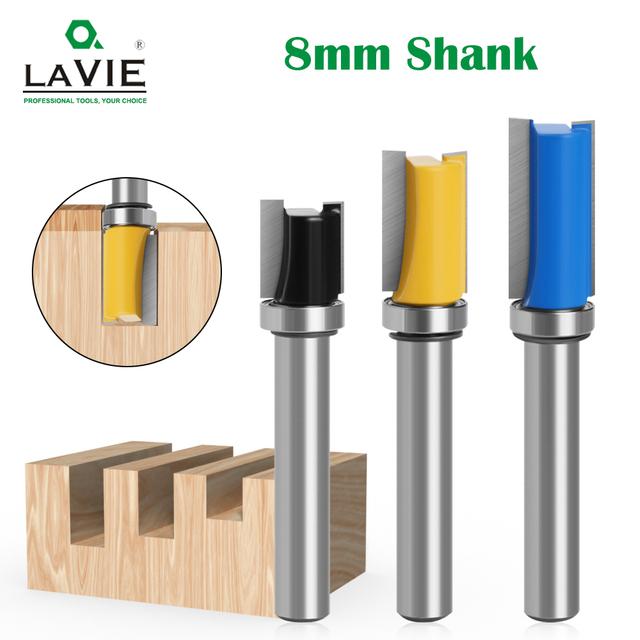
Using a flush trim router bit correctly involves following a few essential steps to ensure precision and safety.
Choose the bit that best fits the material and the cut you need. Consider the bit diameter, cutter length, and bearing placement based on the task at hand.
Securely clamp the workpiece to prevent movement during cutting. Clean the work surface to ensure that no debris or dust interferes with the routing process.
Install the flush trim router bit into the router’s collet. Ensure it is tightly secured to prevent wobble or movement that could lead to inaccurate cuts.
Adjust the router depth so that the bearing rests lightly against the template or reference edge, with the cutter positioned just below the surface of the workpiece.
Place the template securely on the workpiece. Make sure the template is properly aligned, as the router bit will follow the edge of the template during the routing process.
Turn on the router and guide it steadily along the template. Let the bearing follow the template’s edge without forcing the router. Maintaining a steady hand will ensure a smooth, consistent cut.
Once the routing is complete, inspect the edges for smoothness. If necessary, use sandpaper to smooth out any rough spots or edges for a polished finish.
Selecting the right flush trim router bit is essential for precise cuts in woodworking projects. Understanding the different types of bits and choosing the best one improves both efficiency and quality. Regular maintenance ensures optimal performance. YUEQING LAIWEI TOOLS CO., LTD. provides high-quality router bits that deliver professional results, adding value to your woodworking projects with durable and efficient tools.
A: A flush trim router bit is used to trim the edges of a workpiece to make them flush with a template or another surface. It ensures smooth, precise cuts and is ideal for edge trimming, template routing, and laminate trimming.
A: To use a flush trim router bit, securely clamp the workpiece, select the appropriate bit, set the router depth, and guide the router along the template edge. Ensure the bearing follows the template for accurate cuts.
A: A flush trim router bit provides precision and smoothness, allowing you to trim laminate, veneer, or wood edges perfectly flush with a reference surface. This ensures clean and consistent results without the need for extensive finishing.
A: Choose a flush trim router bit based on the material you’re working with, the desired finish, and the type of cut needed. For smoother cuts, consider spiral or compression bits. Ensure the bit diameter and cutter length match your project.
A: The cost of a flush trim router bit varies depending on the material, brand, and features. High-quality options, such as those from YUEQING LAIWEI TOOLS CO., LTD., offer durability and precision at a reasonable price, ensuring long-lasting performance.
A: Yes, flush trim router bits are perfect for trimming laminate. They help achieve a smooth edge when trimming excess laminate from countertops or cabinetry, ensuring a clean finish without damaging the surface.


