
Views: 0 Author: Site Editor Publish Time: 2026-02-02 Origin: Site


You use countersink bits to make a cone-shaped hole in a material. This lets the screw head sit flat or below the surface. This process is called countersinking. It helps you get neat and smooth finishes in wood and metal projects. If you pick good countersink bits, your tools last longer. You also get better results and can work faster.
Benefit | Description |
|---|---|
Increased Durability | Carbide countersink tools last up to 5 times longer than regular steel tools. |
Precision | They make exact cone-shaped holes for flush screws. This lowers the chance of mistakes. |
Efficiency | You replace tools less often, up to 80% less. This helps you get even finishes when making many items. |
Learning the basics of countersinking can make your projects look nicer. It also helps your work get noticed.
Countersink bits make cone-shaped holes. This lets screw heads sit flat with surfaces. It helps things look neat. Using good carbide countersink bits makes them last longer. They can last five times longer than steel bits. Countersinking makes projects look better. It also stops material from getting damaged. It spreads pressure out and lowers the chance of splitting. Always drill a pilot hole first before countersinking. This helps screws fit well and keeps the material safe. Pick the right countersink bit angle for your screw type. This gives the best results in wood and metal work.
You use countersink bits to make cone-shaped recesses in materials like wood or metal. These tools help you create a space where the screw head can sit flush with the surface. When you use a countersink drill bit, you improve the look and strength of your project. The main function of countersink bits is to prepare holes so that fasteners fit perfectly and do not stick out.
Here are some key mechanical functions of countersink bits:
They give your work a professional finish by letting screw heads sit flat with the surface.
They help screws fit tightly, which keeps them from loosening over time.
They protect screw heads from damage when you tighten them, making your projects last longer.
When you want your project to look neat and last a long time, you should use a countersink drill bit. You can find these bits in many toolkits because they are essential for both woodworking and metalworking.
A countersink drill bit works by cutting a conical recess at the top of a drilled hole. You usually use it after you drill a pilot hole. The bit has sharp edges and a specific angle, which allows it to shape the material quickly and smoothly.
Most countersink bits come in standard angles, such as 82 degrees or 90 degrees. These angles match the shape of common screw heads. Some bits have a 60-degree angle for special tasks. When you use a countersink drill bit, you can also remove sharp edges from holes, which makes your project safer and more comfortable to handle.
Countersink bits create a conical recess so flat-head screws can sit flush with the surface.
You can choose from different angles to match your screws or project needs.
After drilling, you use a countersink drill bit to make a smooth seat for the fastener or to deburr the hole.
Tip: Always match the angle of your countersink drill bit to the screw you plan to use. This helps you get the best fit and finish.
When you use countersink bits correctly, you get clean, smooth holes that make your projects look professional. You also make sure that your screws hold tight and do not damage the material.
Use a countersink when you want screws or bolts to sit flat or lower than the surface. This is important if you want your project to look neat and not have fasteners sticking out. You see this a lot in making cabinets, building furniture, and putting up drywall. Countersinking screws helps make the surface smooth and stops things from catching or scratching. If you work with wood, metal, or plastic, countersink bits help you get a professional look.
Typical uses for countersink are:
Making screw heads sit lower so they do not stick out
Smoothing the edges of holes to get rid of sharp corners
Cleaning up holes so surfaces are safer and smoother
Tip: Use a countersink if you want to hide screw heads or keep the material from splitting.
Countersink drill bits give you many good results in your projects. In woodworking, countersinking screws makes your work look clean and finished. It also spreads out pressure, which helps stop wood from cracking or splitting. In metalworking, countersinking makes your projects stronger and look better. Many people find it hard to get screws to sit flat, but using countersink bits makes it easier.
Here are some main benefits:
Advantage | Description |
|---|---|
Aesthetic Appeal | Hides screw heads or makes them flat for a nice look. |
Increased Durability | Spreads pressure, so wood is less likely to crack or split. |
Safety | Makes surfaces smooth, so there is less chance of getting hurt. |
Cleaner Finish | Gives a professional look to your project. |
Prevents Material Damage | Lowers the chance of damage by spreading out pressure. |
Enhanced Stability | Makes joints stronger by letting screws fit tight without sticking out. |
Countersinking screws is important for projects that need to be strong and look good.
You might wonder how countersink and counterbore are different. Both help you put fasteners below the surface, but they do it in different ways.
Countersink holes are cone-shaped and let screws with slanted heads sit flat. You use them in cabinets and thin metal.
Counterbore holes are round with flat bottoms. They work better for bolts and machine screws in thick materials.
Feature | Countersink | Counterbore |
|---|---|---|
Shape | Cone-shaped hole | Cylindrical flat-bottomed hole |
Wall Angle | Tapered sides | Straight sides |
Depth | Usually deeper than counterbore | Often not as deep as countersink |
Fastener Type | Used for screws with cone-shaped heads | Used for bolts and machine screws |
Applications | Wood and metal screws | Bigger fasteners like lag bolts |
Holding Strength | Not as strong because force is uneven | Stronger because force is straight |
Callout Symbol | ⌵ | ⌴ |
Pick a countersink for lighter materials and a counterbore for heavier jobs. This helps you get the best outcome for your project.
When you look for countersink bits, you find many options. Each type helps you get the right finish for your project. You can choose from standard models, all-in-one countersink designs, and specialty bits for unique tasks. Understanding the types of countersink drill bits helps you pick the best tool for your needs.
Standard countersink drill bits give you a simple way to make cone-shaped recesses. You use these bits for most woodworking and metalworking jobs. The straight round shank fits into most handheld drills and drill presses. You tighten the chuck around the shank to keep it from slipping. This design makes the bit easy to use and reliable for general tasks.
You can pick from bits with two or four cutters. Four cutters last longer, while two cutters work faster. Some standard bits come with a tapered pilot, which gives you more versatility. If you want a tool that works for many jobs, you might choose an all-in-one countersink. This type combines drilling and countersinking in one step, saving you time and effort.
Tip: Always check the shank type before you start. A round shank works well for most drills, but make sure it is tight to avoid slipping.
Combination countersink bits offer extra features that make your work easier. You can adjust the length for different screws, and some models fit quick-change drill systems. Many combination bits use heat-treated steel for better durability. If you want a tool that does more, try an all-in-one countersink. It lets you drill, countersink, and even deburr in one go.
Feature | Combination Countersink Bits | Standard Models |
|---|---|---|
Compatibility with quick change | Yes | No |
Adjustable lengths for screws | Yes | No |
Construction material | Heat-treated steel | Varies |
Specialty countersink bits help with specific jobs. You find black oxide bits for precise drilling and larger bits for heavy-duty tasks. Some sets give you a range of sizes for different projects. Tapered replacement bits fit special applications. Solid carbide countersinks with pilots reduce chatter and fit closely into pre-drilled holes. You use these specialty bits for countersinking, chamfering, and deburring.
All-in-one countersink bits save you time by combining several steps.
Specialty bits help you get the best results for unique materials or tasks.
You can choose sets for more options or single bits for specific needs.
If you want a smooth finish and strong joints, try an all-in-one countersink. This tool works for wood, metal, and plastic. You get clean holes and flush screws every time.
You can use countersink bits on both hardwood and softwood. Each type of wood needs a different approach for the best results. In hardwood, you need a deep-drilled countersink that matches the screw size. This helps the screw head sit perfectly without damaging the wood surface. In softwood, countersinking gives you a clean look and a strong hold. The screw head presses evenly into the wood, which keeps your project sturdy.
Countersink bits come in many styles and sizes. You can pick the right one for your project and screw type.
For hardwood, choose a bit that drills deep enough for the screw head. This prevents splitting and keeps the finish smooth.
In softwood, use countersinking to make sure the screw head sits flat and the wood stays strong.
Tip: Always test your countersink bit on a scrap piece of wood before starting your main project. This helps you avoid mistakes and get the best finish.
Countersink bits work well on many metals, including aluminum, steel, and brass. You can also use them on plastic and composite materials. The right bit design and speed help you get clean, chatter-free holes.
Material Type | Machining Characteristics | Best Practices |
|---|---|---|
Aluminum (5052, 6061, etc.) | Easy to machine; 6061 can chip. | Use sharp tools; check thickness before forming. |
Stainless Steel (304, 316) | Harder; needs slower speeds and lubrication. | Use carbide bits with coolant; increase hole size to reduce stress. |
Mild Steel | Machines well; burrs can form. | Deburr after drilling; avoid forming galvanized steel. |
Hardened Steels | Needs slow speeds and special tools. | Machine instead of forming; use larger bend radius if needed. |
Titanium & Exotic Alloys | Hard to cut; high tool wear. | Use low speed, high torque, and lubrication. |
You can use high-speed steel countersink bits for aluminum, steel, brass, plastic, and wood. These bits come in sizes like 1/2", 5/8", and 3/4". They work up to 2000 RPM and have a self-centering design for smooth holes.
When working with composites, you need to manage chips and heat. Packed chips can cause defects and damage your work. Use bits with good flute design to clear chips. Keep the material cool and clamp it tightly for the best results.
Composite chips can be sharp or powdery. Remove them quickly to avoid heat and poor finishes.
Secure your workpiece and use the right speed to prevent defects.
Note: Always match your countersink bit to the material. This helps you get clean holes and extends the life of your tools.
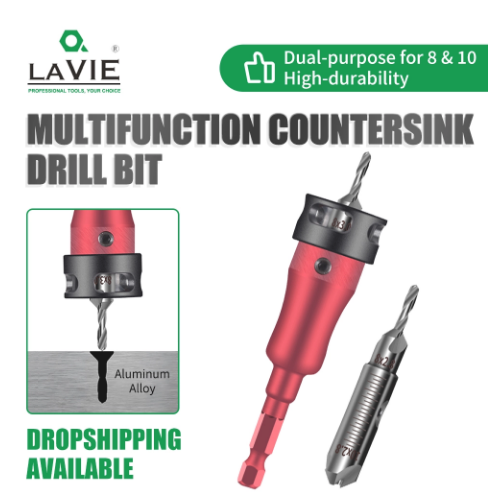
You can achieve clean and safe results by following a clear process when using countersink bits. Start by marking the spot for your hole. Use a pencil and a measuring tool to outline the area. Make a small dent with an awl so your drill does not slip. Next, drill a pilot hole. Pick a drill bit that matches your screw size. Wrap painter’s tape around the bit to mark the depth. Drill the pilot hole until the tape touches the surface. This step helps guide the countersink bit and prevents splitting.
After you finish the pilot hole, select a countersink bit that matches your screw head. Place the bit in your drill and set the depth. Drill the countersink opening so the screw head sits level with the surface. Insert the screw into the pilot hole using a screwdriver. Repeat these steps for each pilot hole you need.
If you work with metal, wear safety goggles and gloves. Choose the right countersink angle and bit size. Secure the metal piece before drilling. Insert the countersink bit into the drill press and tighten it. Set the depth and use the correct speed. Inspect each countersink hole after drilling to make sure it is clean.
You should always wear safety gear, such as goggles and gloves, to protect yourself from flying debris. Secure your workpiece before drilling any pilot hole. A stable surface keeps your hands safe and helps you get accurate results. Keep your workspace clean to avoid slips and to see your pilot hole clearly.
Avoid common mistakes. Do not choose the wrong drill bit size for your pilot hole. This can split wood or make screws fit poorly. Do not over-drill the countersink hole, or the screw head may sit too deep and weaken the material.
High-quality countersink bits, like those from YUEQING LAIWEI TOOLS CO.,LTD, give you a polished look and distribute pressure evenly. This reduces the risk of cracking and keeps your project safe. Durable bits last longer and help you avoid frequent replacements.
Feature | Traditional HSS Bit | Carbide Countersink Bit |
|---|---|---|
Tool life | 500–800 holes | 1,500–2,400 holes |
Edge wear | Dulls quickly | Stays sharp longer |
Replacement frequency | High | Low |
Tip: Always drill a pilot hole before countersinking. This step helps you avoid splitting and ensures a perfect fit for your screw.
You now know that countersink bits help you create a smooth, professional finish for every countersunk screw. These tools prevent wood from splitting, stop screw heads from sticking out, and give your projects a cleaner look. High-quality countersink bits make it easy to achieve a flush screw fit and precise results.
High-quality bits provide a smooth finish and are essential for professional drilling.
Countersink bits create a clean surface for each countersunk screw.
"You can do it, you can get the countersink done, but it’s not precise. It’s not clean. It doesn’t give you a nice clean finish."
Feature | Description |
|---|---|
Material | High-speed steel for toughness |
Application | General use with wear resistance |
Flute Type | Single flute for small holes |
Angle | 82° for flathead screws |
Follow these tips to improve your craftsmanship:
Use a depth stop to control drilling.
Select the right countersink bit for your countersunk screw.
Drill pilot holes to prevent splitting.
With the right countersink bit, you can make every countersunk screw look perfect.
You use a countersink bit to make a cone-shaped hole. This lets the screw head sit flat or below the surface. Your project looks smooth and professional.
Yes, you can use countersink bits on metal. You should pick a bit made for metal. Always use slow speed and keep the metal secure.
You match the bit size to your screw head. Check the screw’s diameter and pick a bit with the same angle. Use a chart for quick reference:
Screw Size | Bit Size | Angle |
|---|---|---|
#6 | 8mm | 82° |
#8 | 10mm | 82° |
You should drill a pilot hole first. This guides the countersink bit and stops the wood from splitting. Your screw fits better and holds tight.
Wear safety goggles to protect your eyes. Use gloves to keep your hands safe. Secure your workpiece before you start drilling.


