
Views: 0 Author: Site Editor Publish Time: 2025-10-23 Origin: Site


router bits — Mostly — but with caveats. This guide gives clear, practical rules you can use right now to decide whether a bit will fit your router: shank size and collet limits, bearings and guide types, power and task fit, adapter use, and the few cases where bits are not interchangeable.
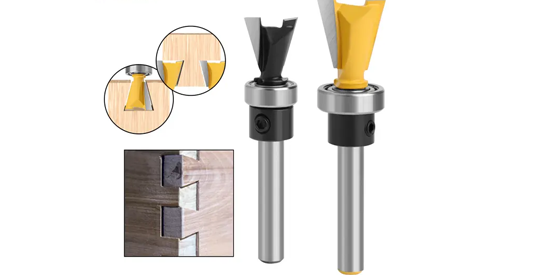
When people ask whether router bits are “universal,” they usually mean one of two things: “Will this bit physically fit my router?” or “Will this bit perform safely and well on my router for the job I want?” In practice, “universal” is shorthand for physical compatibility across common collet sizes and mechanical interchangeability. Most commercial router bits are made in one of a few standard shank diameters and will fit many routers if the collet matches or a safe adapter is used — but they’re not universally interchangeable across every router model and every application.
Shank diameter is the first piece of the puzzle. The two dominant imperial shank sizes are 1/4" and 1/2":
1/4" shank: Smaller, lighter, widely used for trim work, small grooves, and many lower-cost bits. Compatible with most hobby and compact routers.
1/2" shank: Stiffer, stronger, and better for larger bits where runout or vibration would be a problem. Preferred for big edge bits, large-diameter cutters, and heavy-duty use.
Some manufacturers also make metric shanks (common in regions using metric tooling). Metric shanks are less “universal” in countries dominated by imperial tooling, so check the exact dimension. Most commercial router collets accept either 1/4" or 1/2" — but not both at once — and some routers ship with only one size collet installed.
Routers use collets to grip the bit shank. The collet size must match the bit shank, or you must use an adapter that safely reduces a larger collet to a smaller shank:
Many routers include a 1/4" collet and a 1/2" collet (or a reversible collet system). Higher-end routers often accept both natively.
Collet adapters (for example, 1/2" to 1/4") enable a smaller shank to be used in a larger collet. Adapters are widely available and safe when used correctly, but they add an extra interface where runout can occur.
NEVER use a 1/2" bit in a 1/4" collet or vice-versa without the correct adapter or collet. Forcing or shimming is unsafe.
Here’s a quick rule-of-thumb checklist to decide interchangeability:
Does the router collet accept the shank diameter exactly? If yes — good.
If not, is a proper collet adapter available and rated for router use? If yes — consider adapter pros/cons (see below).
Avoid using painted or threaded portions of a shank in the collet — insert only the smooth shank area to the recommended depth.
Large-diameter bits and deep cuts require more torque and horsepower. Even if a 1/2" bit fits your router, a sub-1 HP trim router may struggle with:
Bits above ~1–1.25" cutting diameter for wide cuts.
Large raised-panel or molding bits that remove lots of material.
Long-reach spiral cutters that produce higher torque loads.
If you plan frequent heavy cuts, a router with higher HP and better cooling is the safe choice.
Bits with bearings (bearing-mounted flush/trim bits) rely on the bearing to register on stock or a template. They’re mechanically interchangeable but may be physically incompatible with routers that:
Have limited collet-to-bearing clearance (preventing full insertion).
Use dust shields or baseplates that interfere with bearing travel.
If a bit’s bearing is oversized, the router base or fence may not allow proper operation. Check the base clearance and router plate openings.

There are several important exceptions that break “universal” assumptions.
Plunge-only profiles: Some decorative bits are designed for plunge routers with specific cutting and chip-ejection features. Using them in a non-plunge router can lead to binding or poor chip evacuation.
Long-reach/extended arbor bits: These require routers with sufficient collet depth and often are intended for specific router types. Runout and flex are bigger risks.
Manufacturers often paint or coat a portion of the shank. The painted area can indicate the maximum insertion depth — do not clamp into painted or reduced-diameter sections. Insert the smooth, unpainted shank into the collet to the recommended depth (usually at least 3/4" or per the router manual).
Metric shanks can appear close to imperial sizes but small differences matter. A metric shank that’s fractionally larger or smaller than an imperial collet can cause slippage or poor grip. When in doubt, use the exact spec or a collet manufactured for that metric size.
Adapters let you bridge the gap between shank and collet sizes, but there are safety and performance trade-offs.
Pros:
Flexibility: lets you use 1/4" bits in routers with only 1/2" collets.
Cost-effective: avoid buying multiple collets.
Cons:
Increased runout risk: each interface adds potential concentricity error.
Reduced gripping length: adapters often reduce how much smooth shank is inside the collet.
Heat and wear: friction points can increase wear on the bit and adapter.
Safety tips:
Buy precision-ground adapters from reputable brands.
After installing adapter + bit, spin the router by hand and check for wobble/runout.
Never use adapters to fit a bit that is too long or too heavy for the router’s rating.
Upgrading to a router that supports 1/2" shanks (or includes both collets) gives you more options:
Less vibration with stiffer shanks.
Better concentricity for large-diameter or long-reach bits.
Higher torque tolerance for heavier cuts.
If you frequently use large molding bits, spiral flush-trim bits, or need professional finish quality, choose a router with robust collet support (and a good motor).
Use this 6-step pre-purchase checklist to avoid returns and bad fits:
Check shank diameter of the bit (1/4", 1/2", or metric).
Confirm your router collet supports that diameter — check the manual.
Measure collet insertion depth and ensure the bit’s smooth shank can be fully clamped.
Assess router horsepower relative to the bit’s cutting diameter and intended feed rate.
Check bearing clearance and baseplate openings for bearing-mounted bits.
Decide on adapters only if you accept potential runout and follow safety checks.
High-speed laminate trimming: Use small-diameter, high-RPM-rated bit types on high-speed routers; large bits at high RPMs can overheat.
Metal or composite cutting: Only use bits specifically rated for non-wood materials.
Router table use: In-table routers often provide better stability for larger bits — check collet access and fence clearance.
Replace worn collets — they’re inexpensive and dramatically reduce runout.
Keep shanks clean; resin or paint build-up reduces grip.
Tighten collets to the manufacturer torque specs — under- or over-tightening causes problems.
Use a dial indicator periodically to check bit runout if precision is critical.
Are 1/2" bits better?
Not always. 1/2" shanks are stiffer and better for larger bits and heavy work; 1/4" shanks are lighter and fine for trim and smaller-diameter cutters. Choose based on bit size and task, not “better” in absolute.
Can I put a 1/4" bit in a 1/2" collet with an adapter?
Yes, with a proper adapter. Expect slightly higher runout risk; use precision adapters and check for wobble before cutting.
Do router bearings make bits less universal?
They can. Bearing size and base/fence clearance may limit where a bearing-mounted bit will work.
DIY laminate trimming & edge work: 1/4" trim bits with bearings — fits most compact routers.
Door and cabinet work: 1/2" profile bits for clean, low-vibration results.
Template routing & production: Solid carbide spiral bits on a router table with a 1/2" router for repeatability.
So, are router bits universal? Mostly — within the practical ecosystem of standard shank sizes, collet compatibility, and appropriate router power — but not absolutely. Match the shank to your collet, check collet depth and bearing clearance, mind horsepower for larger bits, and use precision adapters only when appropriate. At LAIWE Tools we offer a wide range of router bits in both 1/4" and 1/2" shanks, plus precision adapters and replacement collets to help avoid fit issues. Browse our router bit series and use the 6-step checklist above before buying — and if you need help choosing the right bit for your router model, contact us at LAIWE Tools for personalized support.
Contact us — LAIWE Tools: quality router bits, precision manufacturing, global shipping.


