
Views: 0 Author: Site Editor Publish Time: 2026-07-30 Origin: Site


Wooden door production carries incredibly high stakes for any professional shop. Just one millimeter of misalignment in your stile and rail joints can result in entirely scrapped materials. Even minor tear-out on an end grain ruins expensive hardwood panels instantly. These everyday errors waste hours of valuable labor and destroy your profit margins. To prevent these costly bottlenecks, manufacturers must shift their focus away from basic DIY router bits. Today's shops require production-grade tooling engineered specifically for structural integrity, repetitive accuracy, and seamless hardware integration. In this guide, we introduce a reliable evaluation framework for selecting high-performance cutting tools. You will discover how to balance initial purchase prices against long-term production yield. By understanding specific carbide grades, anti-kickback profiles, and specialized hardware cutters, you can confidently upgrade your toolset. Better tooling ultimately protects your workflow and streamlines your entire assembly process.
Production-grade door fabrication requires 1/2-inch shank bits with micro-grain carbide to handle heavy stock removal without vibration.
Evaluating stile and rail bits must prioritize matched sets with adjustable shims to compensate for sharpening over time.
Dedicated hardware tooling—such as a specialized wooden door lock hole cutter—dramatically reduces assembly bottlenecks compared to general-purpose bits.
Safety and cut quality rely on anti-kickback designs and optimal shear angles, especially when milling dense hardwoods for exterior doors.
Standard bits fail rapidly in continuous door production environments. They suffer from rapid dulling, excessive vibration, and inevitable joint failure. When you use cheap cutters, you immediately sacrifice edge retention. This directly causes severe burning on the wood surface and creates incredibly weak glue joints. Imagine ruining a premium white oak door panel simply because your bit chipped the end grain. You lose both the expensive lumber and the hours spent milling it.
We establish strict baseline criteria for successful, profitable production. First, you must achieve zero tear-out on all end grain cuts. Second, you need perfectly flush cope-and-stick joints every single time you assemble a frame. Furthermore, your hardware recesses must be precisely dimensioned so locks and hinges drop in perfectly.
Material variables heavily influence your exact tooling requirements. Softwoods used for interior panels cut easily but tear out quickly if edge geometry is poor. Conversely, dense hardwoods and engineered core materials used for exterior doors prove highly abrasive. Abrasive materials destroy inferior carbide edges in minutes. You must match your cutter geometry and carbide grade specifically to your chosen materials.
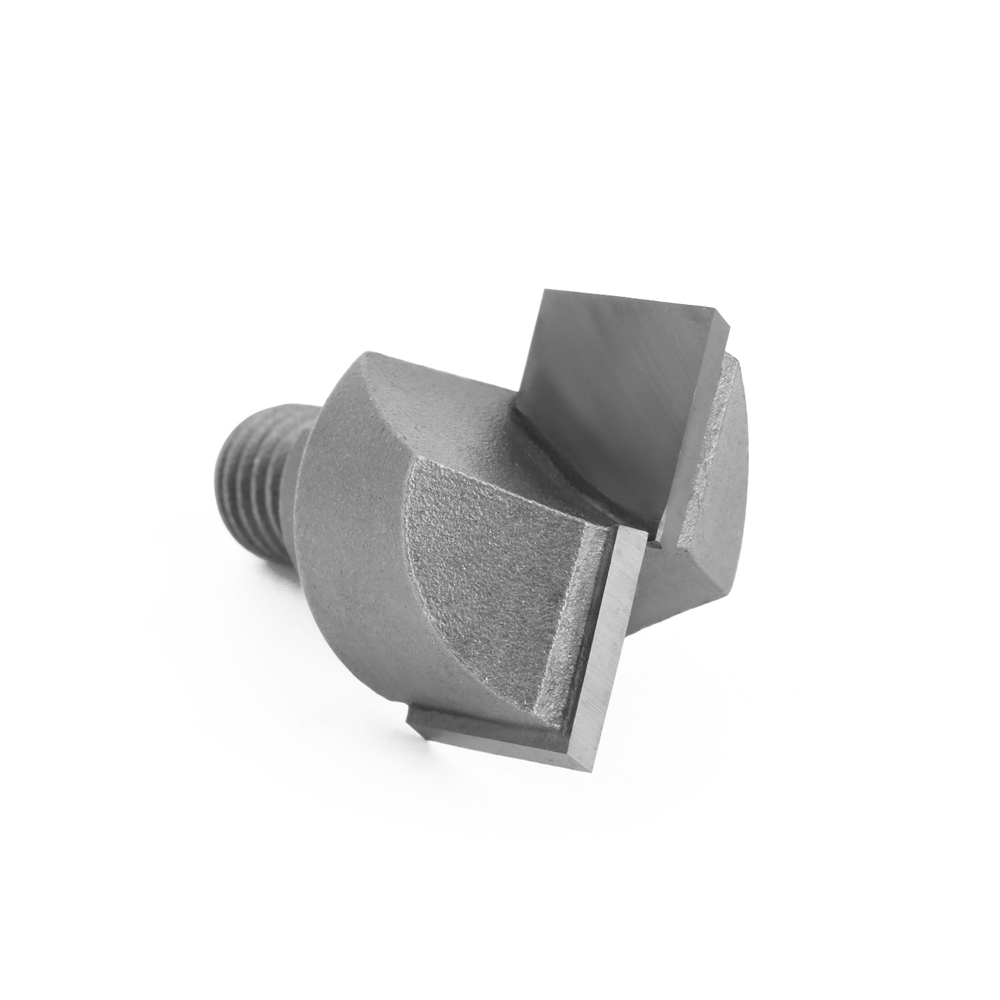
Professional door router bits require extremely specific engineering tolerances. You cannot compromise on material quality or physical geometry.
Production facilities demand C3 or C4 micro-grain carbide. This specialized material maintains incredibly sharp edges through miles of linear cutting. Micro-grain structures resist the micro-chipping common in standard cutters. Furthermore, thicker carbide allows for multiple resharpenings over the tool's lifespan. You drastically improve your return on investment when you can sharpen a single bit five times instead of discarding it early.
High shear angles represent a critical design feature for finishing quality. They slice through wood fibers delicately rather than chopping them violently. This slicing action significantly reduces tear-out on delicate raised panels. Flute design also plays a massive role in overall performance. Optimized flutes provide efficient dust and chip extraction. Removing chips quickly prevents dangerous heat buildup inside the cut, which preserves your carbide temper.
Safety and smoothness always go hand in hand during heavy milling. Anti-kickback designs feature mass-limiting bit bodies. These expanded bodies limit the bite or feed rate per revolution. They effectively prevent the cutter from grabbing too much material at once. You get a much smoother finish and dramatically reduced kickback risk.
Deflection is the ultimate enemy of precise joinery. We assert the absolute necessity of 1/2-inch shanks for all door-making operations. Cutting thick, heavy door stock applies immense lateral pressure on the cutter. A 1/2-inch shank prevents deflection, eliminates chatter, and ensures your profile matches perfectly every time.
Architectural profiles dictate both aesthetics and structural integrity. You must choose the right profile geometry for your specific client application.
The primary architectural profiles include Ogee, Shaker, and Standard Cove designs. Each profile carries distinct structural implications regarding the wood left behind for the tenon.
Profile Type | Aesthetic Application | Structural Tenon Impact | Ideal Wood Types |
|---|---|---|---|
Ogee | Traditional, ornate interiors | Moderate wood removal; leaves standard tenon base | Cherry, Walnut, Mahogany |
Shaker / Straight | Modern, minimalist doors | Minimal wood removal; maximizes tenon thickness | White Oak, Maple, MDF |
Standard Cove | Transitional, classic designs | Significant wood removal; requires careful depth setup | Pine, Poplar, Alder |
Production environments thrive on absolute efficiency. We strongly recommend two-piece matched sets over single reversible bits. Matched sets drastically reduce daily setup time. You keep one router dedicated to the cope cut and another permanently set for the stick cut. Reversible bits require constantly changing heights and fences, which consistently invites human error.
Exterior doors demand maximum structural strength to withstand environmental stress. You must utilize bits capable of cutting extended tenons. Extended tenons allow for much deeper mortise joints. This extra glue surface area firmly prevents heavy exterior doors from sagging over time.
Continuous production means frequent, mandatory sharpening. Every sharpening cycle removes a tiny fraction of carbide from the bit face. Shim-adjustable bit sets are absolutely essential here. You can insert micro-shims between the cutters to maintain incredibly tight joint tolerances even after repeated sharpenings.
Door hardware installation frequently becomes a critical point of failure. If your tooling lacks precision, assembly grinds to a halt. Inaccurate recesses lead to binding hinges, misaligned locks, and frustrated installers.
Deep mortises require highly specialized tooling. You need a dedicated wooden door lock hole cutter to handle this demanding task properly. Look specifically for up-cut spiral designs. These spirals provide deep chip clearing, aggressively evacuating waste upward and out of the mortise cavity. They ensure high plunge-cutting efficiency without burning the mortise walls. A perfectly clean wall guarantees your lock mechanism slides in perfectly without forced binding.
Hanging doors efficiently requires perfectly flush, flat hinges. When a hinge cup recess is not perfectly flat, the hinge plate sits at an awkward angle. This angled seating forces the door to bind heavily against the jamb. We highly recommend integrating a specialized furniture hinge counterbore bit into your workflow.
Depth-stop compatibility: Guarantees identical depths across every single hinge placement.
Spur sharpness: Ensures incredibly clean entry cuts, entirely eliminating surface veneer chipping.
Flat-bottom cutting: Ensures the hinge plate rests perfectly flush against the door edge, preventing binding.
Even the absolute best tooling fails if implemented poorly. You must meticulously optimize your machine setups and safety protocols.
Production door bits possess massive diameters and heavy mass. They require heavy-duty router tables or industrial shapers to run safely. You need a minimum 3+ horsepower motor to drive these cutters seamlessly through dense hardwoods. Variable speed control is absolutely mandatory. You must reduce your RPMs significantly when spinning large-diameter panel-raising bits. High RPMs on large bits cause dangerous vibration and severe wood burning.
Never attempt single-pass routing on deep profiles. Plunging a massive raised panel bit into hardwood in one pass invites immediate disaster. It destroys the bit life and completely ruins the material finish. Instead, always use incremental cuts. Take three or four shallow passes to reach your final desired depth. This technique preserves your carbide edges and leaves a glass-smooth surface.
Spinning large mass door router bits demands strict safety compliance. Standard operating procedures must be enforced.
Calibrate your router fence perfectly parallel to the miter slot.
Utilize heavy-duty feather boards on both the horizontal and vertical axes to pin the stock.
Set up a dual-port dust extraction system to capture heavy chips below the table.
Check your router collet tension frequently, as heavy bits generate severe vibration over time.
Selecting the right tool depends heavily on your specific business model. You must align your tooling investments directly with your anticipated production volume.
Smaller shops typically handle diverse, varying projects. We recommend prioritizing versatile, adjustable multi-profile bit sets. These adaptable sets allow for immense design flexibility. You can swap profiles quickly to meet unique client demands without buying entirely new cutter heads for every single custom job.
Large-scale operations run the exact same profiles continuously for months. We recommend investing in dedicated, single-profile brazed cutter heads or premium insert-tooling systems. These advanced tools are optimized for one specific continuous task. Insert tooling allows you to replace just the carbide knives when dull, keeping the primary tool body perfectly calibrated.
You cannot evaluate a production tool based on its initial purchase price alone. You must rigorously calculate the true tool cost over its functional lifespan. The evaluation formula is straightforward: combine your initial purchase price with your total sharpening costs, then divide that by the total linear feet produced. This specific calculation frequently proves premium carbide tools run significantly cheaper over the long haul compared to budget alternatives.
The best tools are always evaluated on their core geometry, premium carbide grade, and application-specific precision. From mastering complex cope-and-stick joints to achieving flawless hardware integration, your tooling absolutely dictates your final product quality. Substandard bits simply cannot survive the rigorous demands of continuous panel milling and heavy mortising.
Audit your current scrap rates and hardware installation times today. Identify exactly where bottlenecks frequently occur in your assembly process. By pinpointing these specific weaknesses, you can quickly determine which tooling upgrades will yield the fastest return on your investment. Upgrade your core setup first, then standardize your daily machining protocols for maximum efficiency.
A: Door making requires large-diameter cutters to mill thick, heavy stock. A 1/4-inch shank simply cannot handle the extreme lateral forces generated during these cuts. It will suffer from severe deflection and excessive vibration, ruining your joint accuracy. More importantly, 1/4-inch shanks pose a massive safety hazard, as they can easily snap under heavy load.
A: Interior bit sets are designed for thinner softwoods typically used in indoor applications. Exterior sets accommodate much thicker, denser stock. Crucially, exterior bit sets feature extended tenon capabilities. They create deeper mortise-and-tenon joints required to provide structural strength against weather warping and heavy environmental stress.
A: You should establish a strict preventative maintenance schedule rather than waiting for failure. Watch for visual indicators of wear, such as burn marks on the wood or micro-chipping on the carbide edge. You will also feel increased feed resistance as the bit dulls. Sharpen bits immediately once these signs appear to preserve tool life.
A: No, a standard Forstner bit cannot replace a specialized counterbore bit in a production environment. Counterbore bits feature faster chip clearance speeds and specialized carbide tipping designed for continuous, heat-resistant use. They also maintain exact dimensional tolerances over thousands of cuts, ensuring perfectly flat-bottomed recesses that standard bits cannot reliably match.


