
Views: 0 Author: Site Editor Publish Time: 2026-08-25 Origin: Site


Purchasing specialized tooling only to discover it will not seat properly in your router's collet is a frustrating and costly scenario. Many operators assume they must buy brand-specific accessories to match their machine, leading to confusion regarding proprietary ecosystems versus universal tooling standards. Mismatched shanks and collets introduce severe safety hazards, including bit slippage and excessive runout, which can ruin a workpiece or cause catastrophic tool failure.
This guide shifts the focus from brand matching to a technical evaluation of shank dimensions, collet capacities, and the mechanical requirements for safe, vibration-free routing. Understanding these factors ensures you select the correct tooling for your specific machine. We will evaluate industry standards, the mechanics of collet systems, and how to troubleshoot common fitment issues. You will gain the knowledge needed to confidently expand your tooling inventory without compromising safety or cut quality.
Brand Independence: Router bits are universally compatible across router brands; compatibility is dictated entirely by shank diameter and collet size.
The Shank Standard: The industry relies heavily on two primary imperial sizes (1/4-inch and 1/2-inch), with specific use cases and horsepower requirements for each.
Collet Interchangeability: Many mid-to-full-size routers support multiple collet sizes, allowing users to adapt their machine to different tooling inventories.
Safety and Runout: Utilizing improper adapters or worn collets introduces severe safety hazards, including bit slippage, excessive runout, and catastrophic tool failure.
A common beginner assumption is that a Dewalt router requires Dewalt bits, or a Bosch router requires Bosch bits. Tooling manufacturers design Woodworking Router Bits to universal dimensional tolerances rather than proprietary locking mechanisms. The brand of your machine does not restrict your tooling choices. The industry operates on standardized shank diameters that fit into matching collets, regardless of the paint color on the router motor.
Industry standardization allows woodworkers to build diverse tool collections based on profile availability, carbide quality, and specific project needs. What actually matters when evaluating a new bit is the shank diameter, the maximum safe RPM, and matching the bit's mass to your router's horsepower. Ignoring these success criteria leads to poor performance and dangerous operating conditions. When you understand that the connection point is simply a machined steel cylinder fitting into a compressed steel sleeve, the brand name becomes irrelevant.
To further illustrate this, consider the manufacturing process of the bits themselves. The cylindrical shank is centerless ground to a precise tolerance, usually within a few ten-thousandths of an inch. Router manufacturers machine their collets to accept these exact dimensions. This universal approach means a bit manufactured in Europe will fit a router manufactured in North America, provided the imperial or metric specifications align correctly.
Router Brand | Proprietary Shank Required? | Standard Collet Sizes Accepted | Tooling Compatibility |
|---|---|---|---|
Dewalt | No | 1/4", 1/2" (model dependent) | Universal |
Bosch | No | 1/4", 1/2" (model dependent) | Universal |
Makita | No | 1/4", 1/2" (model dependent) | Universal |
Festool | No | 1/4", 8mm, 1/2" (model dependent) | Universal (Requires matching collet) |
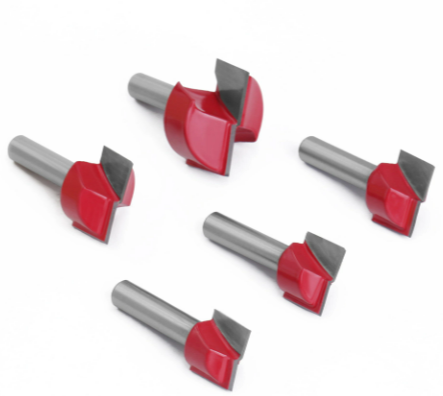
The cutting profile dictates the shape of your cut, while the shank size determines if the bit will physically fit your machine and handle the cutting forces. Understanding the different shank ecosystems prevents equipment damage and ensures safe operation.
The 1/4-inch shank is standard for compact palm routers and light-duty trimmers. These bits are ideal for detail work, light edge profiling, and small inlay tasks. Their smaller mass makes them easy to maneuver in handheld applications where a heavy router would be cumbersome. Many operators keep a dedicated trim router loaded with a 1/4-inch roundover bit for quick edge breaking on finished parts.
However, 1/4-inch shanks have distinct limitations. They exhibit higher susceptibility to vibration and chatter due to their lack of mass. They can snap under heavy loads or when pushed too fast through dense hardwoods. You should never use a 1/4-inch shank for large panel-raising operations or deep mortising. Limit their use to shallow passes and softer materials to prevent deflection and tool breakage.
When working with 1/4-inch shanks, feed rate is a primary consideration. Pushing the router too aggressively causes the thin shank to flex. This flexing, known as deflection, results in a wavy cut surface and rapidly accelerates wear on the router's bearings. Operators must listen to the pitch of the motor and feel the resistance to maintain an appropriate feed rate.
The 1/2-inch shank is the standard for professional shops and serious hobbyists. It offers significantly more mass than a 1/4-inch shank, which drastically reduces vibration. Less vibration yields cleaner cuts, smoother surface finishes, and less wear on the operator's hands. Router Bits with 1/2-inch shanks provide superior stability, especially when running long profiles or dense materials.
This ecosystem offers excellent scalability. These bits handle large panel-raising profiles, heavy stock removal, and deep pattern routing with ease. The increased surface area of the 1/2-inch shank provides the collet with more material to grip, virtually eliminating the risk of the bit slipping downward during a heavy plunge cut. If your router accepts a 1/2-inch shank, you should always choose it over a 1/4-inch alternative.
The rigidity of the 1/2-inch shank also allows for longer cutter lengths. When flush-trimming thick stock, a 1/4-inch shank bit would deflect and create a tapered edge. A 1/2-inch shank maintains a perfectly perpendicular cut line, ensuring accurate template routing and joinery.
European markets frequently use metric shank sizes, which can cause confusion for operators accustomed to imperial measurements. The 8mm and 12mm shanks are common in Festool ecosystems and other imported machinery. You must exercise extreme caution when mixing metric and imperial standards. Never confuse an 8mm shank (approx. 0.315 inches) with a 5/16-inch collet (0.3125 inches). Forcing a mismatched fit causes severe runout and can permanently damage the collet.
CNC machines often utilize specific metric sizes alongside imperial standards. You will frequently encounter 6mm and 1/8-inch shanks in CNC applications for fine detail carving. Always verify your collet's exact measurement before inserting a metric bit into an imperial machine. Using a digital caliper to measure the shank before installation is a simple habit that prevents costly mistakes.
If you purchase tooling from international suppliers, ensure you have the exact matching collet for your router. Many router manufacturers sell aftermarket metric collets for their imperial machines, allowing you to safely utilize specialized European tooling without resorting to dangerous adapter sleeves.
The collet is the mechanical interface between your router's motor shaft and the cutting tool. Understanding how it functions ensures secure clamping, minimizes runout, and maintains safe operation during high-speed routing.
A collet features a precision-machined tapered design. It consists of slotted spring steel that compresses evenly around the bit. When you tighten the collet nut, it forces the tapered collet down into the router's matching tapered shaft. This wedging action compresses the slots, reducing the internal diameter of the collet.
The compression grips the bit's shank tightly. This even, 360-degree pressure prevents the bit from slipping during high-RPM operation. A clean, undamaged collet provides maximum surface contact with the shank. Any dirt, rust, or deformation in the collet prevents this even compression, leading to localized pressure points that can score the bit shank and cause dangerous vibration.
The angle of the taper is engineered to provide maximum holding power while still allowing the collet to release when the nut is loosened. This mechanical advantage allows hand-tightening with a wrench to generate thousands of pounds of clamping force on the bit shank.
Compact palm routers typically feature fixed collet systems. These are usually machined specifically for 1/4-inch shanks and are integrated directly into the motor shaft. You cannot upgrade them to accept larger bits. This limits the machine to light-duty tasks and smaller profile cutters.
Mid-size and plunge routers utilize interchangeable Router Collet Chuck Sets. These systems accept both 1/4-inch and 1/2-inch shanks. You simply unthread the nut, remove the collet cone, and swap in the alternative size. This versatility makes mid-size routers the most practical choice for general shop use, allowing operators to run heavy 1/2-inch flattening bits and delicate 1/4-inch veining bits on the same machine.
When swapping interchangeable collets, it is vital to snap the collet cone into the collet nut before threading the assembly onto the router shaft. Failing to seat the collet into the nut properly will prevent the self-releasing mechanism from functioning and can cause the bit to become permanently stuck in the taper.
Modern routers employ a two-stage self-releasing collet design to prevent bits from getting stuck in the tapered shaft. When you loosen the nut with a wrench, it initially turns easily as the clamping pressure is relieved. Then, the nut suddenly feels tight again. This is the secondary resistance point.
Many operators stop turning at this point, assuming the bit is free, only to find they cannot pull the bit out by hand. You must turn the nut further with the wrench. Overcoming this second point of resistance engages an internal retaining ring that physically pulls the collet cone out of the tapered shaft. This action breaks the friction seal and fully releases the shank.
Understanding this two-stage process prevents operators from using pliers or tapping the bit with a hammer to free it—actions that easily chip the brittle carbide cutting edges or bend the shank.
A collet reducer sleeve allows you to run a 1/4-inch bit in a 1/2-inch collet. It is a small, slotted metal tube that slides into the 1/2-inch collet to take up the extra space. While this seems like a convenient and cost-effective solution, it introduces significant mechanical compromises.
Reducers are a temporary workaround. They introduce an extra layer of mechanical tolerance between the motor shaft and the cutting tool. This stacking of tolerances often causes runout, where the bit wobbles slightly off-center. Runout ruins the cut finish, accelerates bearing wear, and increases the risk of the bit snapping.
Swapping the actual collet chuck is the mechanically superior choice. Dedicated collets provide direct contact with the bit shank, ensuring better grip, perfect concentricity, and improved safety. If your router supports interchangeable collets, discard the reducer sleeves and invest in the proper collet sizes.
Selecting the correct shank size directly impacts cut quality, machine longevity, and operator safety. You must evaluate the physical demands of your project and match the tooling accordingly.
Shank deflection occurs when lateral cutting forces bend the bit slightly as it moves through the material. This ruins your surface finish, leaving chatter marks that require extensive sanding to remove. A 1/2-inch shank has four times the mass of a 1/4-inch shank. This massive increase in rigidity drastically reduces deflection.
Less deflection means the bit remains perfectly vertical during the cut. This stability yields a superior final surface finish straight off the router. Always prioritize 1/2-inch shanks for deep mortises, wide profiles, or when routing dense materials like maple or hickory.
The length of the bit also factors into deflection. A long-reach 1/4-inch bit is highly susceptible to bending. If a project requires a deep reach, upgrading to a 1/2-inch shank is mandatory to maintain a straight cut line and prevent the bit from snapping under lateral load.
Routing generates immense heat at the carbide cutting edges due to friction. Excessive heat degrades carbide quickly, causing it to lose its edge and eventually micro-chip. Thicker shanks pull heat away from the cutting edges more efficiently. The larger mass of steel acts as a thermal sink.
This efficient heat dissipation extends sharpening intervals and prevents the carbide from becoming brittle. When running large profiles that remove significant material, the heat buildup is substantial. A 1/2-inch shank absorbs and dissipates this heat far better than a 1/4-inch shank, ultimately increasing the overall lifespan of the bit.
Operators can visually inspect bits for heat damage. Discoloration or bluing on the steel body behind the carbide indicates excessive heat buildup. Switching to a larger shank, reducing the depth of cut, or adjusting the feed rate will mitigate this issue.
You must match the tooling to the machine's capabilities. Running a massive 1/2-inch shank flattening bit or a large panel raiser on a 1.25 HP router is dangerous. The small motor lacks the torque required to spin that much mass through material efficiently.
This mismatch will stall the motor, burn the wood, and potentially damage the router's internal components. Reserve large-diameter bits for routers with at least 2.25 HP to 3.25 HP. These larger machines have the torque to maintain RPM under heavy loads, ensuring a clean cut and safe operation.
Conversely, running a tiny 1/4-inch detail bit in a massive 3.25 HP plunge router is cumbersome and reduces the operator's tactile feedback. Match the physical size and horsepower of the router to the scale of the tooling and the project.
Multi-piece slot cutters and cope-and-stick sets often use arbor-mounted setups. These assemblies allow you to stack different cutters, bearings, and shims on a single threaded shaft. They require specific shank requirements to maintain stability and prevent vibration.
Stackable bit setups increase the overall height and mass of the cutting profile. This changes your depth limits and requires a rigid 1/2-inch shank arbor. Always ensure the arbor shank is fully seated in the collet and that the retaining nut on the arbor is securely tightened before operation.
When assembling arbor-mounted cutters, ensure all components are clean and free of pitch. Any debris between the stacked cutters will cause them to sit at an angle, introducing severe runout and vibration when the router is powered on.
Even with the correct sizes, bits sometimes fail to seat properly in the collet. Identifying these hidden barriers prevents frustration, ensures secure clamping, and protects your equipment from damage.
Manufacturers apply a protective wax or silicone peel-coating to brand-new bits. This thick layer protects the brittle carbide edges from chipping during shipping and storage. If you do not fully remove this coating from the shank, it will prevent insertion into the collet. The collet tolerances are too tight to accommodate the extra thickness of the wax.
Additionally, manufacturers sometimes leave plastic spacer plugs inside new collets. These plugs prevent the collet from compressing and deforming during transit. They completely block the entry of any bit shank. Inspect the inside of the collet with a flashlight and remove these plugs before attempting to insert a tool.
Use a brass brush or a fingernail to scrape away any residual wax on the shank. Never use sandpaper or abrasives to clean the shank, as this will alter the precise diameter and cause fitment issues.
Pushing a bit entirely to the bottom of the collet shaft is a common and dangerous mistake. When you tighten the nut, the collet needs room to draw downward into the taper to compress. If the bit is bottomed out against the motor shaft, it prevents this downward movement.
This results in a loose grip, even if the nut feels tight. Follow the "bottom out, then pull up 1/16th of an inch" rule. Drop the bit in until it hits the bottom, then lift it slightly before tightening the nut. This small gap allows the collet to draw down and tighten properly around the shank.
Some operators place a small rubber O-ring at the bottom of the collet shaft to automatically provide this clearance, preventing the bit from ever bottoming out against the steel.
Collets are wear items. The constant compression and release cycles, combined with heat and vibration, eventually cause the spring steel to lose its elasticity. Signs of a worn or sprung collet include scoring marks or galling on the bit shank. If you must use excessive force on the wrench to tighten the nut, the collet is likely compromised.
Worn collets cause bit slippage. The bit can pull out of the collet during a cut, ruining the workpiece, destroying the template, or causing severe injury. Routine replacement of collet assemblies—typically every 1 to 2 years in a production environment—is essential to maintain safety and precision.
Inspect the inside of the collet for bell-mouthing, where the opening is wider than the base. A bell-mouthed collet only grips the bit at the bottom, leading to severe vibration and eventual failure.
Sawdust, rust preventative oils, and resin accumulate inside the collet and the router's tapered shaft. This debris prevents proper seating and even compression. A correct-sized bit will feel tight or refuse to slide in smoothly.
The buildup prevents the collet from gripping the shank with full surface contact. Clean your collet and the router shaft regularly. Use a brass brush, a specialized resin cleaner, and compressed air to remove stubborn pitch. Never use steel wool or wire brushes, as they will scratch the precision-machined surfaces.
Maintaining a clean collet assembly is the single most effective way to prevent runout, reduce vibration, and ensure your bits fit perfectly every time.
Brand loyalty does not dictate router bit compatibility. Your tooling choices are strictly a matter of matching the bit's shank diameter to the router's installed collet. Understanding this universal standard frees you to select the best cutting profiles, carbide quality, and price points for your specific projects without being locked into a single manufacturer's ecosystem.
To ensure optimal performance, safety, and longevity of your equipment, follow these actionable steps:
Default to 1/2-inch shanks whenever your router supports them to maximize stability and reduce vibration.
Reserve 1/4-inch shanks strictly for compact palm routers and delicate, light-duty operations.
Verify your router's current collet size with a caliper before purchasing new tooling, especially when dealing with metric sizes.
Clean your collet assembly and router shaft regularly with a brass brush and resin solvent to remove pitch and debris.
Replace your interchangeable collet systems immediately if you notice scoring on your shanks or require excessive tightening force.
A: Yes, provided you use a dedicated 1/4-inch collet. Most mid-size 1/2-inch routers include an interchangeable 1/4-inch collet in the box. Swapping the entire collet assembly is mechanically safer and more accurate than using a drop-in reducer sleeve.
A: Generally, no. Rotary tools like Dremels typically use a 1/8-inch shank. Standard woodworking routers use 1/4-inch or 1/2-inch collets. Unless you install a specific 1/8-inch collet adapter designed for your router model, these smaller bits will not fit securely.
A: Check for protective wax or silicone coatings left on the bit's shank. Also, inspect the inside of the collet for plastic shipping plugs, accumulated sawdust, or hardened resin. The machining tolerances are exact, so any debris or coating will prevent the bit from sliding in.
A: Yes. Router bits are manufactured to universal shank sizes, typically 1/4-inch or 1/2-inch in North America. As long as the bit's shank diameter matches your router's installed collet size, the brand of the bit or the router is completely irrelevant.
A: Replace them if you notice scoring, galling, or scratch marks on your bit shanks. You should also replace the collet if you have to use excessive force on the wrench to tighten the nut, or if you experience any bit slippage during operation.
A: This is a mechanical safety feature called a self-releasing collet. The initial loosening frees the nut, but the collet remains wedged in the taper. Turning the wrench past the second point of resistance engages a retaining ring that physically pulls the collet out, releasing the bit.


