
Views: 0 Author: Site Editor Publish Time: 2026-08-21 Origin: Site


You are working on a woodworking project and realize you need to profile an edge, cut a dado, or hollow out a pocket. You look around your shop and see a power drill or a drill press, but no dedicated router. The temptation to chuck a milling tool into your drill is strong. Attempting to bypass the purchase of dedicated routing equipment by cross-purposing tooling is a common thought process, but it ignores the fundamental mechanical mismatch between how drills and routers operate.
While a milling shank might physically fit into a drill chuck, the physics of cutting, tool bearing design, and rotational speeds dictate why proper tooling is non-negotiable. Using the wrong tool for the job compromises safety and guarantees project failure. Understanding the mechanical realities of these tools will save your workpiece and prevent serious injury. The mechanics of wood removal require specific velocities and lateral stability that standard drilling equipment simply cannot provide.
RPM Deficit: Drills operate at 1,500 to 3,000 RPM, whereas routers spin between 20,000 and 30,000 RPM. This massive deficit causes router bits to tear and burn wood rather than cut it cleanly.
Bearing Load Mismatch: Drills are engineered for axial loads (pushing straight down). Router bits require tools engineered for heavy lateral loads (pushing sideways).
Chuck vs. Collet: Standard drill chucks cannot safely secure router shanks against high-speed lateral forces; dedicated Router Collet Chuck Sets are required to prevent dangerous bit slippage.
Safety Verdict: Using router bits in a hand drill is highly dangerous and yields poor results. Even in a drill press, the practice is severely limited and generally discouraged.
Standard hand drills and drill presses typically max out around 3,000 RPM. In contrast, Router Bits require operational speeds of 20,000 RPM or higher to function as designed. The physics of the cut are entirely different. High-speed milling relies on velocity to take micro-shavings, slicing through wood fibers before they can splinter. Low speeds result in aggressive grabbing, severe tear-out, and friction burns on the workpiece.
When you attempt to mill wood at 2,500 RPM, the cutting edge spends too much time in contact with the material per revolution. Instead of shearing the wood, it acts like a blunt wedge, tearing fibers out in large chunks. This dynamic not only ruins the finish but also transfers massive shock loads back into the tool and the operator's hands.
Tool Type | Average RPM Range | Primary Cutting Action | Chip Ejection Method |
|---|---|---|---|
Hand Drill | 500 - 2,500 | Low-speed scraping/boring | Vertical flute lifting |
Drill Press | 500 - 3,000 | High-torque axial boring | Vertical flute lifting |
Wood Router | 20,000 - 30,000 | High-velocity lateral shearing | Horizontal centrifugal ejection |
The internal engineering of a drill features thrust bearings designed to handle downward, or axial, pressure. When you push a drill bit into wood or metal, the force travels straight up the shaft into these bearings. A router, however, utilizes heavy-duty radial bearings designed to withstand aggressive side-to-side, or lateral, forces generated during edge profiling or dadoing.
Applying lateral force to a drill chuck damages the drill's internal bearings and introduces severe runout. Runout is the deviation of the bit from a perfect rotational axis. Once a drill's bearings are compromised by lateral stress, the chuck will wobble uncontrollably, rendering the drill useless for precision boring tasks in the future.
High-speed routers are poorly suited for standard drilling operations. The extreme rotational speed without adequate chip clearance causes rapid heat buildup and immediate wood burning. Standard drill bits rely on slow, high-torque pressure to lift chips vertically, whereas milling tools are designed for high-velocity lateral chip ejection.
If you plunge a standard twist drill bit into wood at 25,000 RPM, the friction will instantly carbonize the wood and destroy the temper of the steel bit. The flutes cannot evacuate the waste material fast enough, leading to a dangerous buildup of heat and pressure that can shatter the bit.
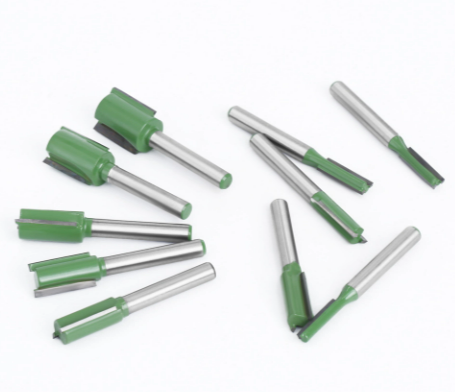
A router collet is a slotted collar that compresses evenly around the entire circumference of the bit shank when tightened. Dedicated Router Collet Chuck Sets are necessary for maintaining perfect concentricity and absolute grip at 30,000 RPM. This 360-degree clamping force ensures the bit cannot shift, vibrate loose, or pull out under heavy lateral loads.
When installing tooling, never bottom out the bit in the collet. You must leave a slight gap of approximately 1/16 inch to allow the collet to tighten fully without binding against the bottom of the armature shaft. If the bit is bottomed out, the collet cannot draw down into the taper properly, resulting in a loose grip and extreme hazard.
The 3-jaw design of a standard drill chuck fails under lateral routing pressure. These chucks only grip the shank at three narrow contact points. They lack the continuous surface area grip of a collet, leading to the bit vibrating loose or being pulled out of the chuck during a cut.
As lateral pressure is applied, the shank acts as a lever against the three jaws. The high-frequency vibration of milling wood quickly loosens the chuck's grip. Once the bit slips, it will either drop out of the chuck or catch in the wood and snap, creating a high-velocity projectile hazard in the workshop.
Low RPMs cause the cutting edge to catch the wood grain and violently throw the tool or the workpiece, resulting in kickback. Improper feed rates and unstable chucks increase the risk of snapping the carbide tips or the shank. It is physically impossible to safely hand-hold a drill while applying the lateral force required for routing.
The bit catches the wood grain due to insufficient RPM.
The rotational torque of the drill transfers entirely to the operator's wrist.
The drill kicks back violently, potentially causing severe sprains or lacerations.
The lateral stress snaps the carbide cutter, sending shrapnel into the workspace.
The lack of RPMs and structural rigidity leaves deep, un-sandable gouges in the wood known as chatter marks. Slow-spinning bits generate excessive heat, causing friction burning that ruins the edge profile and damages the temper of the bit. You will spend more time trying to sand out the damage than you would have spent doing the job correctly with the right tool.
Using Straight Router Bits in a drill press to act as an end mill is a common workaround. While the drill press quill offers partial stability, drill press chucks can still drop under lateral load as the Morse taper vibrates loose. You must drill a pilot or entry hole with a standard twist drill bit first before executing any lateral movement, as most straight bits cannot plunge-cut vertically.
If you absolutely must attempt this operation, you must follow strict parameters to mitigate the risks. Even then, the results will be marginal at best.
Use extremely shallow passes, removing no more than 1/16 inch of material at a time.
Limit this technique to softwoods like pine or cedar; hardwoods will cause immediate chatter.
Secure the workpiece in a heavy-duty, clamped cross-slide vise to control the feed rate mechanically.
Accept that the finish quality will be sub-par and require extensive cleanup.
Never use edge-forming, chamfer, or flush-trim bits in a drill. Bearing-guided bits will fail instantly because the bearing requires high RPMs to glide smoothly along the template or edge. At drill speeds, the bearing will simply dig into the wood, bind, and cause the tool to kick back violently.
Compact palm routers are the cost-effective, safe alternative to dangerous drill workarounds. Investing in a proper router opens up the ability to use hundreds of specialized profiles safely. A compact trim router paired with a simple shop-made jig or template delivers precision and safety that a hand-held drill setup cannot mimic.
Modern trim routers offer variable speed control, soft-start motors, and micro-adjustment capabilities that make edge profiling and joinery tasks highly predictable. The structural rigidity of a router base ensures the bit remains perfectly perpendicular to the workpiece, eliminating the wobble and chatter associated with hand drills.
Match shank sizes, typically 1/4-inch or 1/2-inch, to the appropriate Router Collet Chuck Sets. Using adapter sleeves to fit smaller shanks into larger collets can introduce runout and should be avoided for precision work. Start with a core set of Straight Router Bits for joinery before moving to complex edge-forming profiles.
Using milling tools designed for 30,000 RPM in a hand drill is unsafe, mechanically unsound, and destructive to both the tool and the workpiece. The physics of wood removal dictate that lateral shearing requires high velocity and absolute structural rigidity. If a routing task is required, the minimum viable investment is a dedicated trim router and a high-quality collet.
Evaluate your current project needs and identify the specific profiles or joinery cuts required.
Purchase a dedicated compact trim router rather than attempting dangerous workarounds with a drill.
Upgrade your tooling setup with high-quality collets to ensure maximum grip and minimal runout.
Invest in a beginner-friendly set of straight cutting tools to practice safe feed rates and depth settings.
A: Routers spin too fast for standard drilling and lack the geometry to clear chips vertically, leading to burning, unless using a specialized plunge bit with a programmed pocket toolpath on a CNC.
A: You risk severe kickback, tool damage, and ruined wood due to low RPMs and lateral force. The 3-jaw chuck will likely drop the bit during operation.
A: While physically possible with a cross-slide vise, it risks dropping the chuck from the Morse taper, requires drilling a starter hole first with a standard drill bit, and yields poor, chattering cuts.
A: Collets provide 360-degree clamping force necessary to hold bits securely at 30,000 RPM under heavy side loads. Drill chucks only grip at three points and vibrate loose.
A: No. Drill bits are for axial boring at low speeds; router bits are for lateral milling at high speeds. The metallurgy and geometries are mutually exclusive.


