
Views: 0 Author: Site Editor Publish Time: 2026-08-17 Origin: Site


Operating with dull tooling compromises cut quality, increases the risk of kickback, and accelerates wear on router motors and CNC spindles. Woodworkers and shop managers face a recurring operational expense: determining whether to discard expensive tooling, attempt DIY sharpening, or pay for professional grinding services. Knowing exactly when to maintain or replace your tooling is critical for shop efficiency and maintaining tight tolerances on your workpieces.
This guide provides a technical evaluation framework to diagnose tool wear, assess the viability of sharpening different bit profiles, and establish strict replacement thresholds. By understanding these parameters, you can optimize your tooling budgets without sacrificing production quality. We will cover the exact visual indicators of edge degradation, the chemical cleaning steps required before any abrasive touches the carbide, and the geometric limitations of profile bits.
Cleaning Precedes Sharpening: Pitch and resin buildup frequently mimic a dull edge; chemical cleaning should always be the first diagnostic step.
Geometry Dictates Viability: Straight bits can be sharpened multiple times, while complex profile bits have strict limits (typically 3–4 cycles) before the profile geometry is permanently altered.
CNC Diameter Compensation is Mandatory: Sharpening Solid Carbide CNC Router Bits reduces their overall diameter, requiring immediate toolpath adjustments in CAM software to maintain dimensional accuracy.
Cost-to-Replacement Ratio: Professional sharpening is generally only economically viable for high-end carbide tooling or large panel-raising bits where the sharpening cost is less than 30% of a new bit's price.
Sustainability and End-of-Life: Spent carbide tooling should not be discarded in standard waste; high-grade carbide is highly recyclable and holds scrap value.
Defining what constitutes a sharp bit means looking for clean shearing action, zero burn marks, and minimal feed resistance. Establishing the financial baseline for tooling maintenance requires evaluating the type of bit and its application. Straight bits are highly receptive to sharpening because they feature flat cutting flutes. Removing material from the flat face restores the edge without fundamentally changing the tool's purpose. You can grind the flat face of a straight flute multiple times, and while the overall diameter shrinks slightly, the bit will still cut a flat, square trench.
Profile bits, such as roundovers, chamfers, or ogees, present strict geometric constraints. Removing material alters the final routed shape. Because of this, complex profiles are typically limited to three or four professional sharpenings before the altered geometry becomes unacceptable for precision work. If you are running a cope and stick set for cabinet doors, altering the geometry through aggressive sharpening will result in joints that no longer fit together tightly.
Material composition heavily influences sharpening viability. High-Speed Steel (HSS) is softer and easier to hone but dulls quickly. Carbide Woodworking Router Bits utilize micro-grain carbide, which is exceptionally hard and retains an edge far longer. However, this extreme hardness means carbide requires specialized diamond abrasives for material removal. Standard aluminum oxide grinding wheels will simply glaze over and generate excessive heat, potentially fracturing the carbide insert.
The myth of sharpening after every single use unnecessarily strips tool life. In hobbyist environments, bits used primarily on softwoods can last years without needing a grind. Conversely, industrial environments using carbide tooling daily may require professional sharpening on a weekly cycle to maintain production standards. You have to track the linear footage cut by each tool to establish a baseline for your specific shop conditions.
Bit Type | Material | Sharpening Viability | Max Sharpening Cycles |
|---|---|---|---|
Straight / Spiral | Solid Carbide | High - Flat flutes are easy to grind | 4 - 6 cycles |
Complex Profile (Ogee) | Carbide Tipped | Low - Alters joint geometry | 2 - 3 cycles |
Flush Trim | Carbide Tipped | Medium - Requires bearing swap | 3 - 4 cycles |
Spoilboard Surfacing | Insert Carbide | N/A - Rotate or replace inserts | 0 (Replace inserts) |
Tracking tool life requires discipline. Operators should log the hours a bit spends in the spindle. When you notice the feed rate dropping or the spindle load meter spiking on your control panel, the bit is struggling to shear the material. This physical resistance translates directly into heat, which is the primary enemy of brazed carbide tooling. Heat breaks down the binder in the carbide matrix, leading to micro-chipping and eventual catastrophic failure.
You must also consider the labor involved in tool changes. Pulling a bit out of the collet, cleaning it, inspecting it, and sending it out for sharpening takes time. If you are running a high-volume production cell, the downtime associated with swapping dull tooling might cost more than the tool itself. This is why establishing a strict maintenance schedule based on linear footage or spindle hours is far superior to running a bit until it burns the wood.
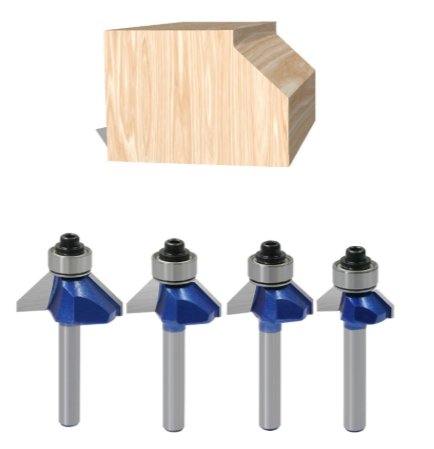
Establishing a standardized inspection routine prevents the premature disposal of functional tooling. The strong-light reflection test is an effective visual indicator. Inspect the cutting edge under a bright light source; bright flecks of light indicate microscopic chips, nicks, or edge rollovers that catch illumination. A perfectly sharp edge will disappear under direct light because there is no flat surface for the light to reflect off of. If you see a white line along the cutting edge, the tool is blunt.
The fingernail test can help identify localized physical wear where the edge catches. Lightly drag your thumbnail across the cutting edge. A sharp bit will shave a microscopic layer of your nail. A dull bit will slide over it, and a chipped bit will catch and snag. This tactile feedback is invaluable on the shop floor when you need to make a quick go/no-go decision on a tool.
Workpiece evidence also provides critical clues. Burn marks on end grain, excessive tear-out, and raised fibers strongly suggest a degraded cutting edge. When routing maple or cherry, a dull bit will instantly leave dark brown or black scorch marks that require heavy sanding to remove. However, tactile feel can be deceptive. Specific coatings, micro-textures, or protective shipping wax affect tactile grip, making carbide feel dull while the actual cutting geometry remains highly functional.
Pitch and resin buildup frequently cause issues that mimic dullness. Heat bakes wood resins onto the flute, altering the clearance angle and causing friction. Implement standard operating procedures for chemical cleaning and bearing lubrication prior to edge evaluation. Often, a thorough cleaning restores performance without the need for abrasives. Soaking the bits in a dedicated resin solvent for ten minutes will dissolve the baked-on pitch, allowing you to wipe it away with a brass brush.
Remove the bit from the collet and detach any guide bearings using a hex key.
Submerge the cutting flutes in a specialized citrus-based or alkaline resin cleaner.
Allow the bit to soak for 10 to 15 minutes to break down the baked-on pitch.
Scrub the flutes with a soft brass brush. Never use steel wire brushes, as they can micro-chip the carbide.
Rinse the bit, dry it thoroughly with compressed air, and inspect the edge under a strong light.
If the bit still shows signs of wear after cleaning, you can proceed with a sharpening assessment. Do not skip the cleaning phase. Grinding a dirty bit will instantly clog your diamond hones or the professional grinding wheels, ruining the abrasive surface and resulting in a poor edge finish on the tool.
Comparing in-house maintenance against third-party professional services helps determine the best approach for your shop. DIY touch-ups with diamond hones are suitable for minor edge degradation. The proper technique involves honing only the flat face of the flute, never the beveled profile. Maintain balance by applying equal strokes with diamond paddles to each flute. If you swipe the left flute ten times, you must swipe the right flute ten times to maintain rotational balance.
Professional sharpening services are necessary for precision work, especially for Router Bits used in CNC applications. Professional liquid-cooled grinding prevents carbide micro-fracturing and maintains exact index angles. This level of precision is difficult to achieve by hand. A professional shop uses multi-axis CNC grinders that map the exact geometry of the flute and remove the absolute minimum amount of material required to restore the edge.
Sharpening inherently reduces the cutting diameter. This implementation risk requires strict mitigation protocols. Always measure the post-sharpening diameter with digital calipers and update tool libraries in your CNC control software to ensure accurate toolpaths. If you send out a half-inch compression bit for sharpening, it will likely come back measuring 0.490 inches. If you do not update your CAM software with this new diameter, your mortises will be too tight and your tenons will be too loose.
When honing in-house, secure the router bit in a dedicated vise with soft jaws. Use a fluid lubricant, such as a light lapping fluid or even glass cleaner, to float the swarf away from the diamond abrasive. Place the diamond paddle flat against the inner face of the flute and push it upward toward the cutting edge. Never drag the hone backward across the edge, as this can pull micro-chips out of the carbide matrix.
For complex profile bits, do not attempt in-house sharpening. The risk of altering the profile and ruining the bit is too high. Box up your profile bits, panel raisers, and large diameter flattening bits and send them to a reputable grinding service. Establish a rotation system where you have a backup set of tooling ready to go while the primary set is out for maintenance.
Creating a definitive end-of-life checklist for router tooling prevents costly mistakes. Realistic lifespans vary; cheap bits may survive one or two sharpenings, while premium carbide straight bits can endure three to five cycles. You must evaluate the structural integrity of the tool body, not just the cutting edge.
Signs of irreversible damage dictate immediate disposal. Look for micro-chipping or missing chunks in the carbide that cannot be ground out safely. Detect hairline cracks in the brazing, which present a severe safety hazard. If the braze fails at 18,000 RPM, the carbide insert becomes a lethal projectile. Scored shanks, bent shanks, or compromised guide bearings that cannot be swapped also require replacement. A scored shank will not seat properly in the collet, leading to runout and vibration.
Apply a cost-benefit analysis when deciding between sharpening and buying new. If sharpening and shipping costs exceed 30% to 40% of the replacement cost, replace the bit. Factor in the labor cost of downtime and CAM reprogramming for resized bits. If a standard straight bit costs a few dollars, paying a professional service to grind it makes zero financial sense. Reserve your sharpening budget for large panel raisers, complex cope and stick sets, and expensive solid carbide spirals.
Practice sustainable end-of-life habits. Carbide is highly recyclable, and participating in scrap recycling programs offsets tooling costs while minimizing environmental impact. Keep a dedicated bucket in the tool room for spent carbide. Once it is full, take it to a local scrap metal dealer who specializes in tungsten carbide. The scrap value can be surprisingly high and can be used to offset the purchase of new tooling.
Always inspect the collet when replacing a router bit. A worn collet will ruin a brand new bit by allowing it to slip or vibrate during the cut. Collets are consumables and should be replaced every 400 to 600 hours of spindle run time. If you see fretting marks or galling on the shank of your router bits, your collet is failing and needs immediate replacement.
Pushing tooling past its operational lifespan causes cascading failures. Increased feed resistance accelerates wear on spindle bearings and router collets, leading to expensive machine repairs. When a bit is dull, the operator or the CNC machine has to force it through the material. This lateral pressure destroys the precision ceramic bearings inside the spindle cartridge.
Material waste and rework costs quickly accumulate. Calculate the cost of scrapped hardwoods or ruined sheet goods against the price of a new router bit. Tearing out the edge of a veneered plywood sheet because you tried to squeeze one more sheet out of a dull compression bit is a false economy. The cost of the ruined material far exceeds the cost of a fresh tool.
Dull tooling introduces significant safety risks, including an increased likelihood of kickback, binding, and operator injury due to forced feed rates. On a router table, a dull bit will grab the workpiece and throw it across the shop. The heat generated by a blunt edge can also ignite the fine dust packed into the cut channel, starting a fire in your dust collection system.
Vibration is another hidden cost. A dull bit chatters in the cut, leaving a washboard finish on the routed edge. This requires the finishing department to spend excessive time sanding the profile to make it acceptable for finishing. By maintaining sharp tooling, you eliminate this bottleneck in the sanding department and improve the overall throughput of the shop.
Router bits can and should be sharpened, provided they are premium carbide, structurally sound, and primarily straight or simple profiles. Clean all bits first, hone lightly in-house for minor edge degradation, and outsource expensive CNC and large profile bits to professional grinders. Discard any bit with chipped carbide or compromised brazing.
Audit your current tooling inventory and discard any bits with bent shanks or cracked brazing.
Implement a mandatory chemical cleaning protocol for all bits before assessing their sharpness.
Establish a relationship with a certified local or mail-in tool grinding service for your complex profiles.
Update your CAM software tool libraries immediately after receiving sharpened bits to account for diameter reduction.
A: Standard files work on High-Speed Steel (HSS), but carbide requires specialized diamond abrasives due to its extreme hardness. A steel file will simply slide off a carbide edge.
A: A premium carbide bit can typically be sharpened 3 to 5 times, depending on the depth of wear and the specific bit profile. Complex profiles have fewer sharpening cycles.
A: Yes, sharpening reduces the cutting diameter, necessitating immediate adjustments to CNC toolpaths or router fence setups to maintain tight joint tolerances.
A: Burning is usually caused by a dull edge, severe pitch buildup, or an incorrect combination of feed rate and spindle speed. Clean the bit first to rule out resin friction.
A: Yes, guide bearings are replaceable consumables. You can size and swap them easily using a hex key. Always ensure the new bearing matches the exact outer diameter required.
A: Generally, no. The cost of professional sharpening usually exceeds the replacement cost of budget tooling. Reserve sharpening for premium, high-cost bits.
A: Carbide is highly recyclable. Collect spent bits in a dedicated bin and sell them to carbide recycling facilities or scrap dealers to recover some of your tooling costs.


