
Views: 0 Author: Site Editor Publish Time: 2026-08-14 Origin: Site


Woodworkers and fabricators frequently face a common tooling dilemma: expanding a router collection without unnecessarily duplicating expensive inventory. You might wonder if the cutters you already own can seamlessly transition between a lightweight trim router and a heavy-duty plunge model. Sharing tooling seems like an efficient way to save resources, but the reality is far more complex than simply dropping a bit into a collet.
Mismatching bits to the wrong router class leads to severe safety hazards. Forcing incompatible tooling can result in violent kickback, shattered carbide edges, ruined workpieces, and premature tool motor failure. A small trim router lacks the mass and power to drive large profiles. Conversely, a massive plunge router can easily snap a delicate bit if feed rates are ignored.
Some interchangeability exists, but physical and mechanical constraints strictly govern it. Safe cross-platform use depends entirely on shank diameter, collet capacity, router horsepower, and the specific cutting application. Understanding these boundaries ensures you maximize your tooling investments without compromising safety or cut quality.
Physical Compatibility is Dictated by Collets: Interchangeability relies entirely on matching the bit's shank to the router's collet. Trim routers are strictly limited to 1/4-inch shanks, while plunge routers can typically accommodate both 1/4-inch and 1/2-inch shanks.
Functional Compatibility is Dictated by Horsepower: Even if a bit physically fits via an adapter, a trim router lacks the torque and mass to safely drive large-diameter profiling bits.
Adapters Bridge the Gap: High-quality router collet chuck sets allow full-sized plunge routers to safely utilize smaller 1/4-inch bits originally purchased for trim routers.
Application Defines the Tool: Plunge-specific operations (like deep mortising) require center-cutting bits and a plunge base; using these bits in a fixed-base trim router requires dangerous ramp-in techniques.
Before evaluating cutting performance, you must establish the physical constraints of tooling interchangeability. The connection point between the motor and the cutter dictates what is physically possible in the shop. You cannot bypass these mechanical limits without risking equipment damage or personal injury.
The shank is the smooth cylindrical portion of the cutter that inserts into the machine. In North America, shanks primarily come in two standard diameters: 1/4-inch and 1/2-inch. The engineering differences between these two sizes directly impact performance on the job site. A 1/2-inch shank offers exactly four times the mass of a 1/4-inch shank. This increased mass drastically reduces vibration and chatter during heavy cuts. It also provides superior heat dissipation, pulling thermal energy away from the delicate carbide cutting edges and transferring it into the router's spindle.
When you run a 1/4-inch shank on a deep pass, the lack of mass makes the bit prone to deflection. Deflection causes a wavy cut surface and increases the risk of snapping the bit at the collet line. For heavy material removal, the 1/2-inch shank is always the superior choice due to its rigidity.
Collets function as the critical gripping mechanism. They secure the bit via friction and compression. As you tighten the collet nut, the tapered steel collet compresses inward, clamping tightly around the shank. To share 1/4-inch cutters across different machines, woodworkers rely on interchangeable Router Collet Chuck Sets. These components allow a heavy-duty plunge router to safely grip smaller shanks.
While many heavy-duty plunge routers ship with interchangeable 1/4-inch and 1/2-inch collets directly from the manufacturer, trim routers are strictly limited to 1/4-inch capacity out-of-the-box. The physical spindle on a trim router is too small to accept a larger collet. When adapting smaller bits to larger routers, avoid cheap reducer sleeves. Slotted sleeves often introduce runout, causing the bit to wobble at high speeds. Instead, always use dedicated, machined collet replacements designed specifically for your router model to ensure concentricity and safety.
Here is a step-by-step process for safely swapping collets on a plunge router:
Disconnect the router from the power source completely.
Depress the spindle lock button or use the primary wrench to hold the spindle stationary.
Use the secondary wrench to loosen the collet nut until it spins freely.
Remove the existing 1/2-inch collet and nut assembly from the spindle.
Clean the inside of the spindle taper with a dry cloth to remove dust and resin.
Insert the dedicated 1/4-inch collet assembly and thread the nut on by hand.
Insert the 1/4-inch bit shank, ensuring it bottoms out and then pulling it up 1/16-inch before tightening.
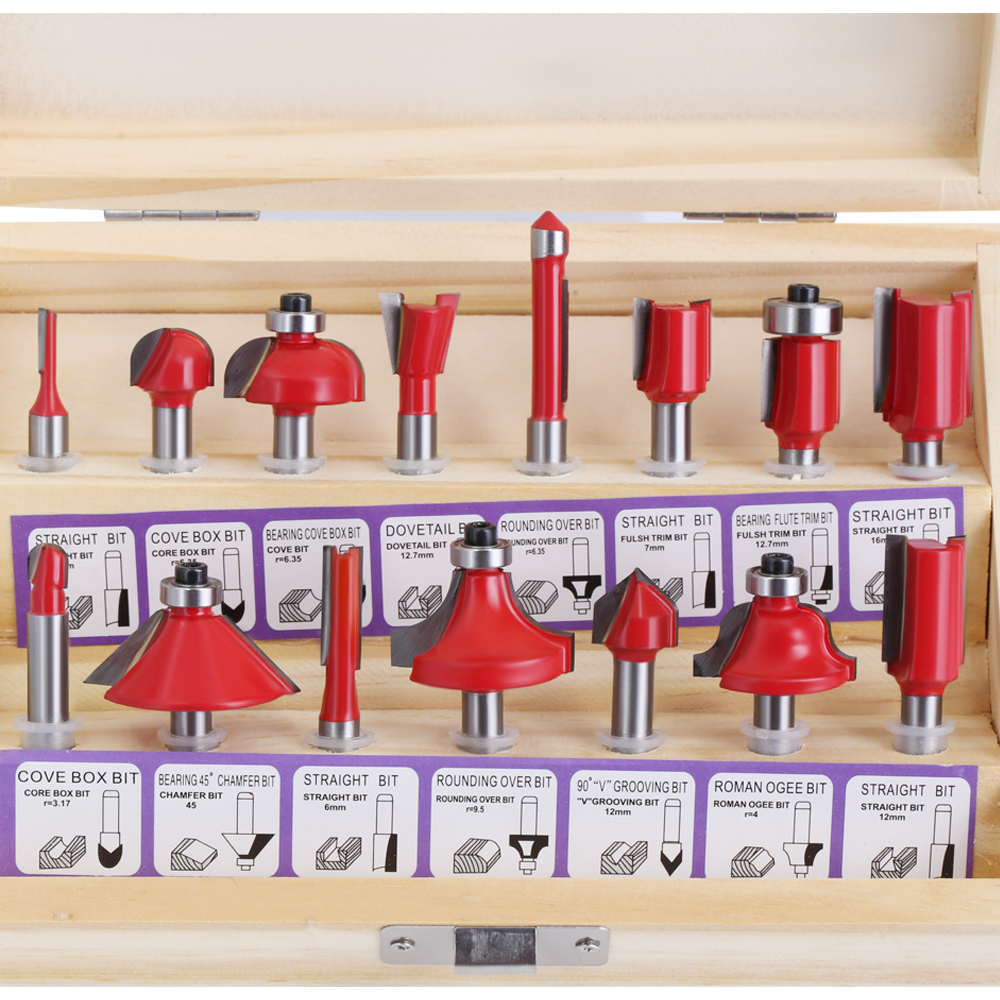
Understanding which bits can be safely driven requires comparing the baseline specifications of each router class. The physical size of the machine dictates its safe operational limits. You must match the tool's capacity to the demands of the cutter.
Trim routers, often called palm routers, are built for single-handed operation. They typically feature power ratings between 1.0 and 1.25 horsepower. These machines spin at exceptionally high speeds, often reaching up to 30,000 RPM. Their low mass and high speed make them ideal for small edge-profiling, flush-trimming veneers, and laminate work. However, they rely on a fixed-base design. This limitation restricts vertical entry into the center of a workpiece, meaning they are primarily edge-treatment tools.
Because they lack variable speed control in many entry-level models, trim routers run at a constant high velocity. This makes them unsuitable for anything other than small-diameter cutters. Pushing a trim router too hard results in motor bog-down and severe burning on the wood surface.
Full-size plunge routers are two-handed machines built for heavy material removal. They feature robust motors with power ratings ranging from 2.0 to over 3.25 horsepower. Because they can drive massive cutters, they include variable speed controls. Dialing down the RPM is mandatory for safely running large-diameter bits. Additionally, they feature a spring-loaded plunge mechanism. This design allows for controlled, precise vertical bit entry into the center of a board, which is essential for mortising and internal pattern routing.
The mass of a plunge router absorbs vibration. When you run a large panel-raising bit, the heavy cast aluminum base and thick guide rods keep the tool stable against the rotational forces generated by the cutter.
Consider a large project like a solid wood dining table build. The capabilities of your machine will dictate your workflow. A plunge router is absolutely mandatory for heavy tasks. You need the horsepower and the plunge mechanism for routing deep mortises for the table legs, flattening large rough-sawn slabs, or cutting structural joinery. A trim router cannot handle these loads. Instead, the trim router is relegated to secondary tasks, such as applying a final round-over to the table edge or flush-trimming edge banding.
Feature | Trim Router | Plunge Router |
|---|---|---|
Horsepower | 1.0 - 1.25 HP | 2.0 - 3.25+ HP |
Shank Capacity | 1/4-inch strictly | 1/4-inch and 1/2-inch |
Base Design | Fixed Base | Spring-loaded Plunge Base |
Speed Control | Often single speed (High RPM) | Variable speed dial |
Primary Use | Edge profiling, laminates | Mortising, heavy joinery, slab flattening |
There are specific scenarios where sharing tooling between machines is safe, efficient, and cost-effective. Identifying these overlaps helps streamline your shop operations and reduces the need to buy duplicate profiles.
The primary overlap exists with 1/4-inch shank cutters. Many standard Router Bits perform exceptionally well in both machines. Small round-overs, chamfers, flush-trim profiles, and small straight cutters can move freely between a trim and plunge router, provided the plunge router is equipped with the correct collet. Keeping small cutters in a trim router for quick edge work while leaving heavy joinery cutters in the plunge router creates excellent workflow efficiency. You avoid constant bit changes and keep the right tool staged for the right task.
For example, if you are building cabinet doors, you might keep a 1/4-inch round-over bit permanently chucked in your trim router to ease the edges of the frames, while your 3-horsepower plunge router handles the heavy stile-and-rail profile cuts at the router table.
When moving a cutter from a heavy machine to a light machine, you must adjust your technique. A plunge router might power through a 1/2-inch deep groove in a single pass. If you put that same straight bit into a trim router, attempting that depth will stall the motor or cause severe kickback. You must take multiple shallow passes. Adjust your depth stop to remove no more than 1/8-inch to 1/4-inch of material per pass. Listen to the motor; if it bogs down, you are feeding too fast or cutting too deep.
Always test your cut depth on scrap material first.
Reduce your feed rate when using a trim router on dense hardwoods like oak or maple.
Ensure the bit is sharp; a dull bit in a low-horsepower router will immediately cause burning and tear-out.
Keep the router base flat and apply consistent downward pressure to prevent tipping during shallow passes.
Establishing hard safety boundaries is critical. Certain tooling configurations are inherently dangerous and should never be attempted. Ignoring these rules puts you at risk of severe injury.
Never attempt to run large-diameter cutters in a trim router. The physics of gyroscopic force make this incredibly dangerous. Large panel raisers or heavy stile-and-rail cutters generate immense rotational inertia. A lightweight palm router lacks the physical mass to counteract these forces, making the tool uncontrollable in your hands. Furthermore, palm routers lack the low-RPM speed control necessary for large cutters. Spinning a 2-inch diameter cutter at 30,000 RPM will cause the carbide to exceed safe tip speeds, leading to catastrophic failure.
Trim machines physically cannot accept 1/2-inch shanks. The spindle bore is too narrow. Attempting to modify a tool, use unapproved aftermarket adapters, or grind down a shank to fit a smaller collet is a severe safety violation. If a cutter has a 1/2-inch shank, it requires the horsepower and bearing structure of a full-size machine. The bearings in a trim router will disintegrate under the lateral load of a heavy 1/2-inch shank cutter.
Using a plunge-specific cutter, like a spiral upcut or a deep straight bit, in a fixed-base palm router for internal cuts is highly dangerous. Without a plunge base, you cannot achieve controlled vertical entry. Users are forced to tip the spinning cutter into the wood—a technique known as ramping in. While experienced users sometimes employ this technique, it is highly risky, prone to skipping across the workpiece, and generally discouraged for deep internal cuts.
Purchasing tooling with maximum versatility in mind requires understanding bit geometry and material quality. Not all cutters are designed for multi-machine use. You need to evaluate the specific design features before buying.
The critical design difference lies in the tip geometry. Plunge-specific cutters feature carbide cutting edges that extend across the bottom and meet in the center of the tip. This center-cutting geometry allows them to drill vertically straight down into wood, much like a drill bit. Non-center-cutting profiles, such as edge-forming round-overs or basic straight cutters, only cut on the sides. If you attempt to plunge a non-center-cutting profile straight down, the blunt center will burn the wood and stop downward progress.
Cross-platform use demands high manufacturing standards. Premium Woodworking Router Bits utilize micro-grain carbide. This dense material withstands the varying RPMs and inconsistent feed rates often encountered when switching between a lightweight palm tool and a heavy plunge machine. Cheap high-speed steel (HSS) dulls quickly and cannot handle the heat generated by cross-platform applications. Investing in high-quality carbide ensures the bit performs predictably regardless of which router drives it.
Spiral geometry behaves differently depending on the machine. An upcut spiral pulls chips out of the mortise, but it also exerts an upward pulling force on the router itself. In a heavy plunge machine, the tool's mass counteracts this force. In a lightweight palm machine, an aggressive upcut can literally pull the tool out of your hands or lift the base off the workpiece. Downcut spirals push chips downward, leaving a clean top edge, but require a steady hand to prevent the tool from pushing away from the cut line.
Spiral Type | Chip Direction | Force Exerted on Router | Best Router Match |
|---|---|---|---|
Upcut | Upward (clears hole) | Pulls router down into wood | Plunge Router (heavy mass) |
Downcut | Downward (packs hole) | Pushes router away from wood | Trim Router (for shallow edge work) |
Compression | Toward center of cut | Neutral | CNC or Heavy Plunge Router |
When purchasing new cutters, apply a simple framework. Buy 1/4-inch shanks for small edge profiles, flush-trimming, and light inlay work to maximize versatility across all your machines. Buy 1/2-inch shanks for anything involving deep material removal, large profiles, or heavy joinery to guarantee stability, reduce vibration, and ensure longevity. This strategy prevents you from wasting money on redundant tooling while maintaining strict safety standards.
Audit your current collet inventory to see which shank sizes your machines can safely accept.
Verify the horsepower and RPM limits of your machines before purchasing large-diameter cutters.
Invest in dedicated, high-quality collet adapters rather than cheap reducer sleeves if you plan to use 1/4-inch cutters in a full-size machine.
Organize your tooling storage by shank size to prevent accidental misuse during fast-paced projects.
A: No. Trim routers physically cannot accept 1/2-inch shanks due to spindle size limitations. Attempting to force or modify a tool to accept oversized shanks presents severe safety hazards and exceeds the motor's horsepower constraints.
A: While standard edge-forming cutters work perfectly fine, true vertical plunge cuts require cutters with a cutting edge on the bottom. You must use center-cutting straight cutters or spiral cutters to safely bore directly down into the material.
A: Plunge-specific cutters feature center-cutting geometry, meaning the carbide blades meet in the middle of the tip, allowing vertical boring. Standard cutters only feature cutting edges on the sides and cannot be pushed straight down into wood.
A: Without a dedicated plunge base, true vertical entry is impossible. Users must ramp in by tilting the spinning cutter into the wood. This technique is advanced, risky, and generally discouraged for deep or precise internal cuts.
A: No. They vary wildly in material quality. Cheap high-speed steel dulls rapidly and burns wood. Premium cutters use micro-grain carbide tips, which maintain sharp edges longer and handle the heat generated by different router speeds.
A: Choose a mid-size plunge router first. It handles larger 1/2-inch shanks necessary for heavy joinery, mortising, and flattening. A trim router is an excellent secondary convenience tool, but it lacks the power for primary furniture construction tasks.
A: You must use a proper collet adapter. The safest method is swapping the entire 1/2-inch collet chuck for a dedicated 1/4-inch collet chuck designed for your specific machine. Avoid cheap slotted reducer bushings, as they often cause dangerous runout.


